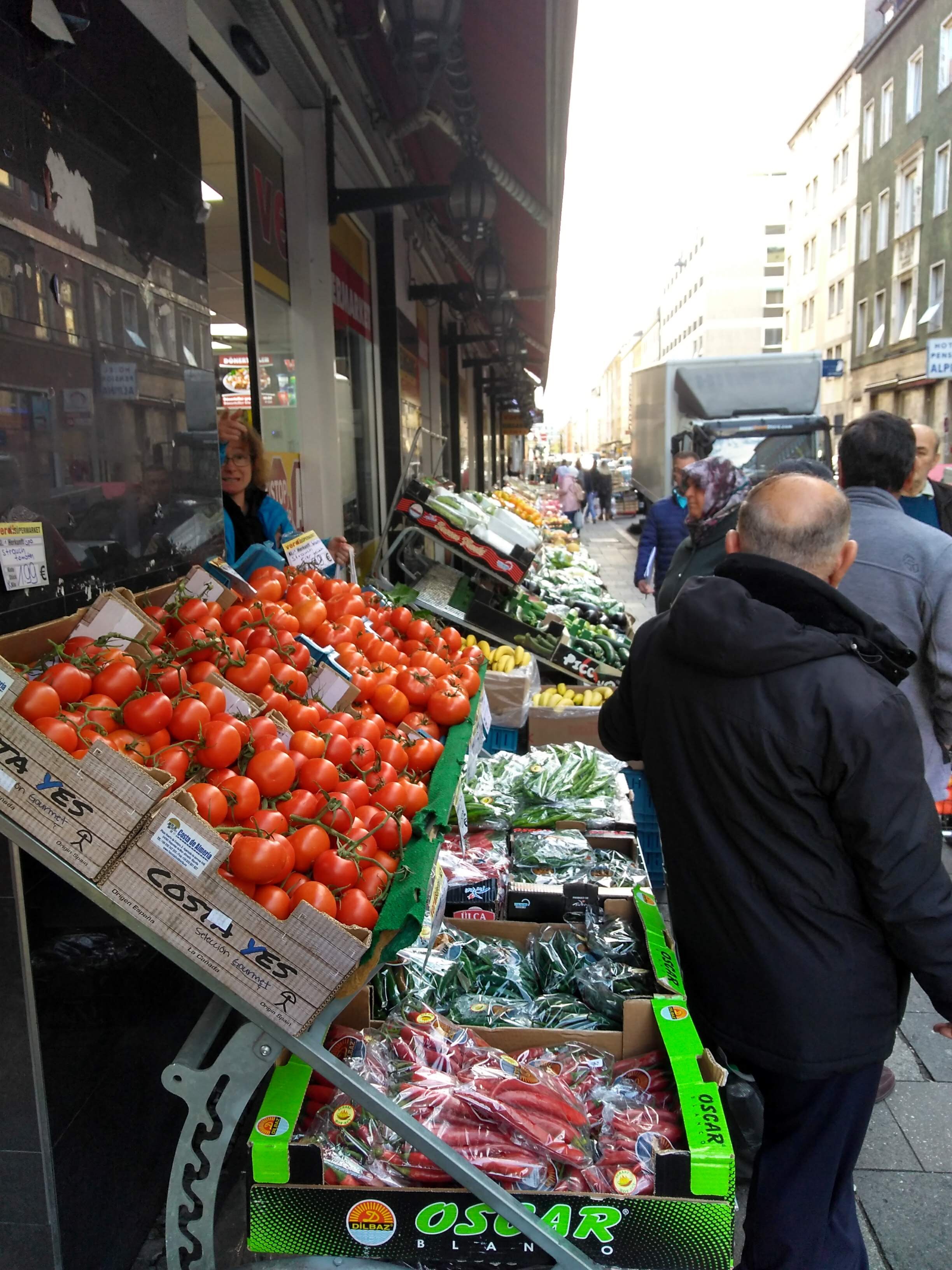
These seven weeks have flown by. My final days were back in Munich. My hosts wanted me to be sure and see the Turkish/Middle East portion of the city, so that was one of our Monday adventures.
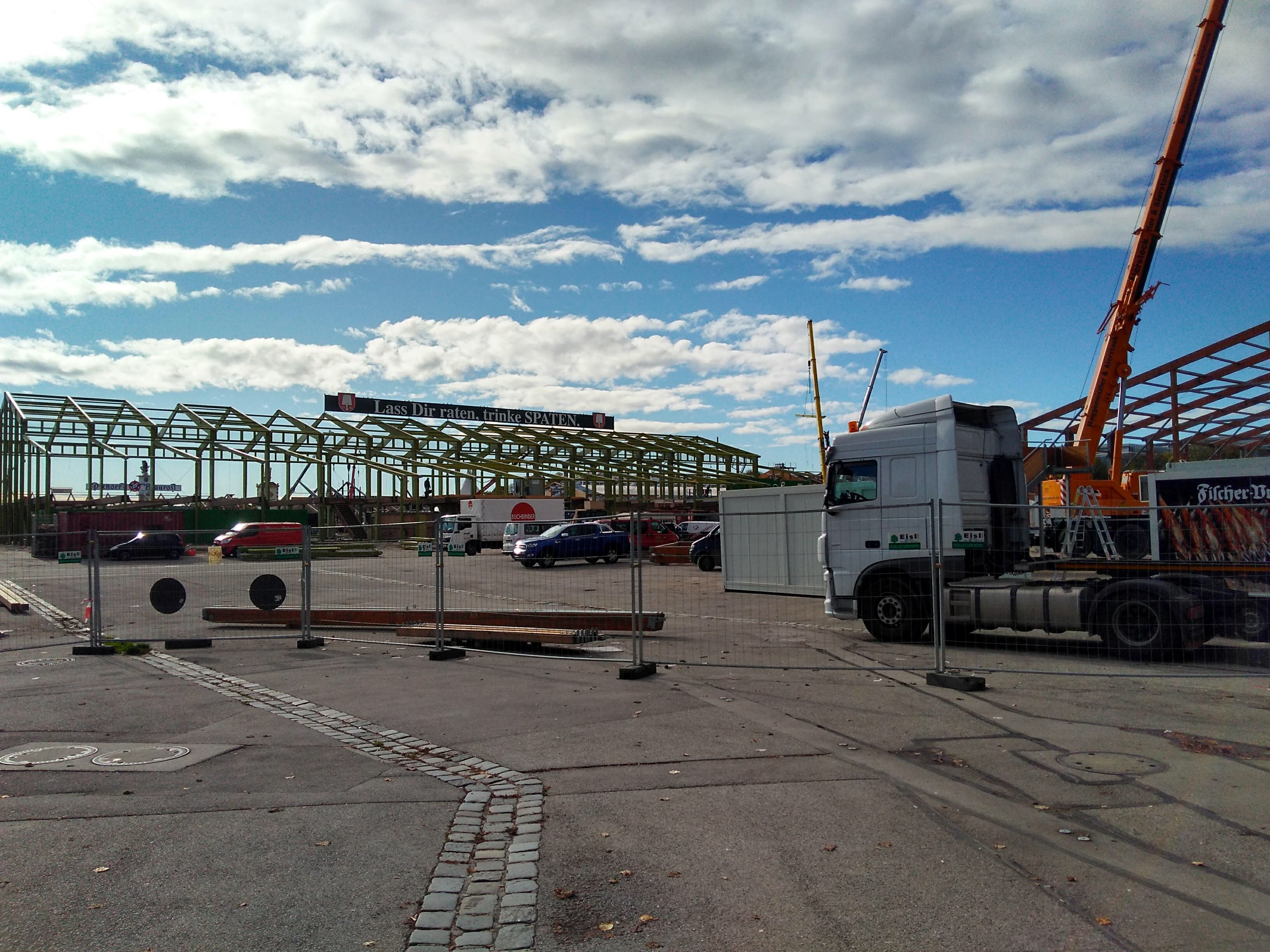
There were wonderful shops and markets. Then we walked past the Oktoberfest site. It looks different than when I saw it back in October.
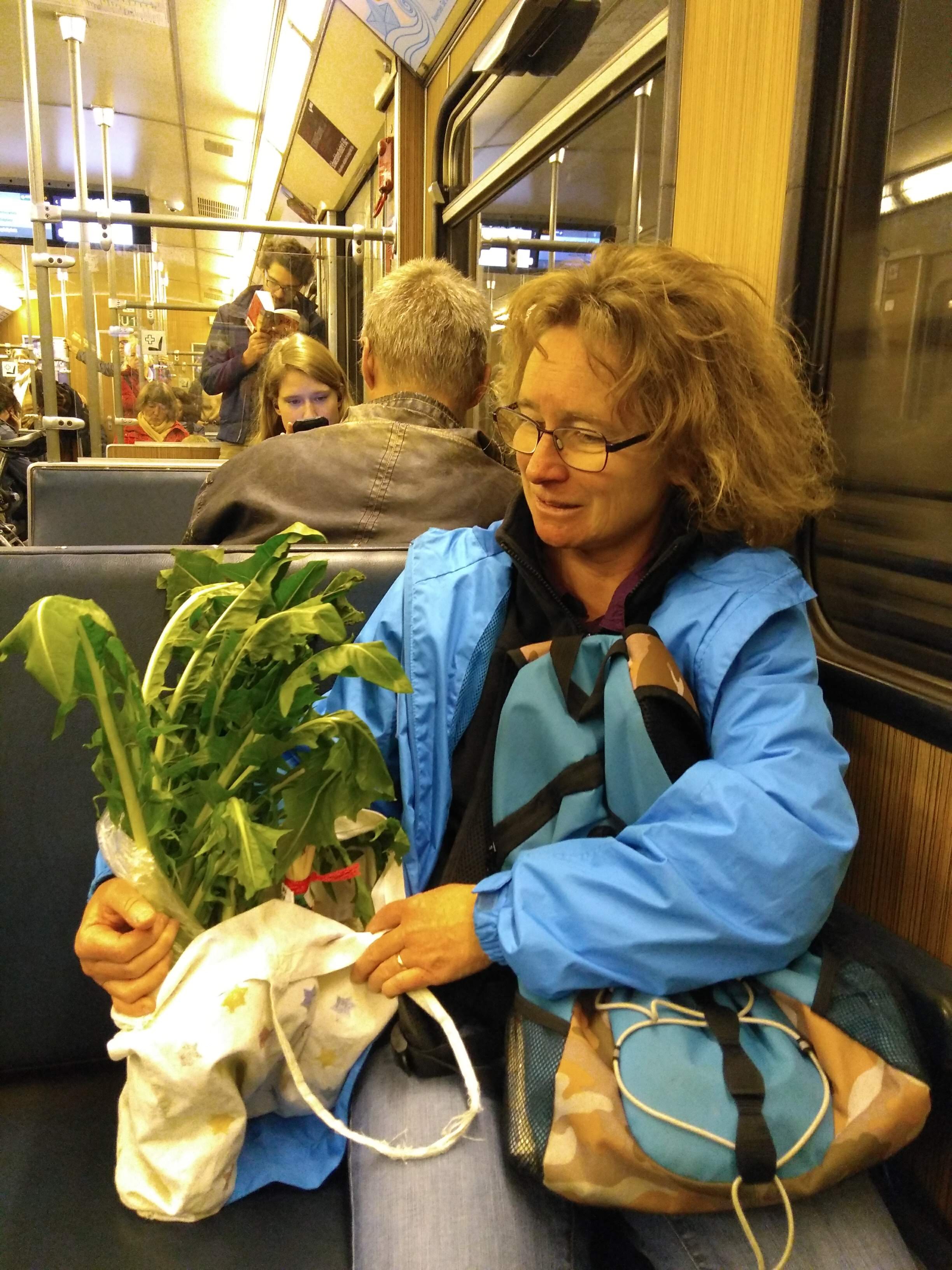
On the bus I asked Claudia about the greens she’d gotten at one of the markets. It’s a favorite of theirs; for salads. When I figured out what it was, I had to chuckle.
Dandelion greens, cultivated to be BIG.
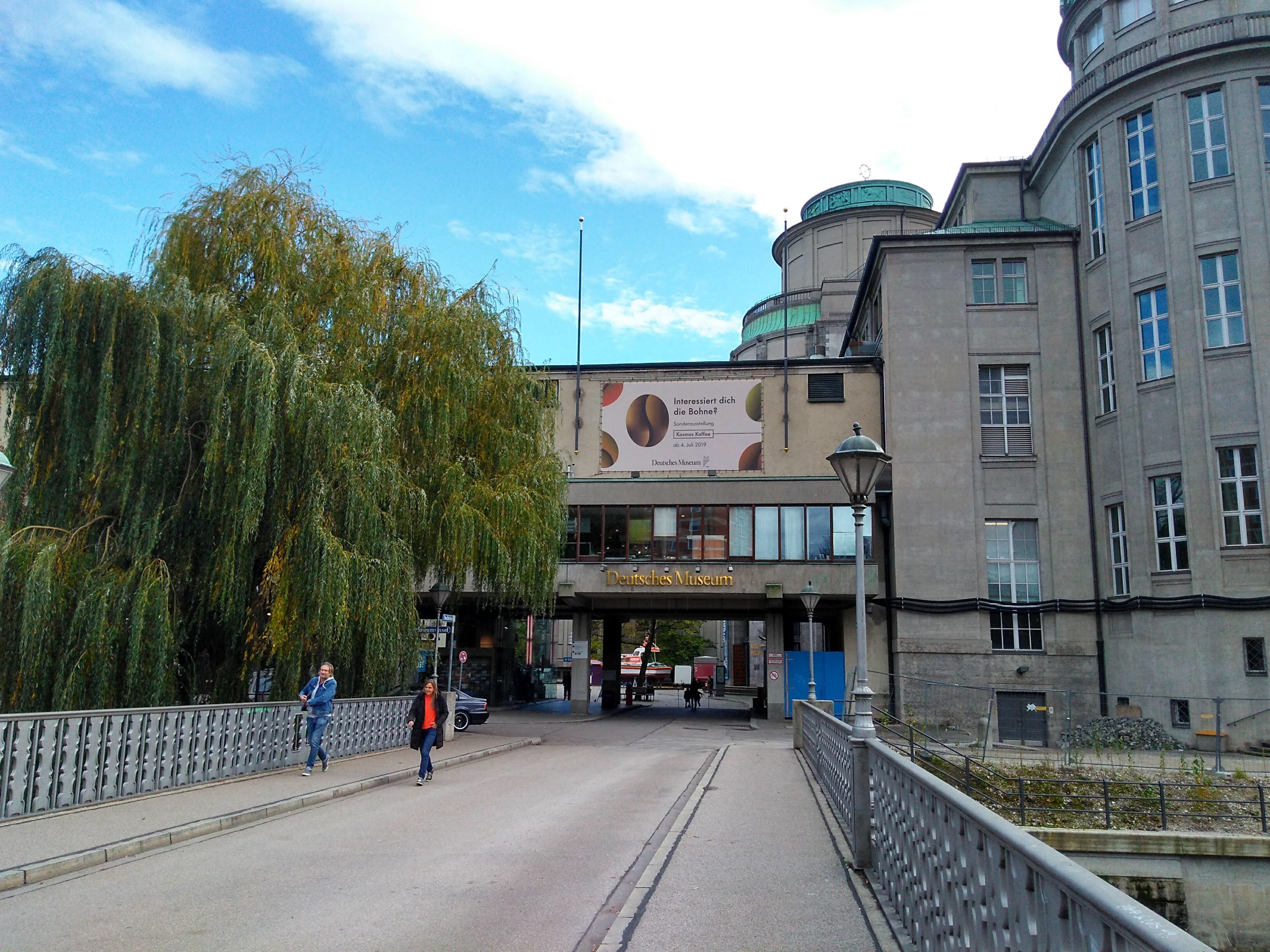
There was enough time in the afternoon for me to pay a quick trip to the Deutsches Museum, and I was happy to see a bit of that huge place .
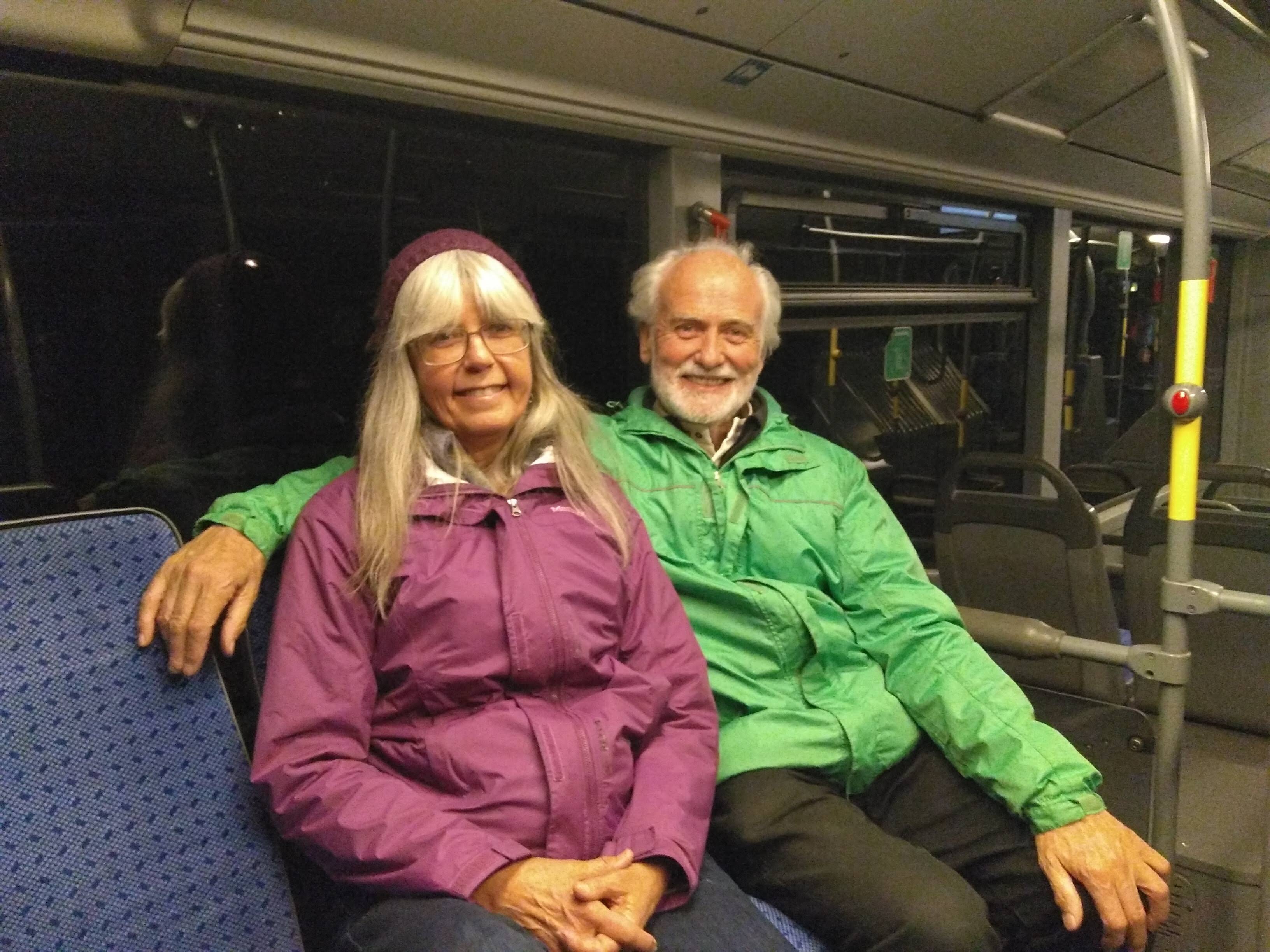
Then they took me to a beautiful restaurant for our final dinner together. Claudia snapped this photo on our bus ride back to the apartment.
The next morning it was an early trip to the airport, and time to say goodbye.
Well, dear reader, it has been quite an adventure. It was fun sharing highlights along the way. Thanks for coming along.
I’m closing the door on this chapter, but who knows what will come next? Until, then….Tschüss!
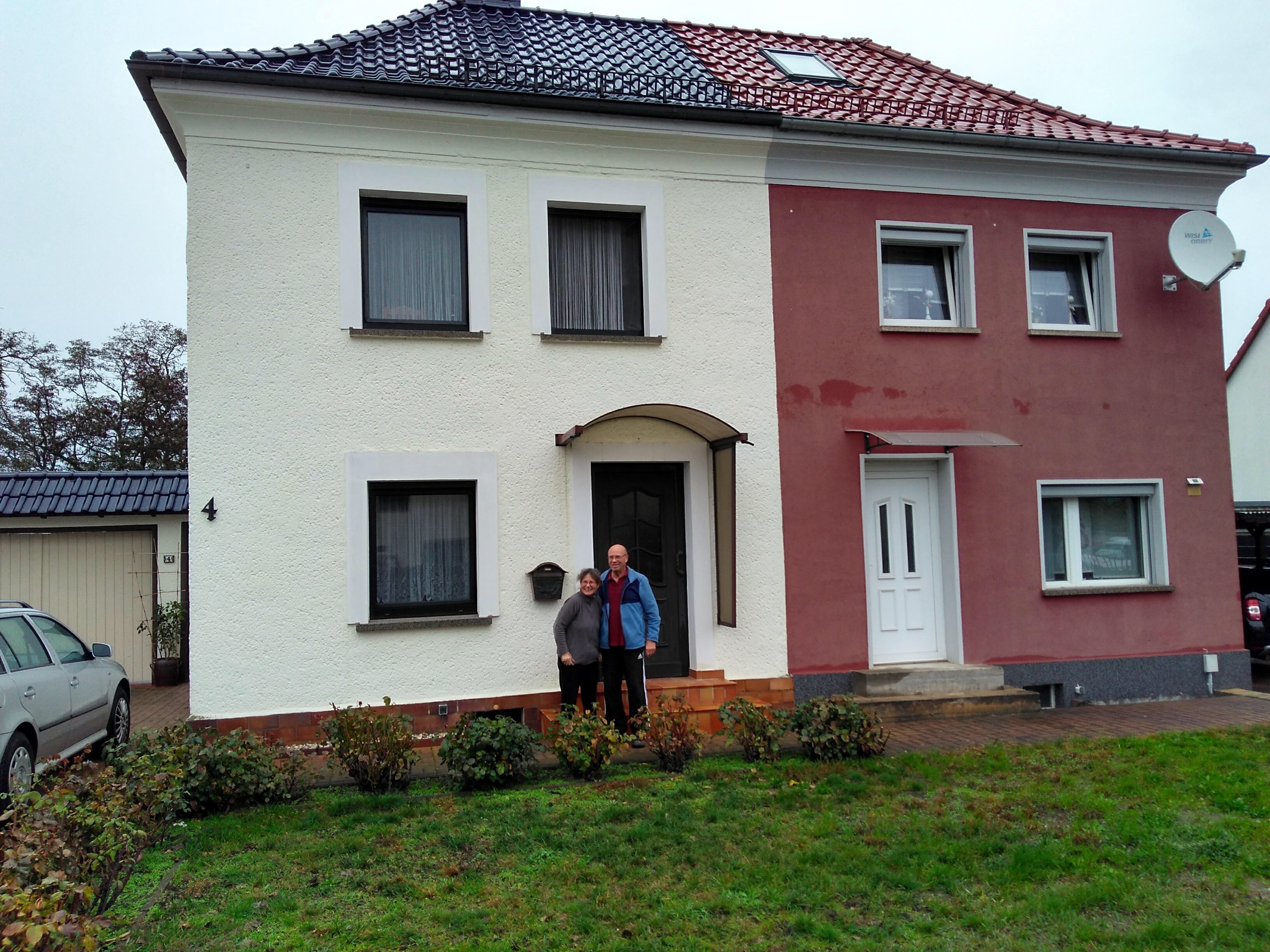
Claudia grew up in small towns between Wittenberg and Leipzig, and her mother and stepfather still live in one of those, Sandersdorf. Their house was our home base as we took a day (each) to explore the towns of Halle and Leipzig.
This whole region, including Wittenberg, is in the former GDR (Eastern Germany). Learning from Claudia about what life was like during the time of the Soviet occupation has been extremely enlightening (to say the least). She was 12 when Germany was reunited. Her stories of how repression affected people, family members who attempted to leave the country, the decades of rebuilding the countless places devastated by bombs (or the Soviet’s decision to NOT rebuild them) were heart wrenching. And yet, rising above it all is the resiliency of these people, evident around every corner.
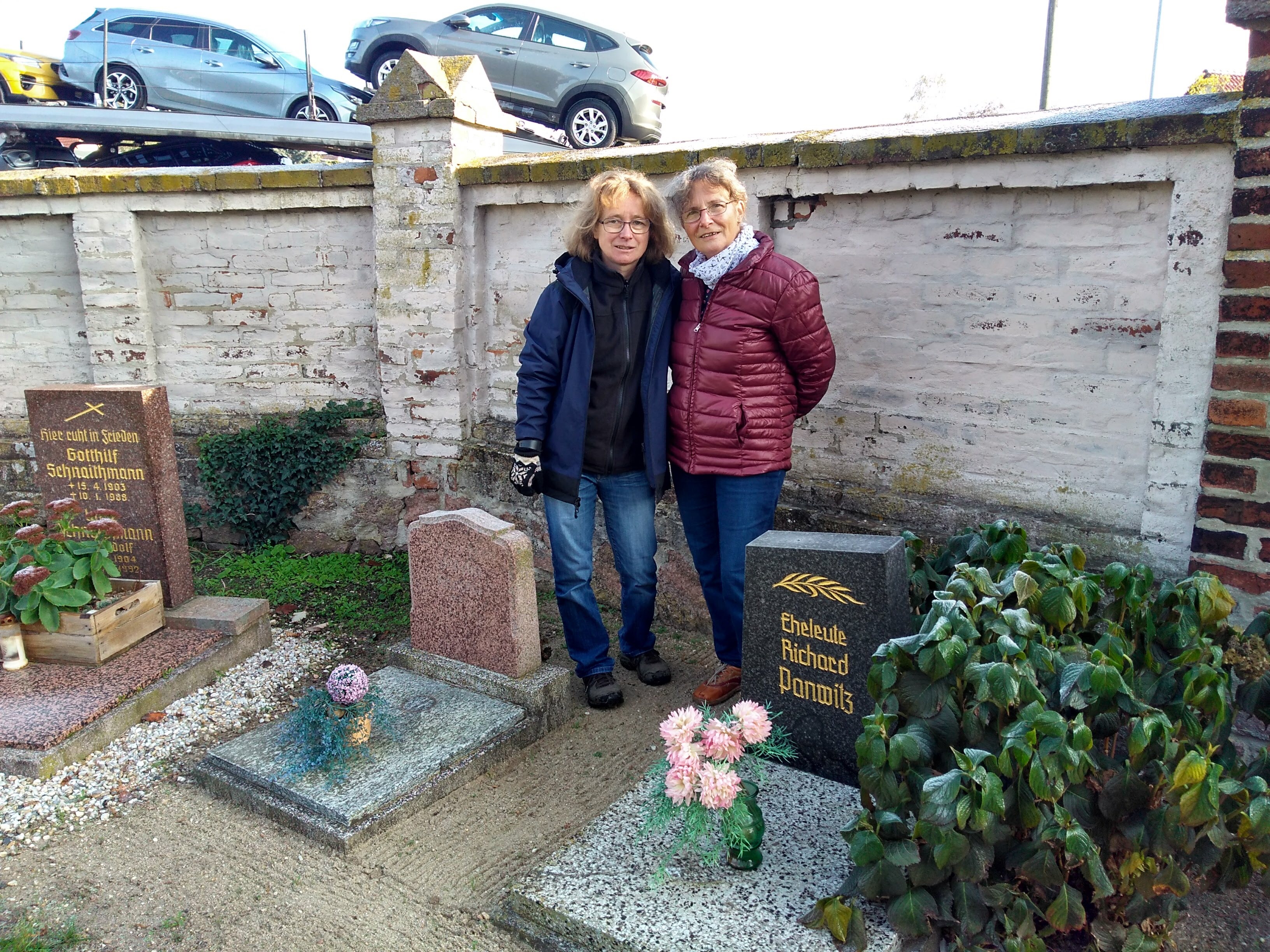
It was All Saints Day (Nov. 1), so our first stop was at the church graveyard to tidy up the graves of Claudia’s grandparents and the infamous Uncle Wilhelm (not actually an uncle) whom I had heard all about.
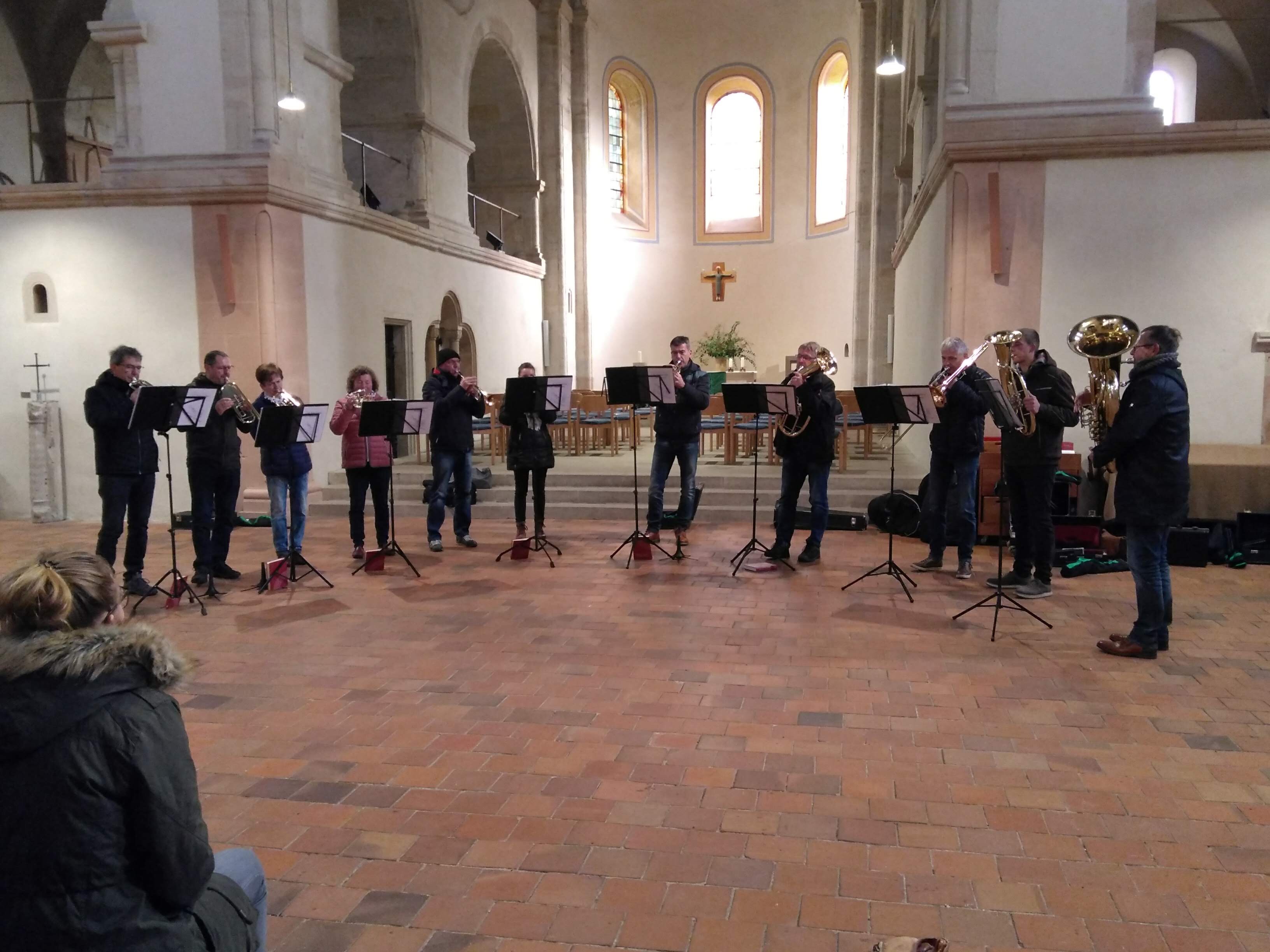
Then, to an old (12th century old) monastery on a hill where we were looked around for a bit and then noticed people with instruments walking into the chapel. To our delight, they began playing, and we were treated to an ad hoc concert!
Then, on to the city of Halle, which Claudia knows well. She got her undergraduate degree at the university there, and later her doctorate, and she and Helmut met, married, and lived there until Helmut’s retirement from teaching two years ago.
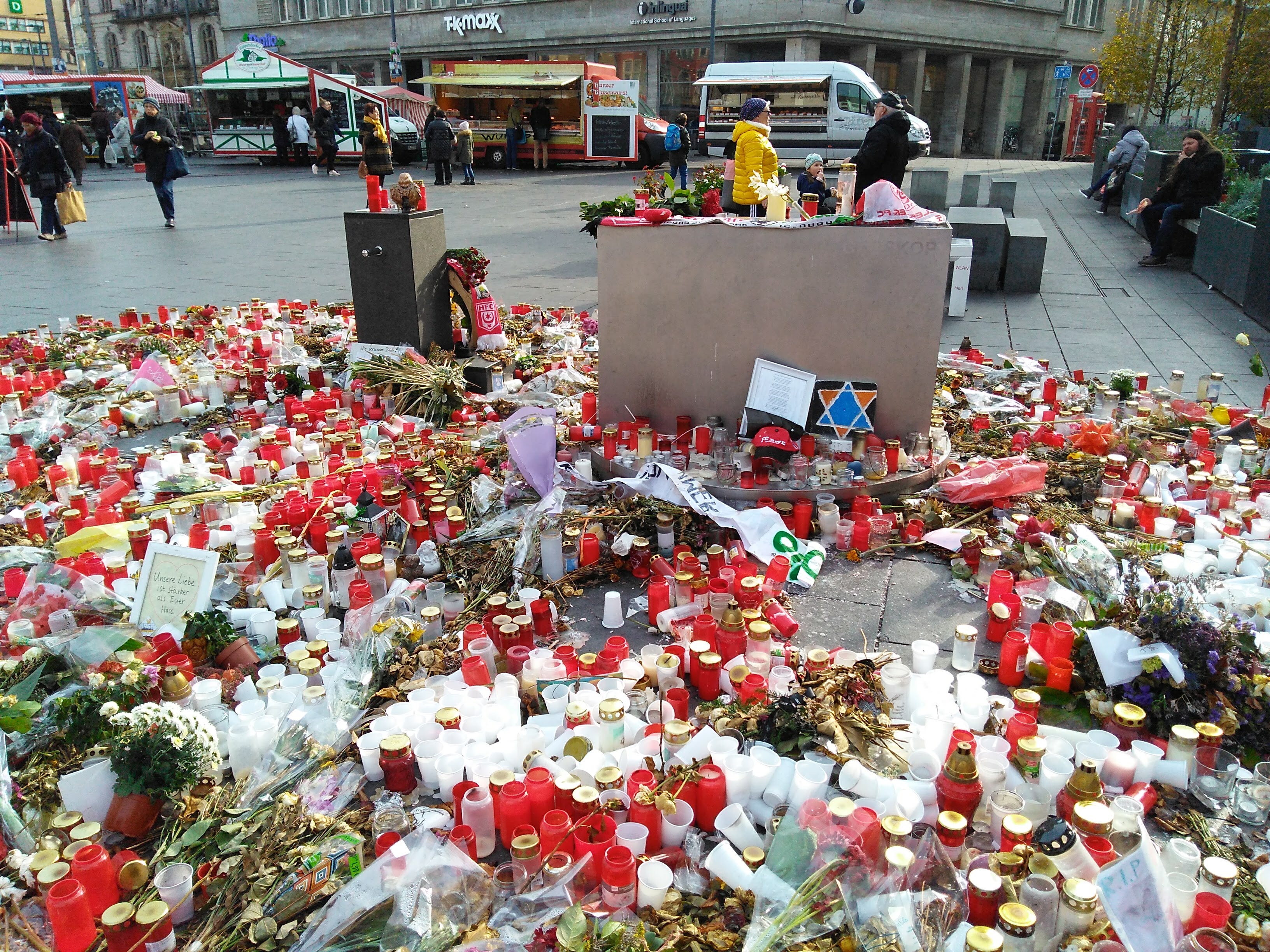
There was a large memorial in the Market Square for the victims of the shooting in Halle on Yom Kippur just a few weeks before.
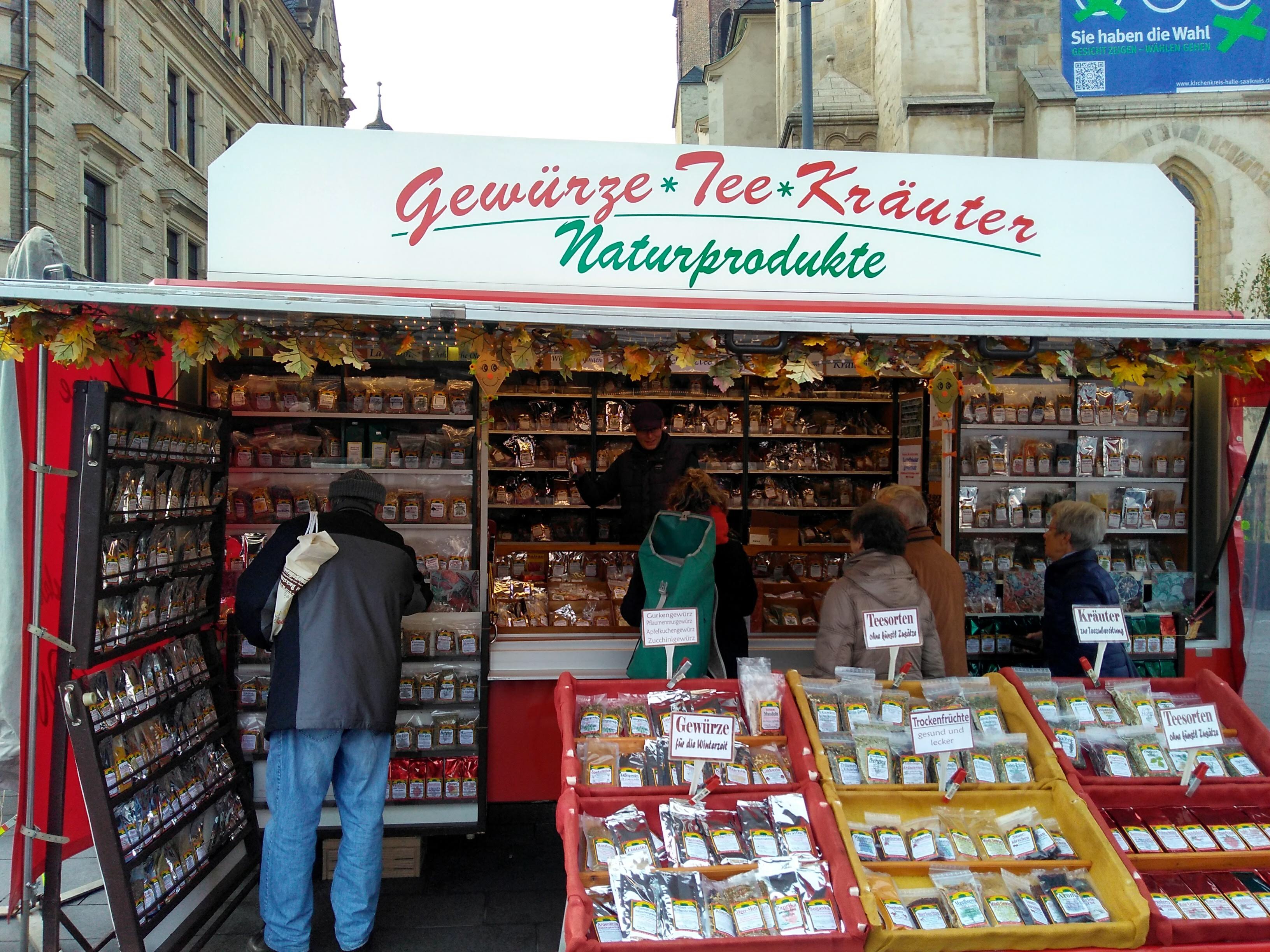
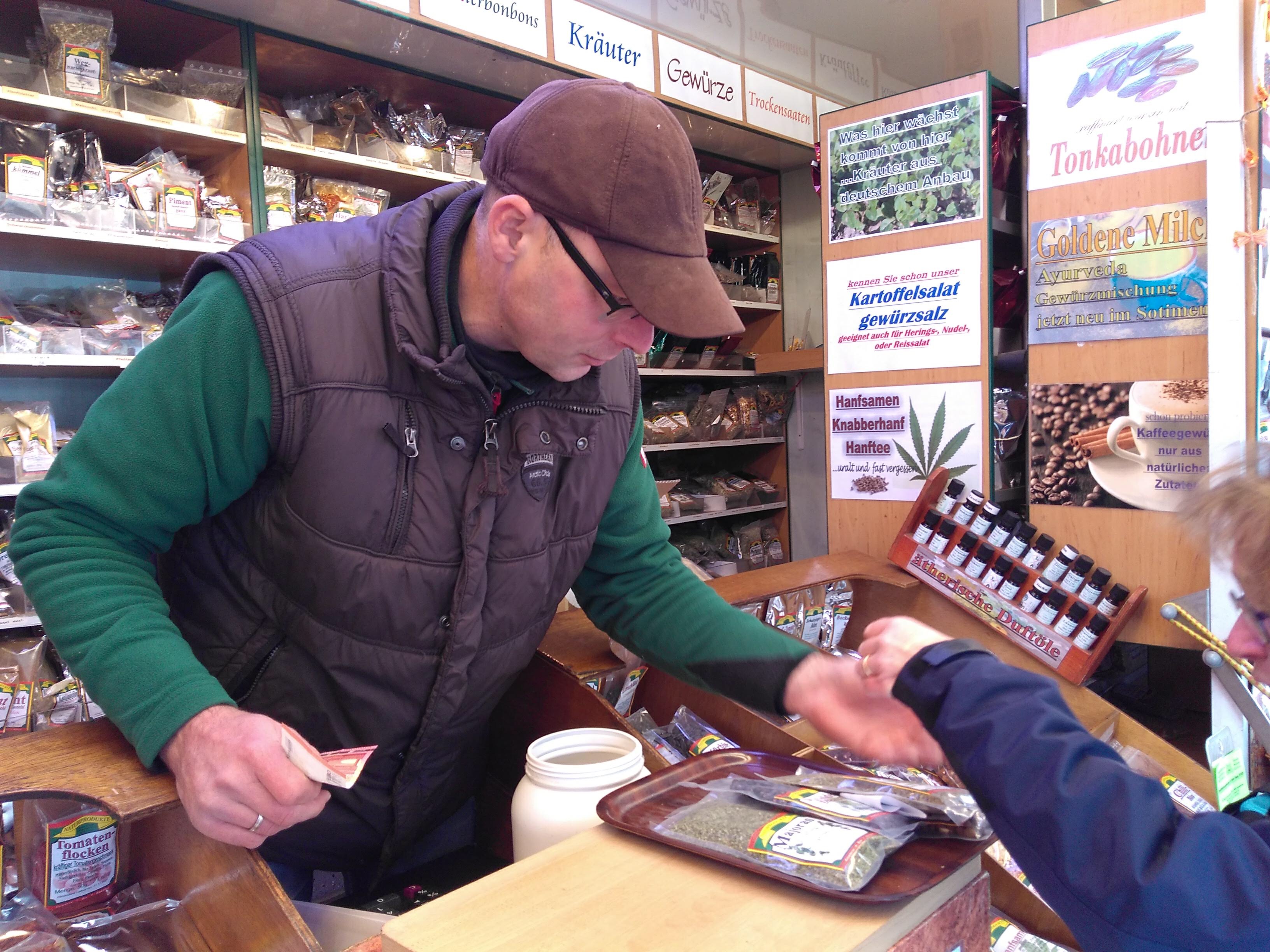
Claudia gets her spices from the “Spicy Man.” His stand is set up in Market Square on Wednesdays and Fridays and it was Friday! (We planned for this.)
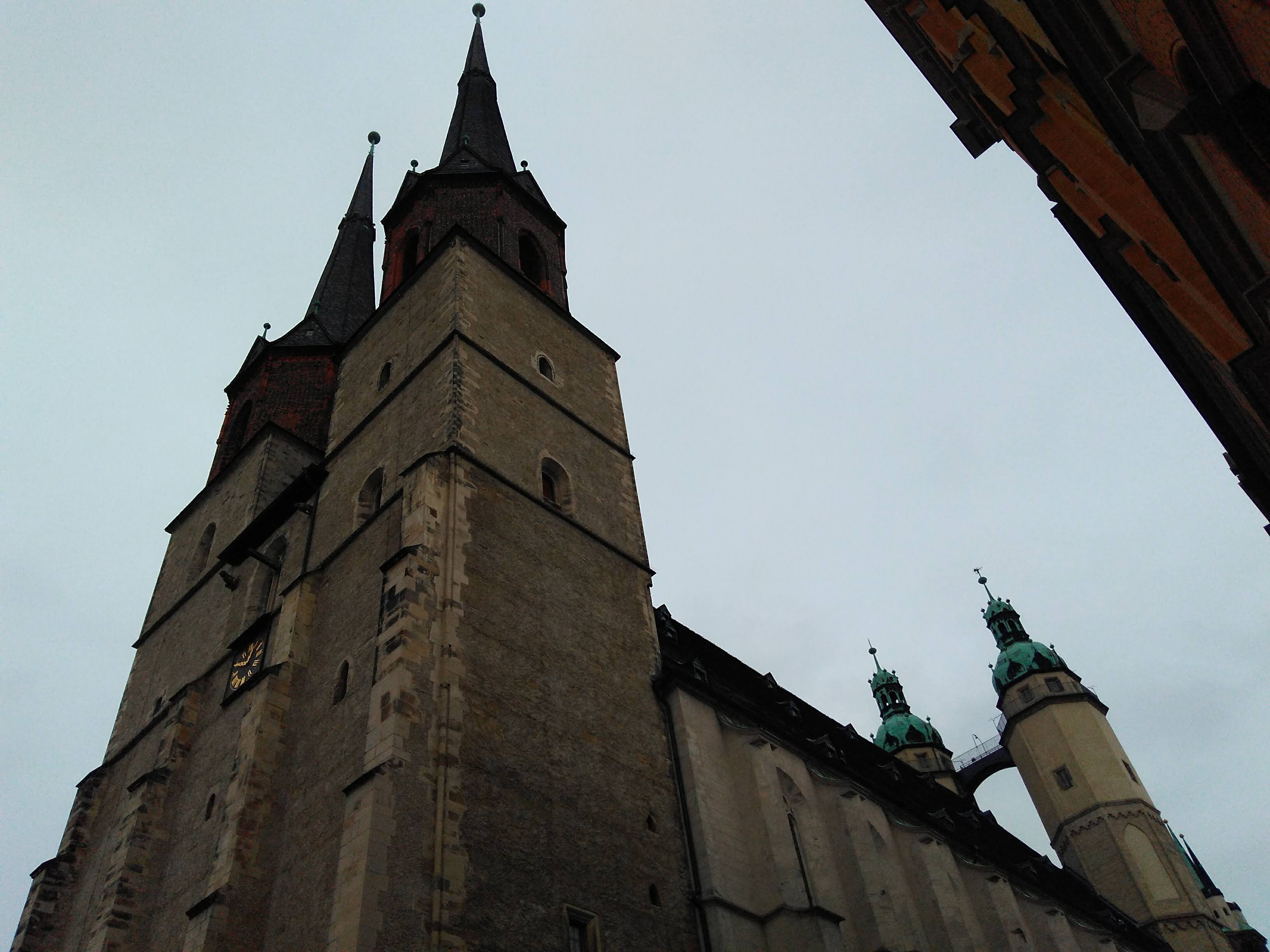
Centuries ago two town church buildings were combined into one, Marktkirche, and inside is a special room with a wax figure of Martin Luther made in the early 1900’s from one of his death masks. It was a bit ghoulish so no photo here.
Note the four spires—two from each of the original churches.
Martin Luther preached here in his last years, and his funeral procession stopped here on its way back to Wittenberg for his final burial.
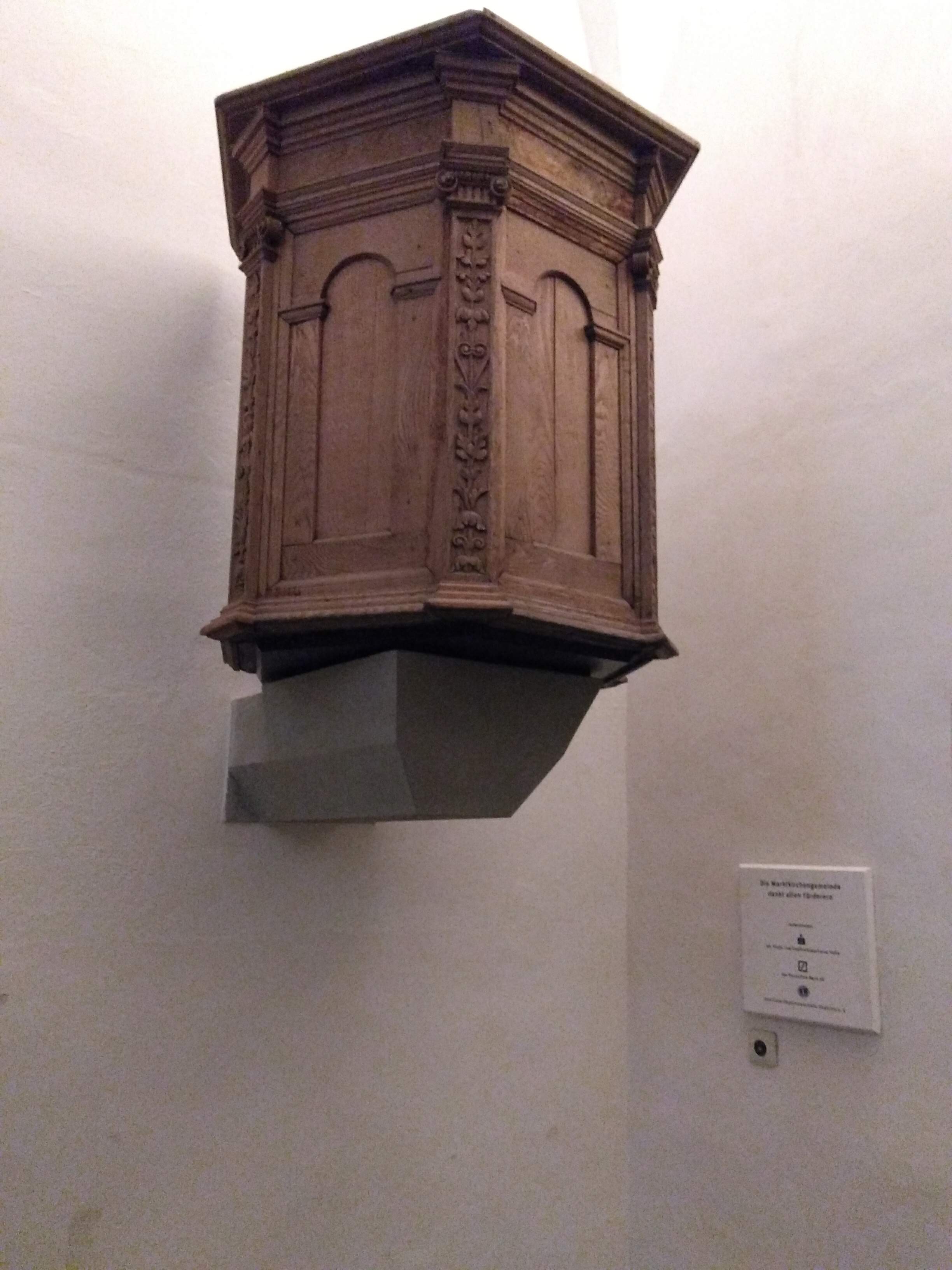
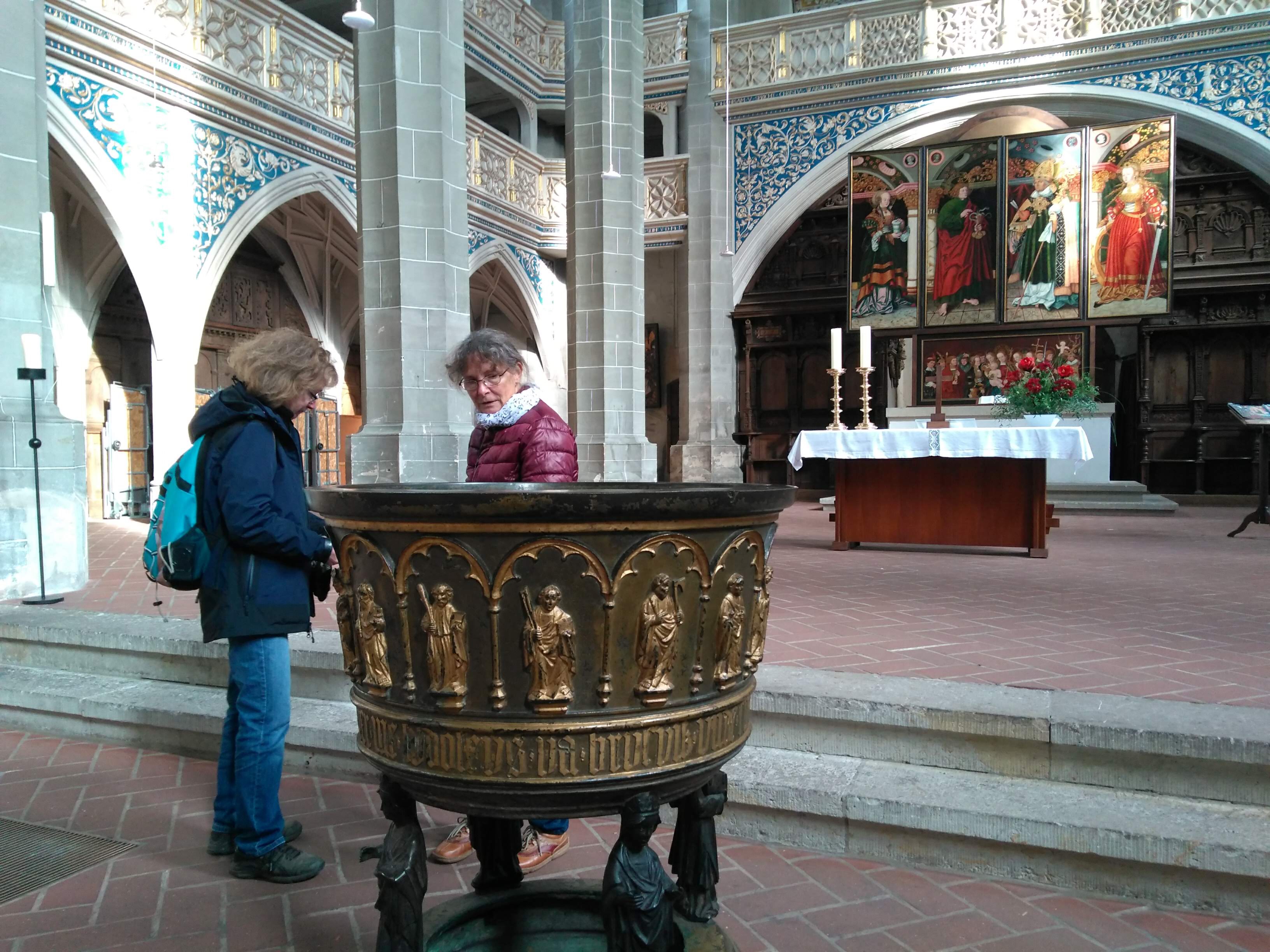
This pulpit, also in that special room, is believed to be the one from which ML preached in 1545-46, shortly before his death.The 15th century baptismal font
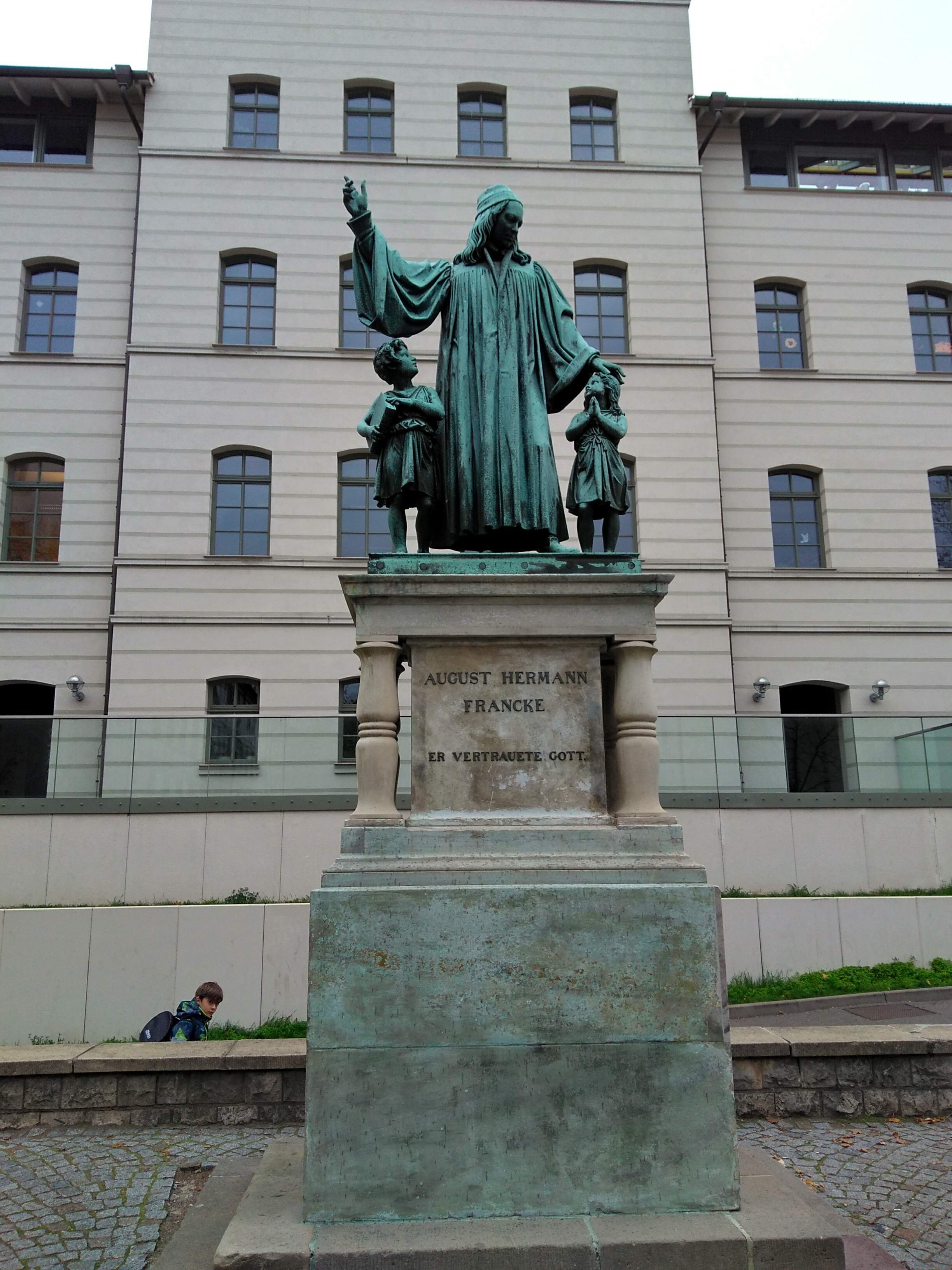
After lunch we walked to a large complex of buildings—-the site of an old orphanage and schools which has been restored (after the war bombings) and is now a cultural heritage site.
Founder of the orphanage and schools in 1700. It was considered very progressive for its time.
I could go on and on about Halle, but we must move on to the next day’s adventure which was LEIPZIG. It was another day full of amazing sites and rich history.
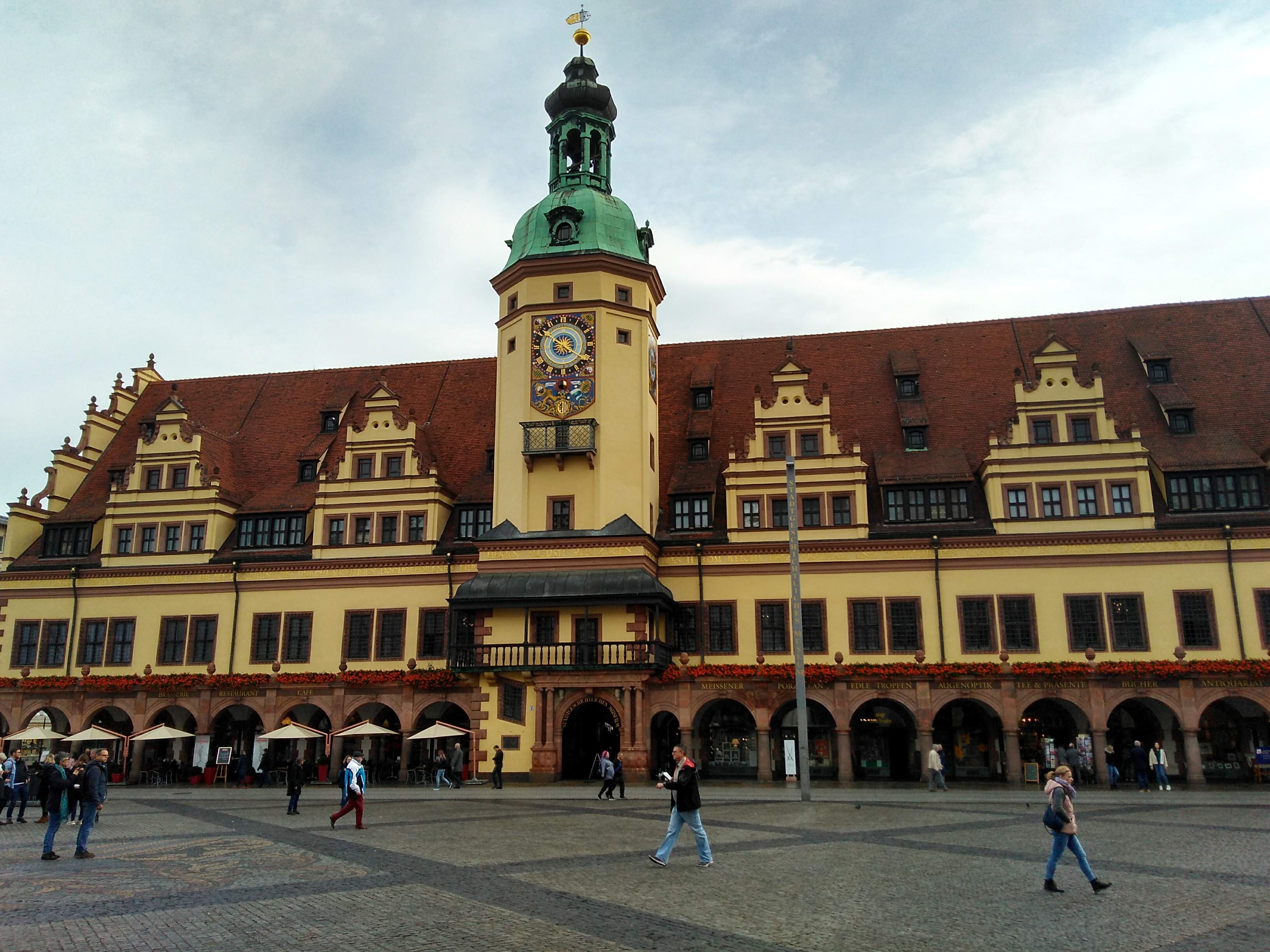
The historic Rathaus (town hall).
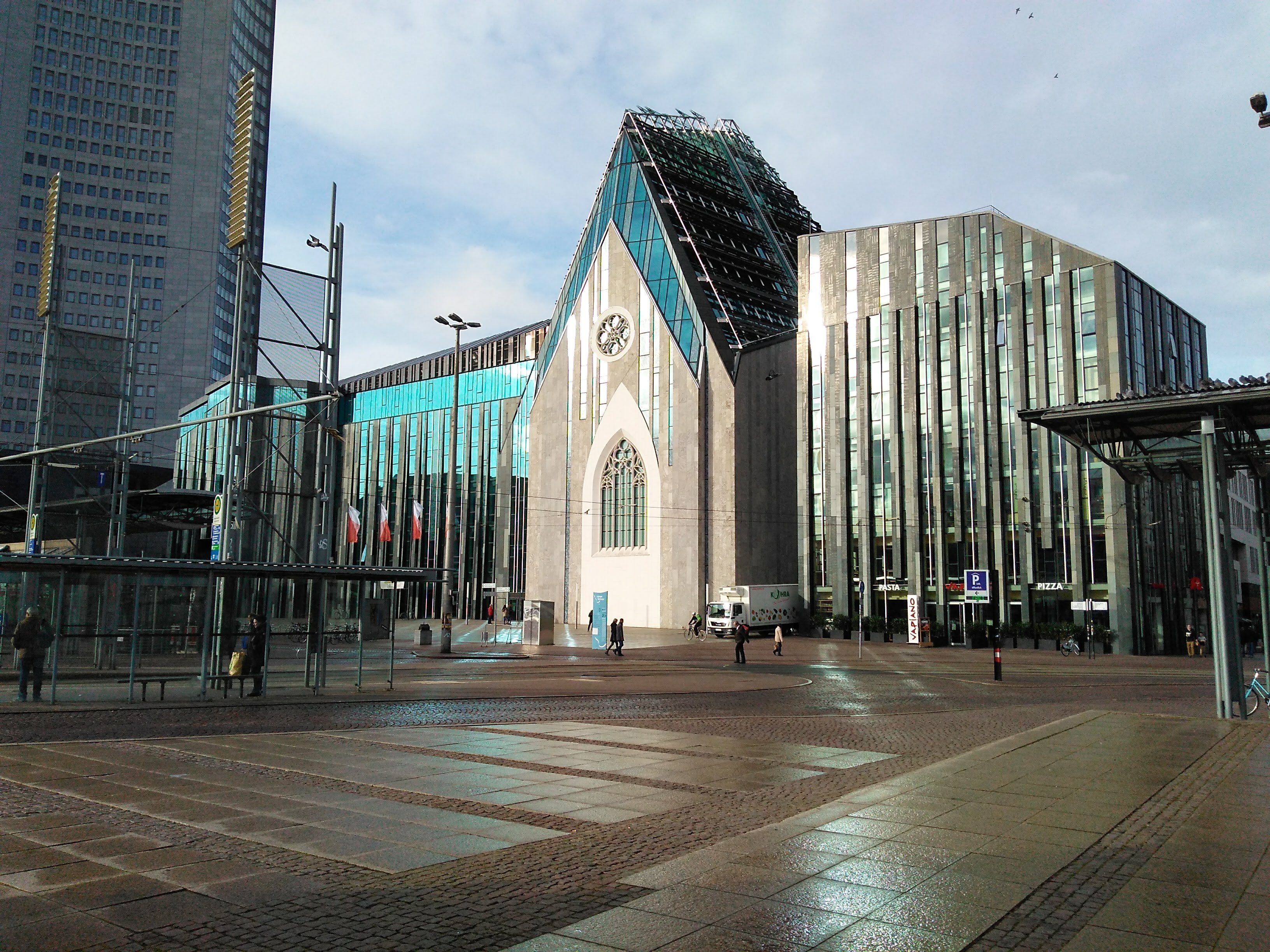
The church below has a very interesting history. On this site was a large church originally constructed in the 13th century. It was severely damaged by bombing in WWII. The people of Leipzig desperately wanted to restore the church, but the Soviets decided to demolish it in 1968. After reunification, the town decided to build a new church.
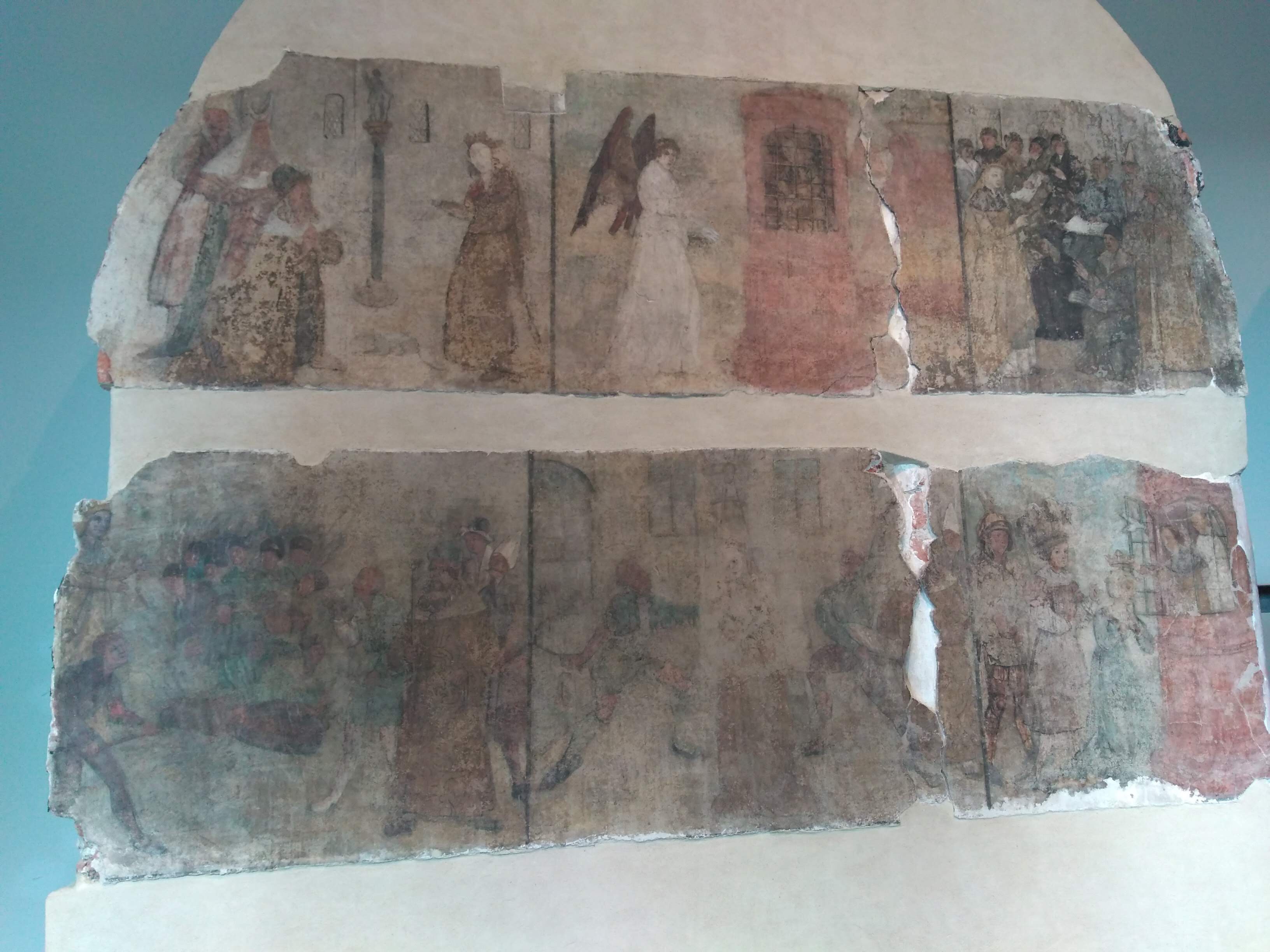
On display inside are some remnants of the old building that people removed before the demolition.
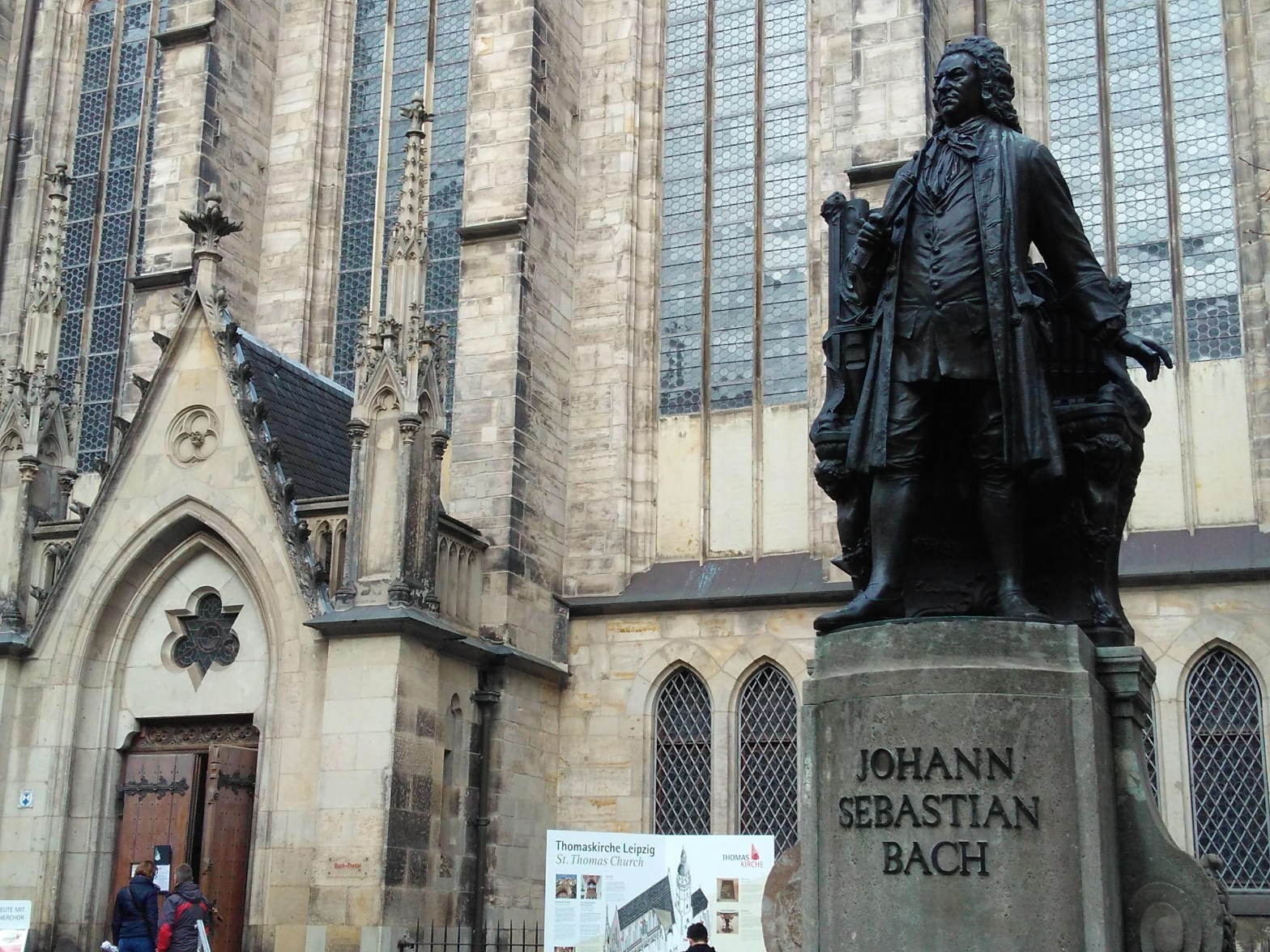
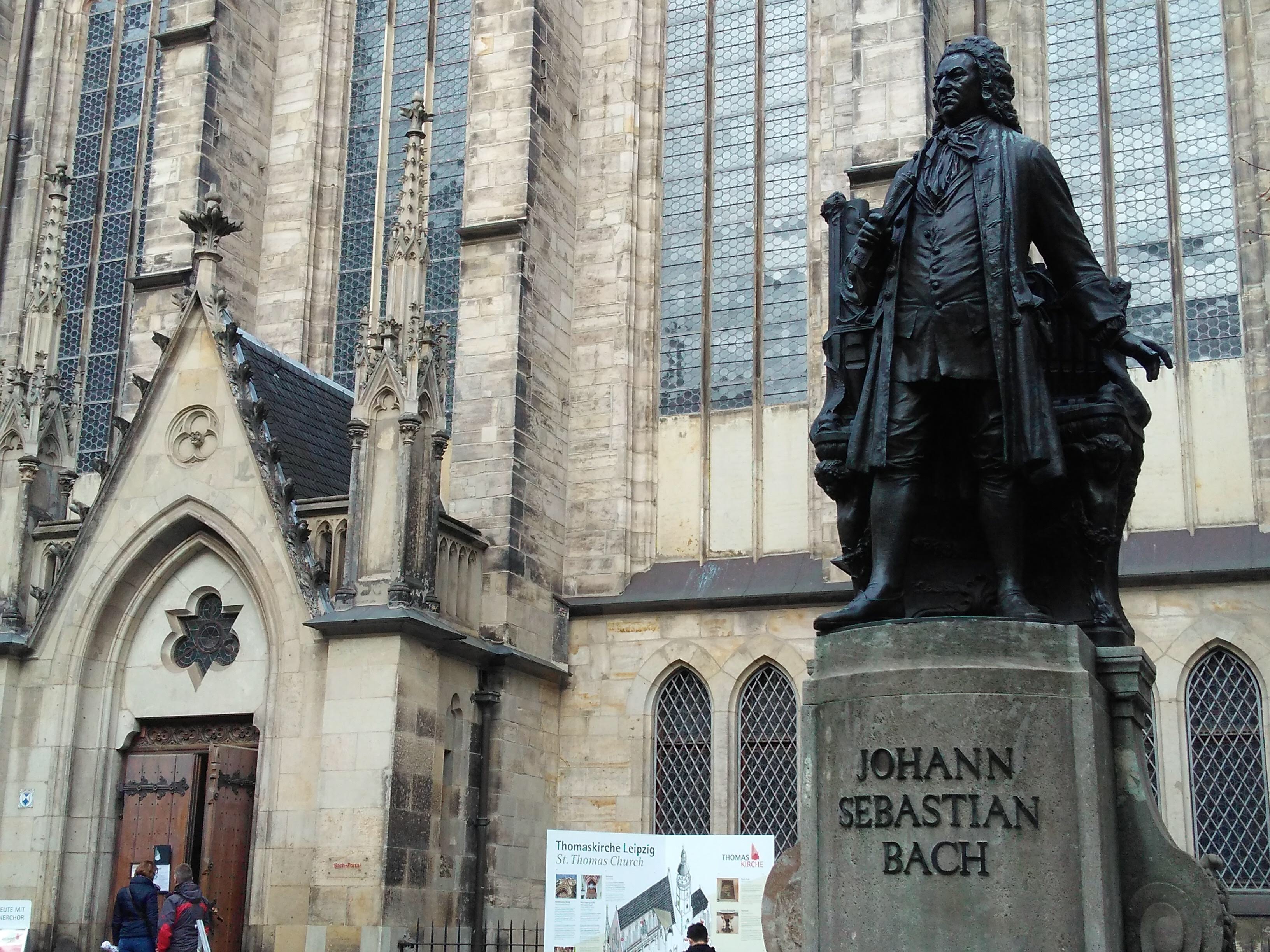
Leipzig claims several music “masters” as its own, the most famous of which is J.S. Bach who was organist and composer at the St. Thomas Church for over 25 years.
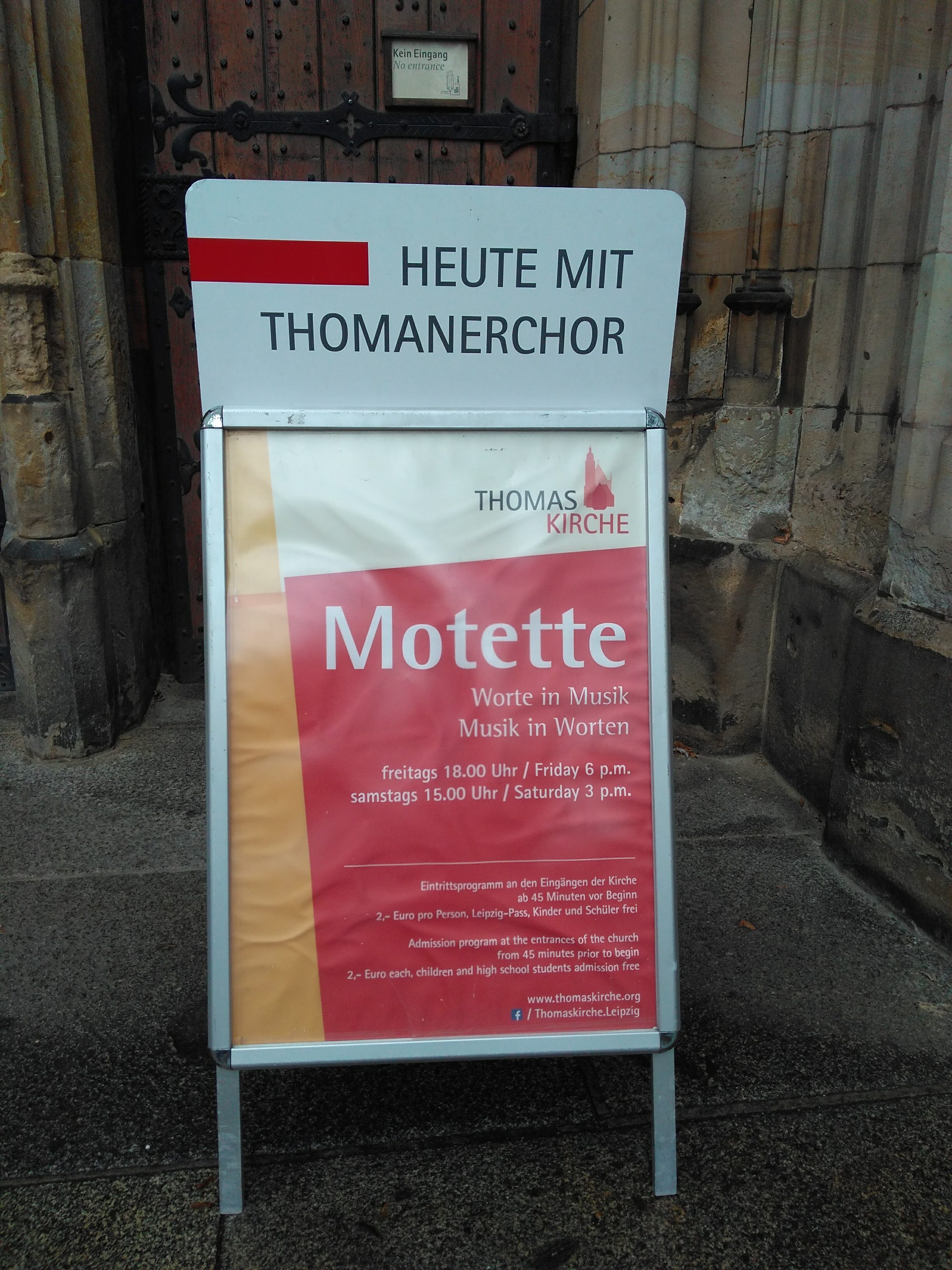
There are public concerts on Fridays and Saturdays, and it was Saturday! The €2.00 tickets are not sold in advance, so there was some standing-in-line. Oh my, was it worth it!!! Such a thrill.
The sign says: “Today with (the) Thomaner Choir” which is somewhat rare. A double thrill!
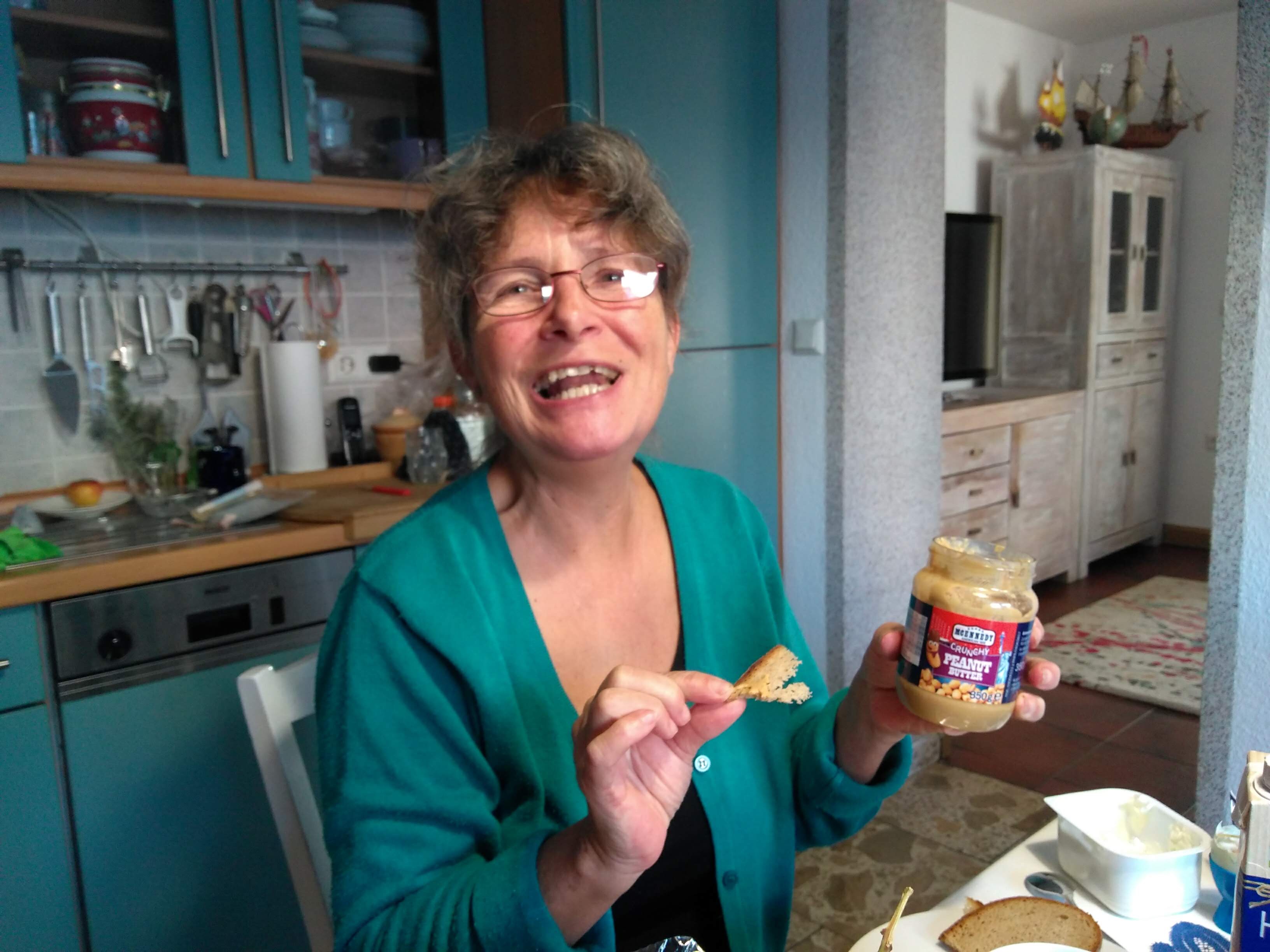
Trudi and Horst were gracious hosts for the three nights we stayed in Sandersdorf. Claudia faithfully served as translator for us. I enjoyed the German food that we had with them, and Trudi delighted in the American treat that I brought along to share.
Peanut butter. I actually purchased this in Germany, but it took quite a search.
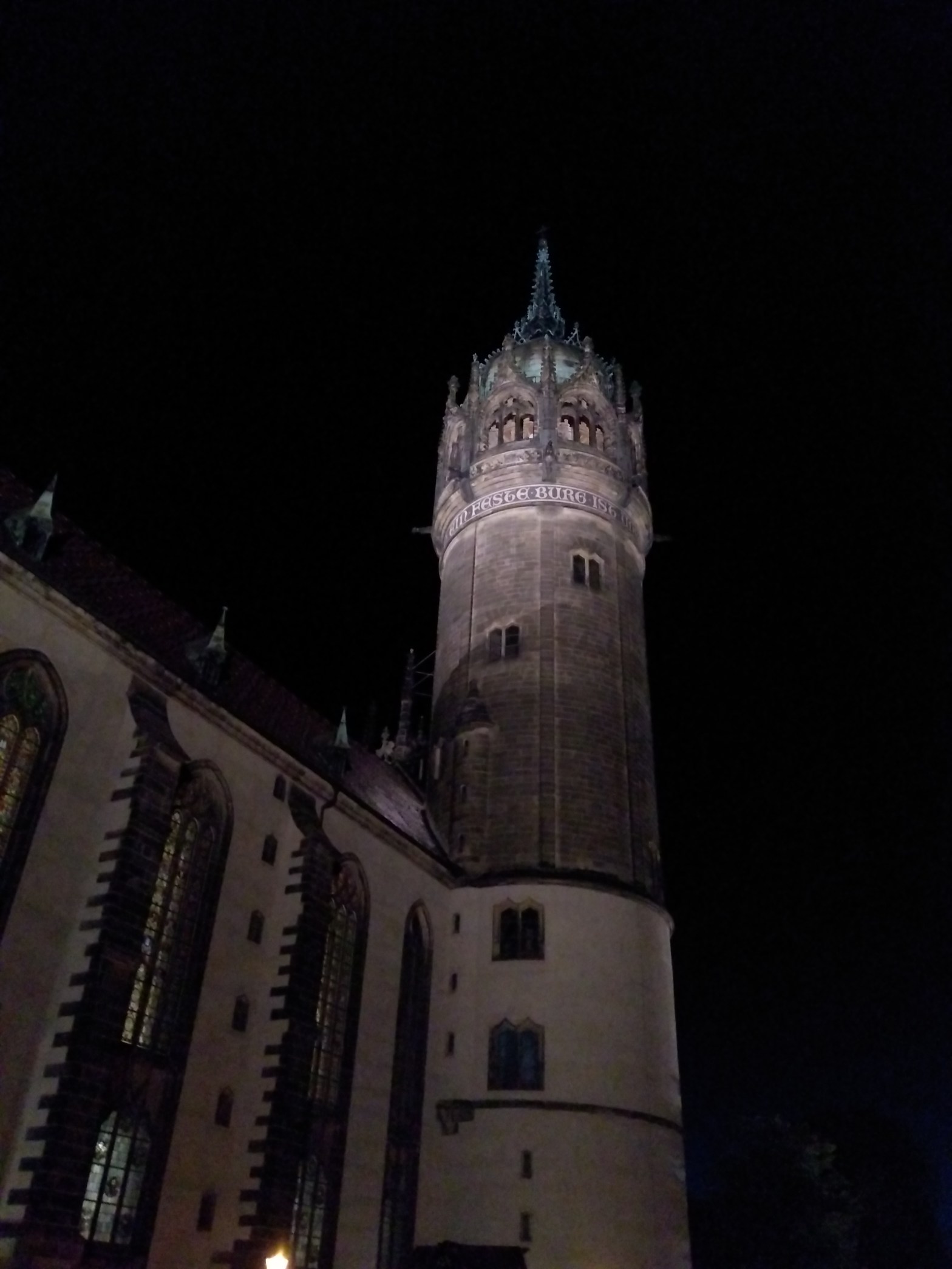
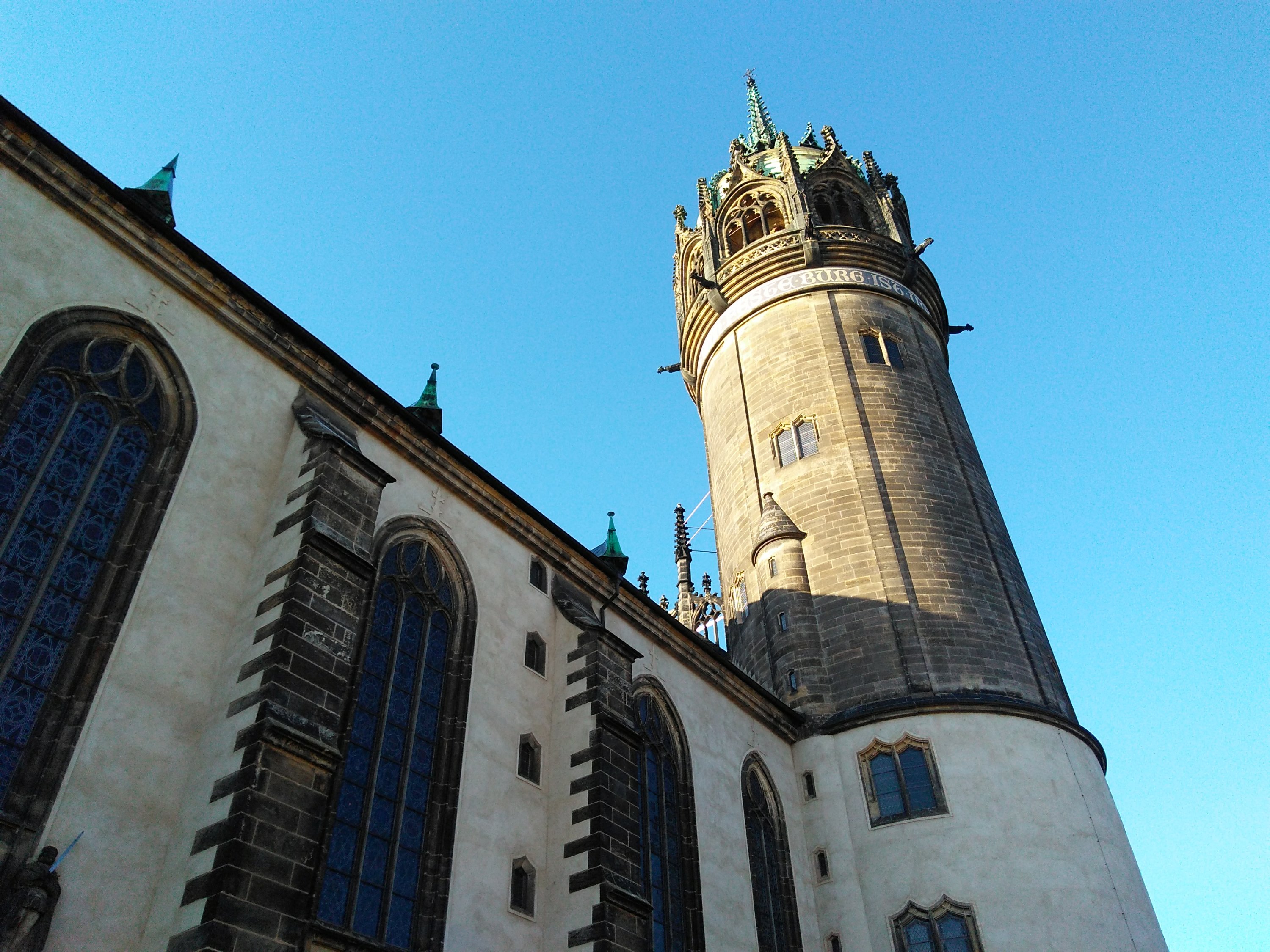
I have had many thrilling experiences in the past few weeks, but one of the absolute high points of this trip was worshiping in the Schlosskirche (Castle Church) in Wittenberg on Reformation Day, October 31.
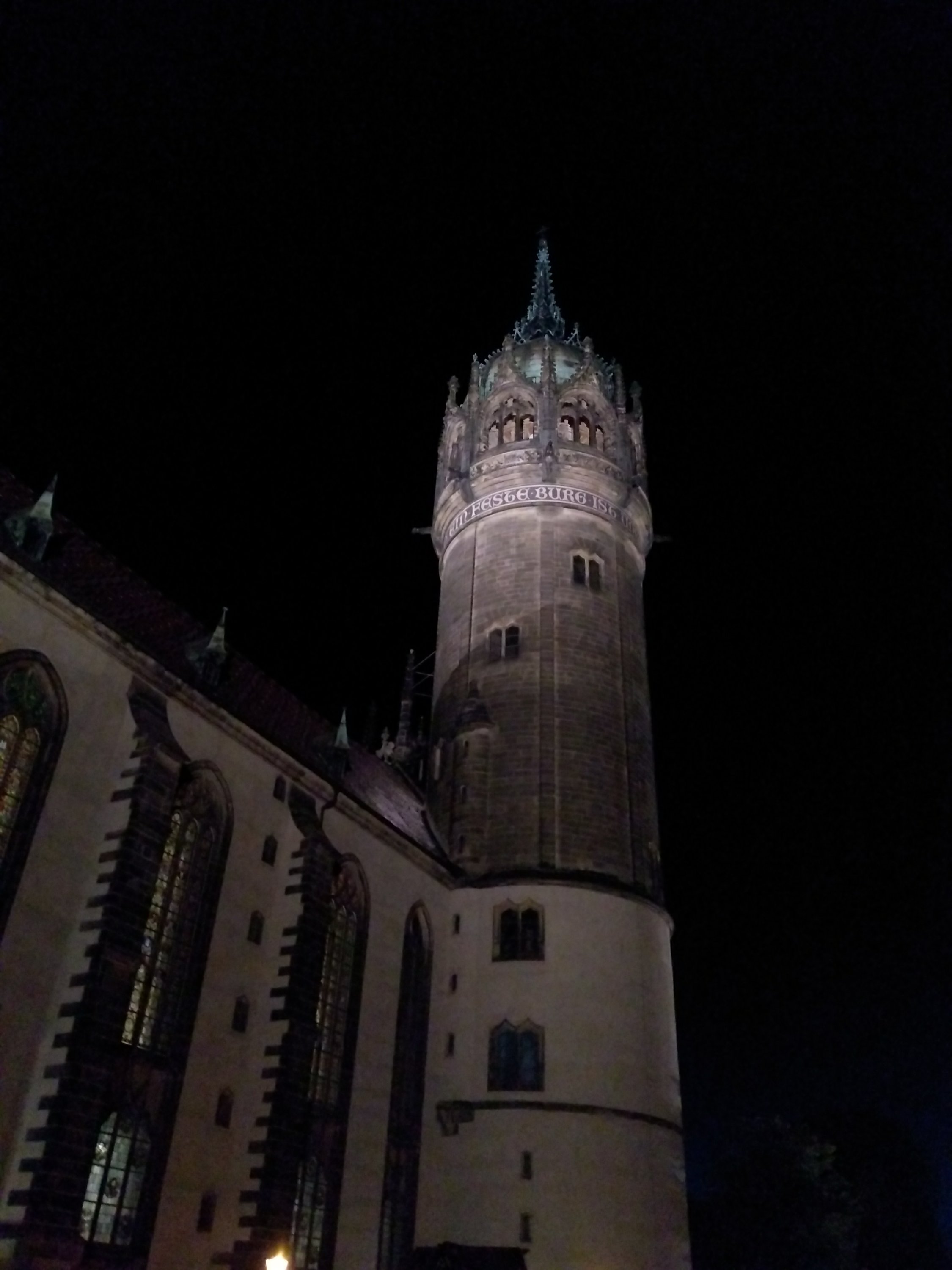
The church tower at night
Claudia and I arrived to town around 5 pm the day before, and had ample time to check into our quaint little room, just steps away from the church, and then walk around town as people were setting up their booths and tables for the next day.
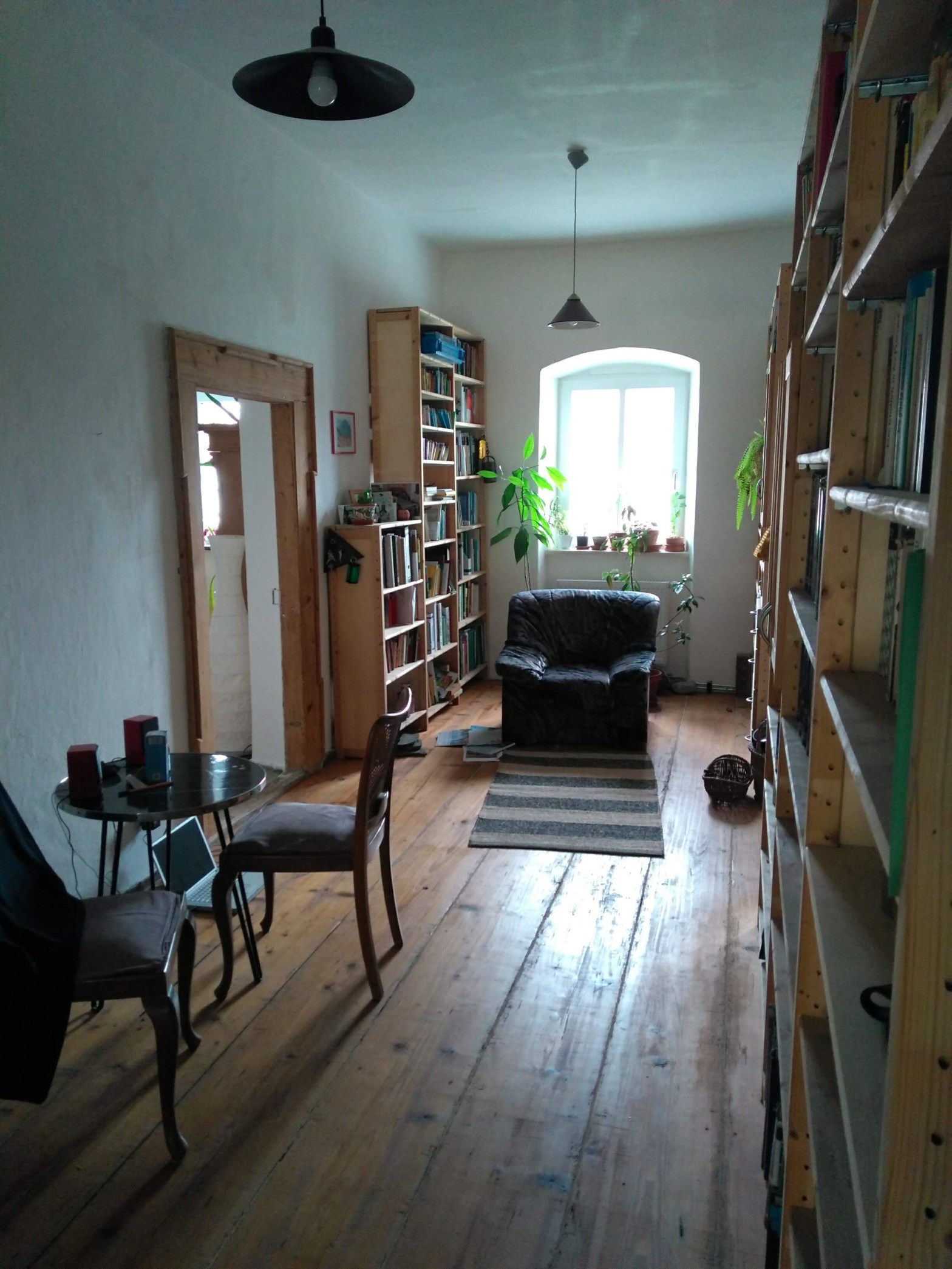
The English-language service was at 8:00 AM. so we arranged for an early breakfast with the delightful host of our courtyard B&B.
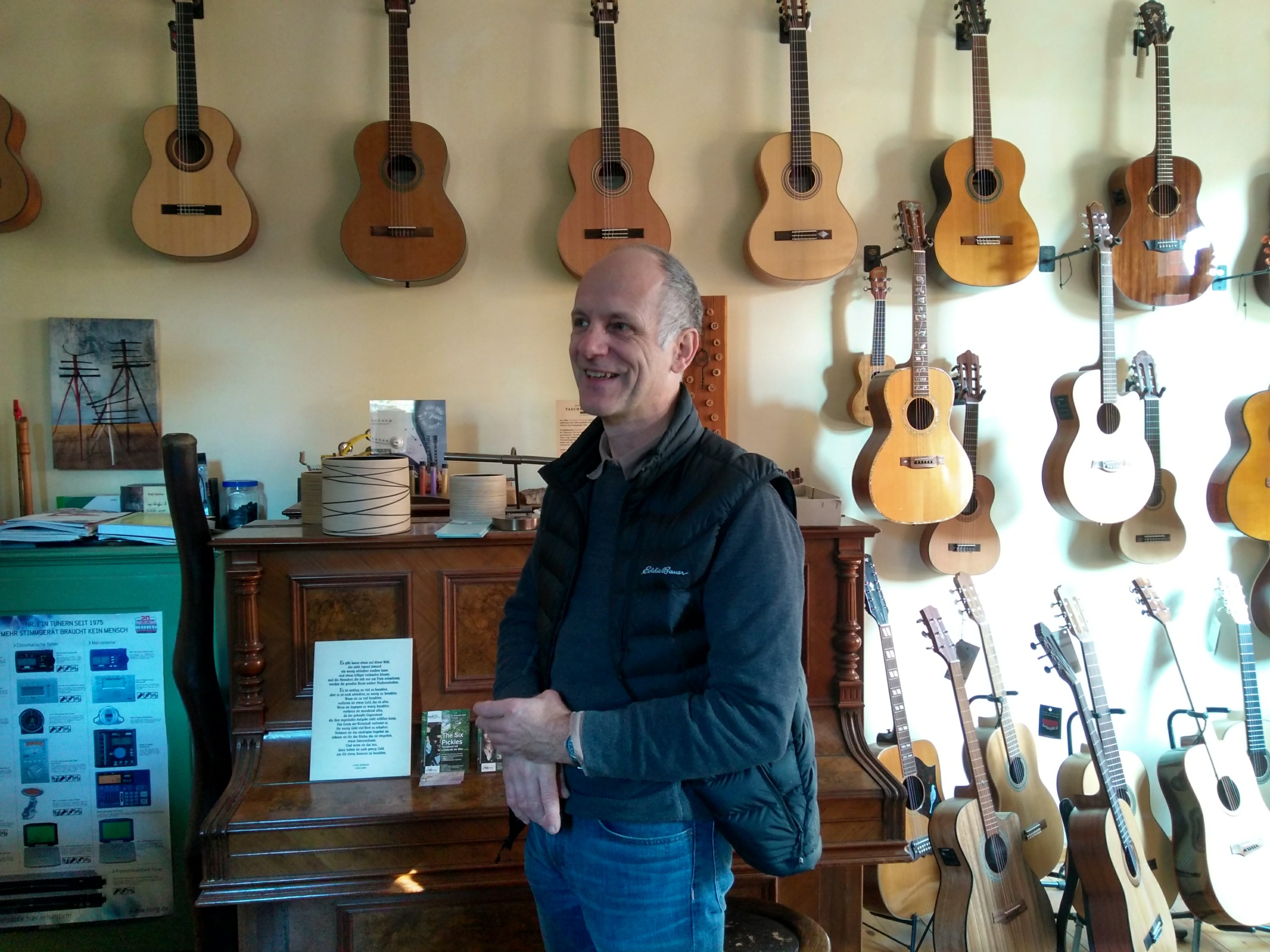
Jeorg is a historical instrument craftsperson, and he showed us around his studio.
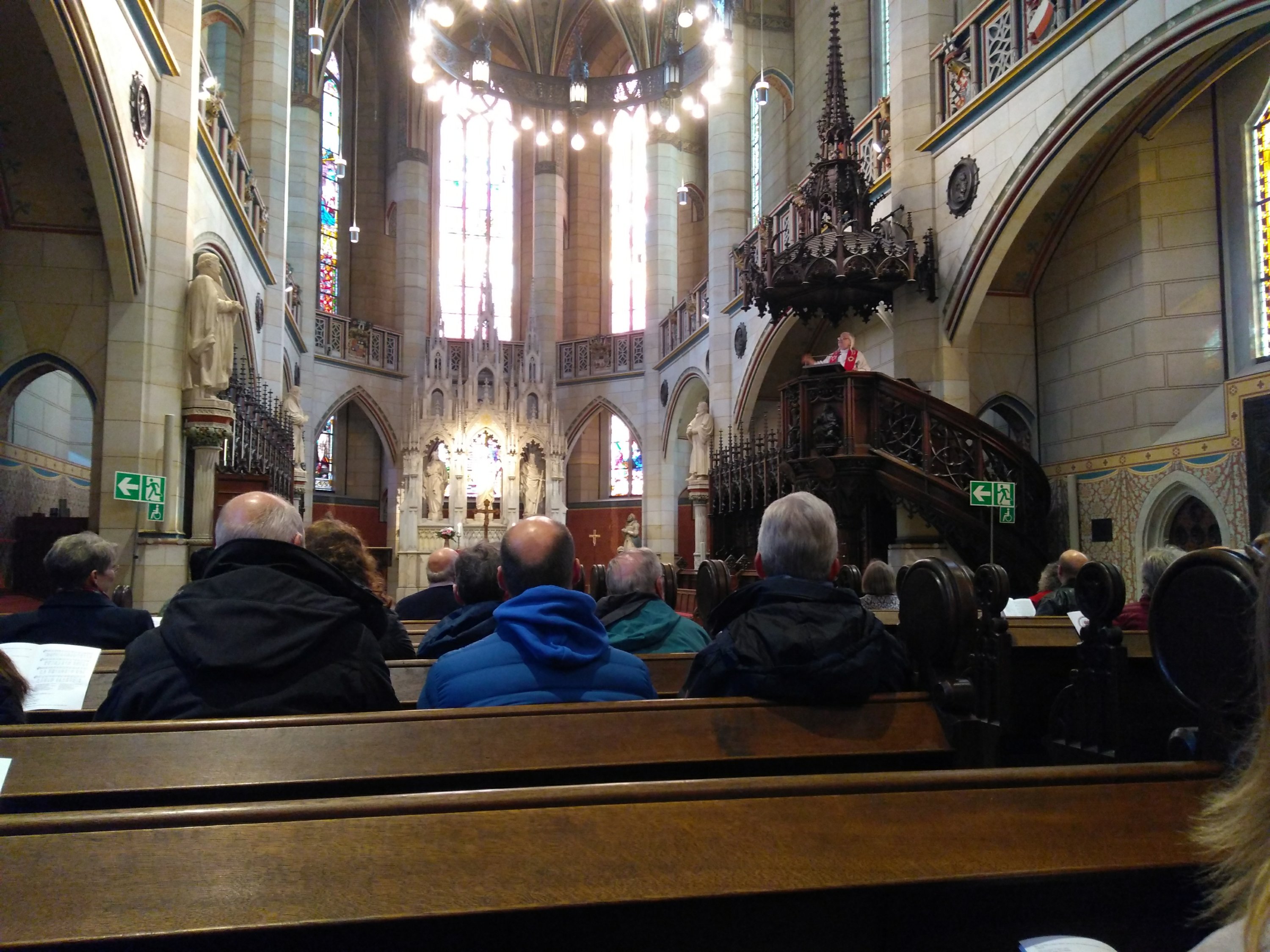
Then, off to church. The service was beautiful, with those great Reformation lectionary texts, and a relevant message about necessary “reforming” in any time or age. And familiar hymn tunes, led by the pipe organist in grand fashion.
I discreetly snapped a photo during the sermon. Quite a platform to preach from…
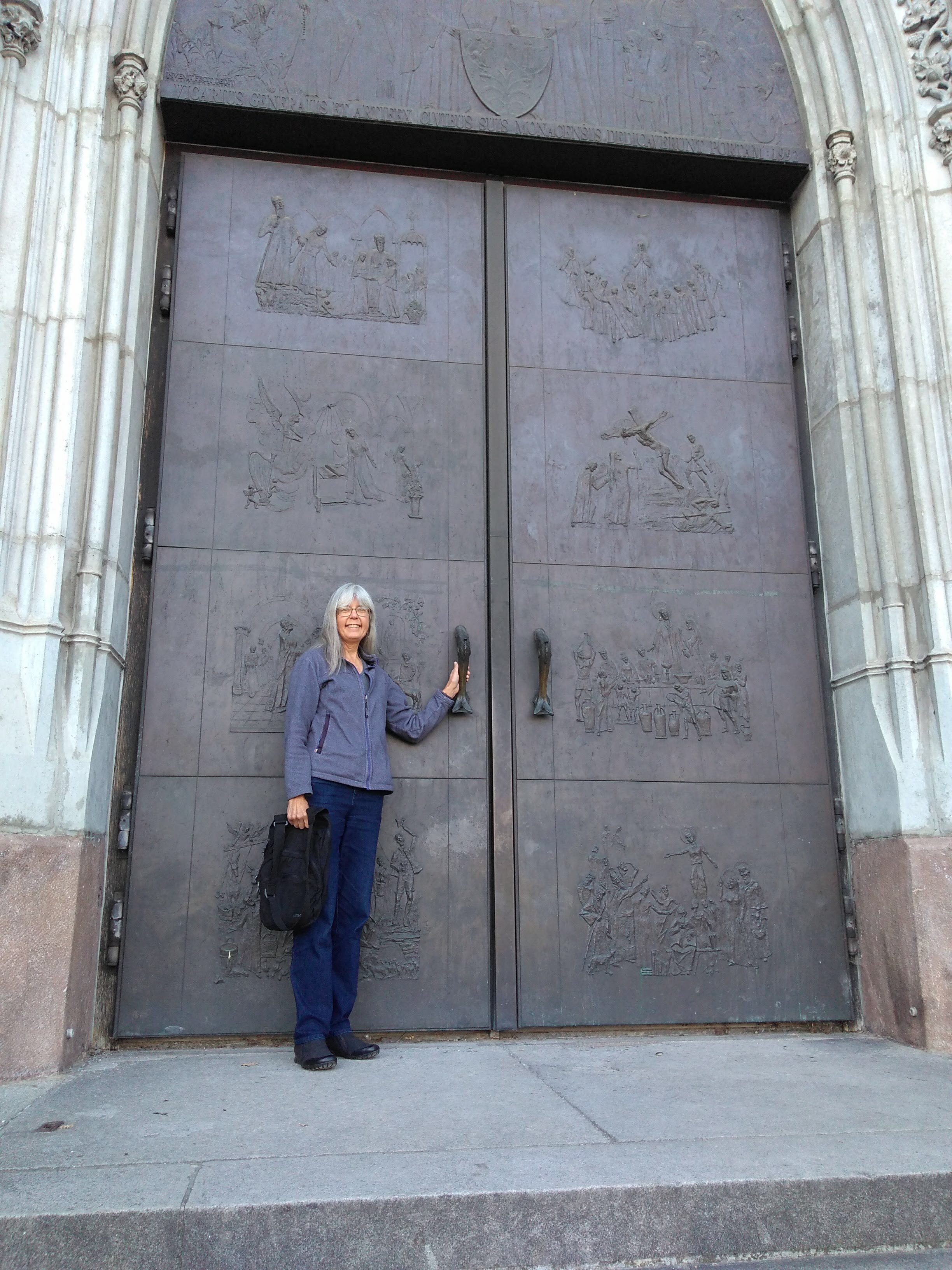
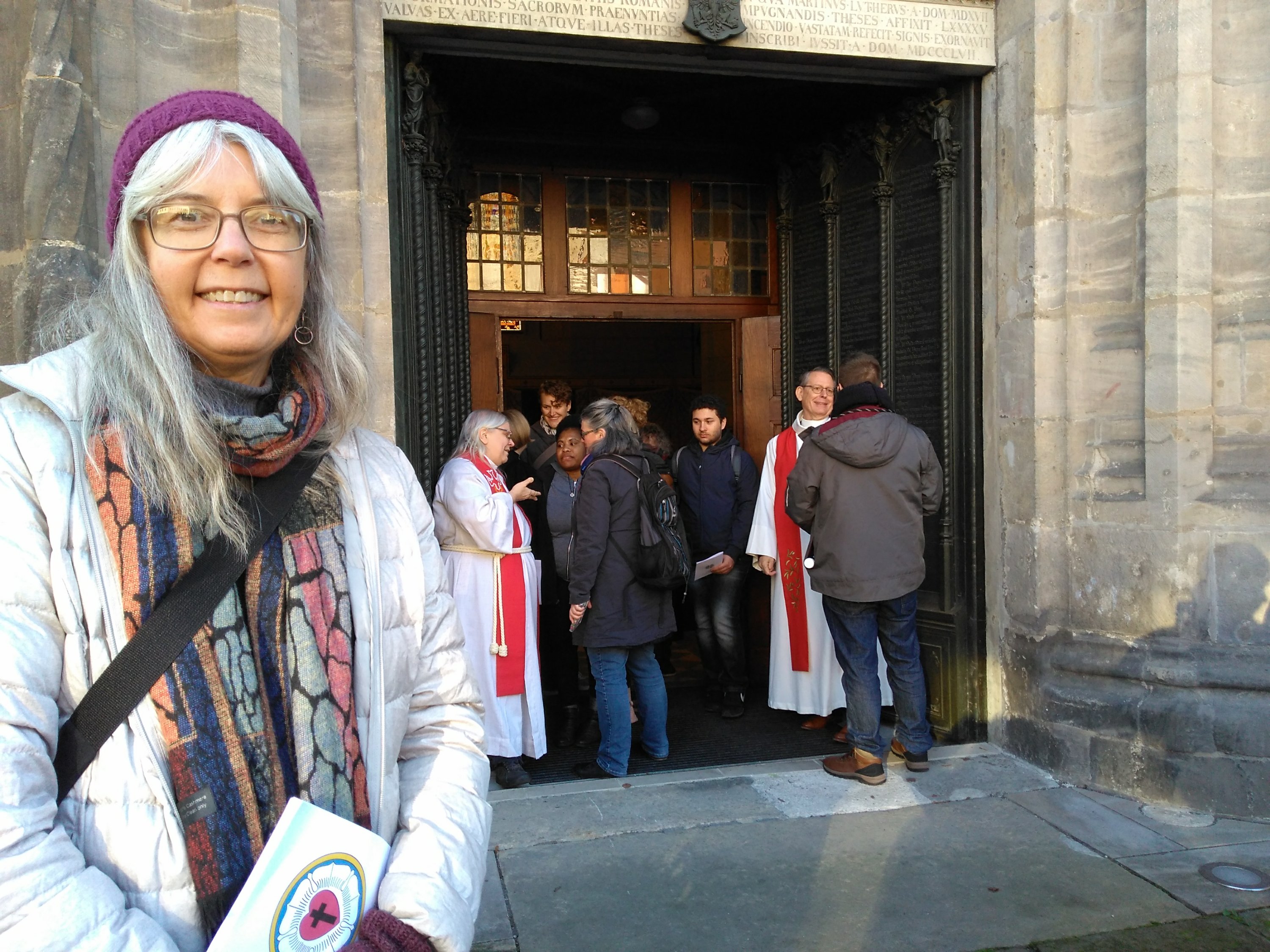
To exit, we actually walked through the doors on which Martin Luther most likely nailed those 95 theses on this day in 1517. (There is no question about the theses themselves, or the author, but the accounting of the actual “nailing event” wasn’t told until many years after 1517.)
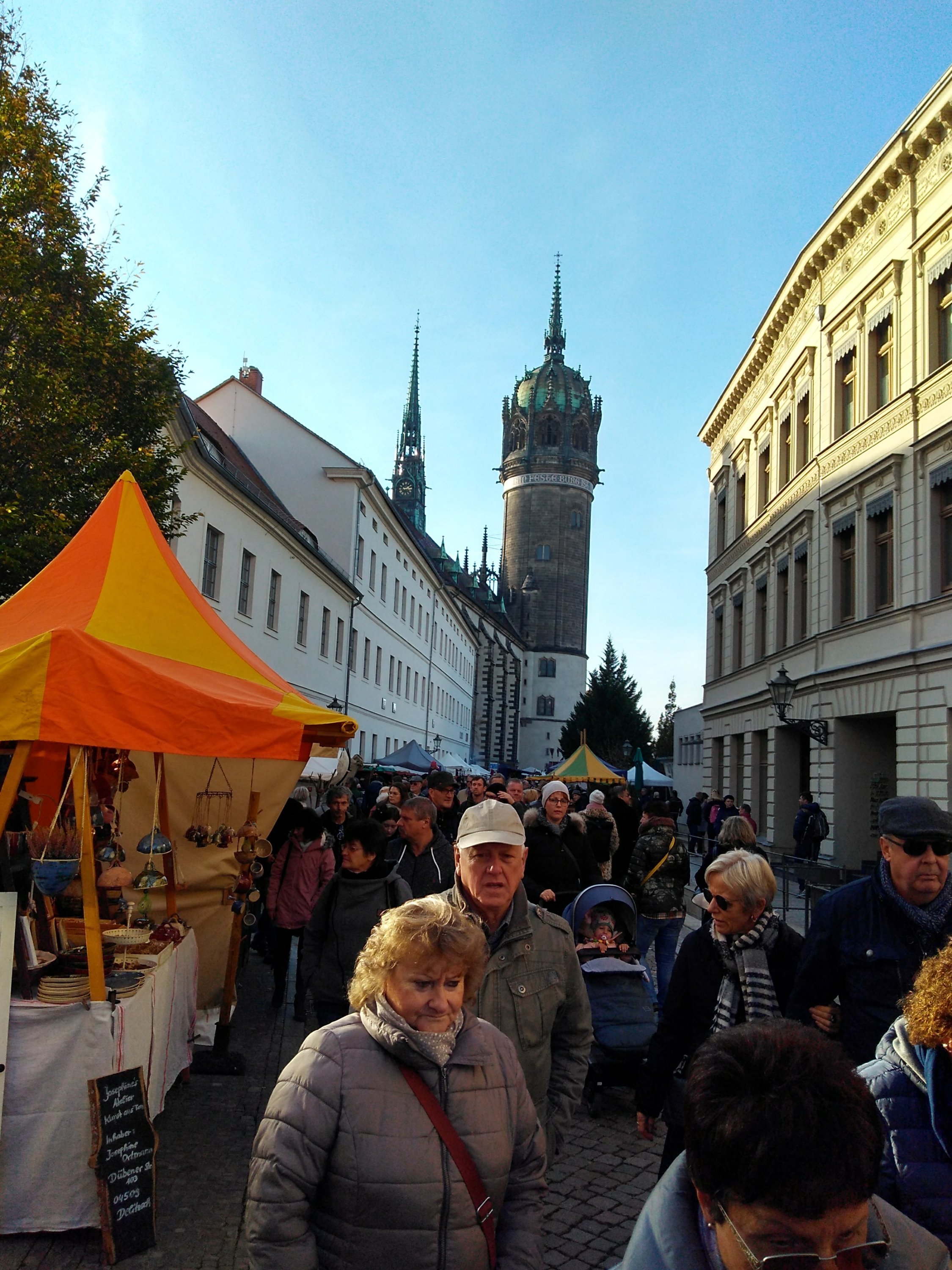
Reformation Day is a holiday in this part of Germany and the people really came out for this city-wide festival.
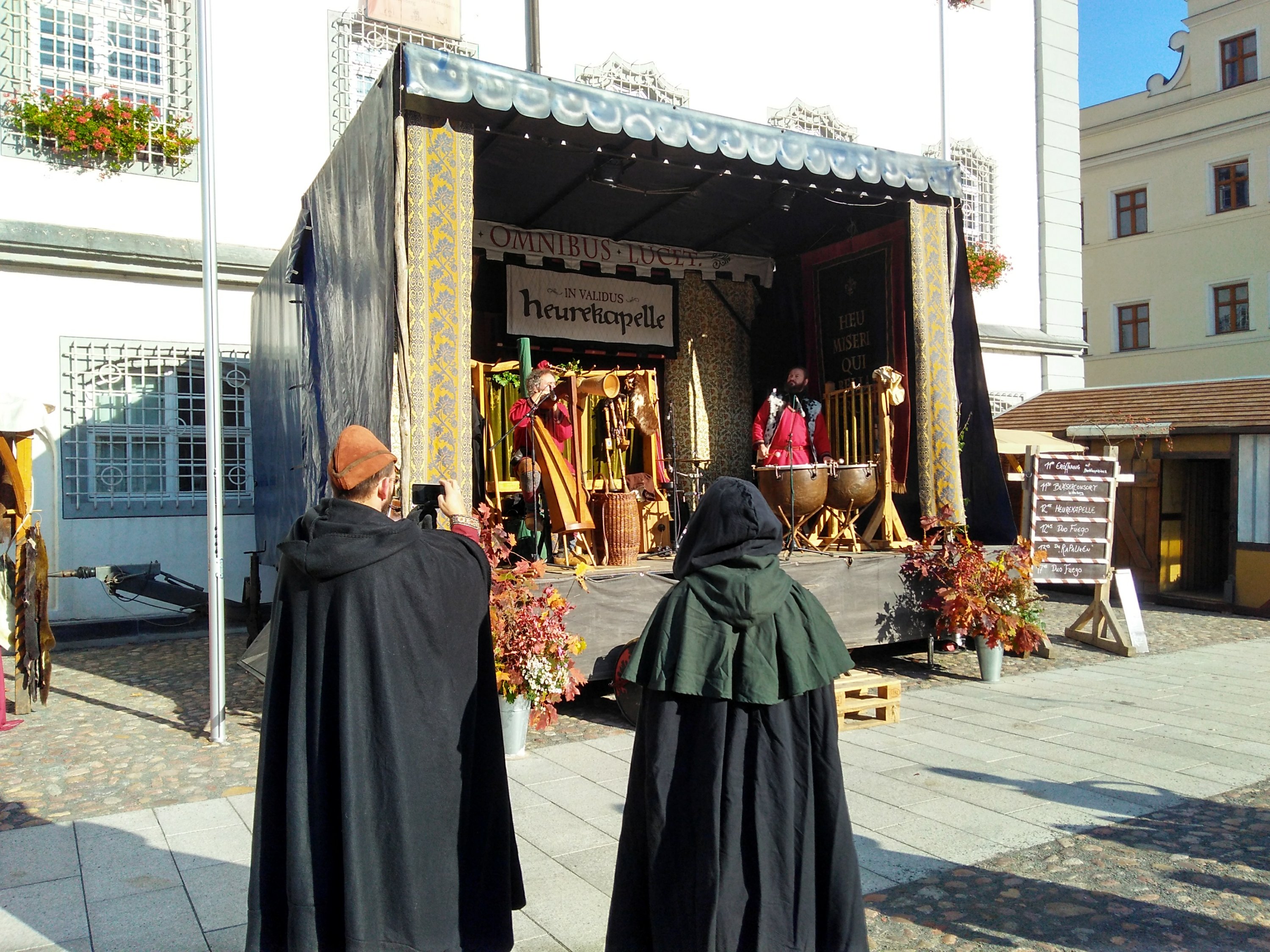
Some in period costumes
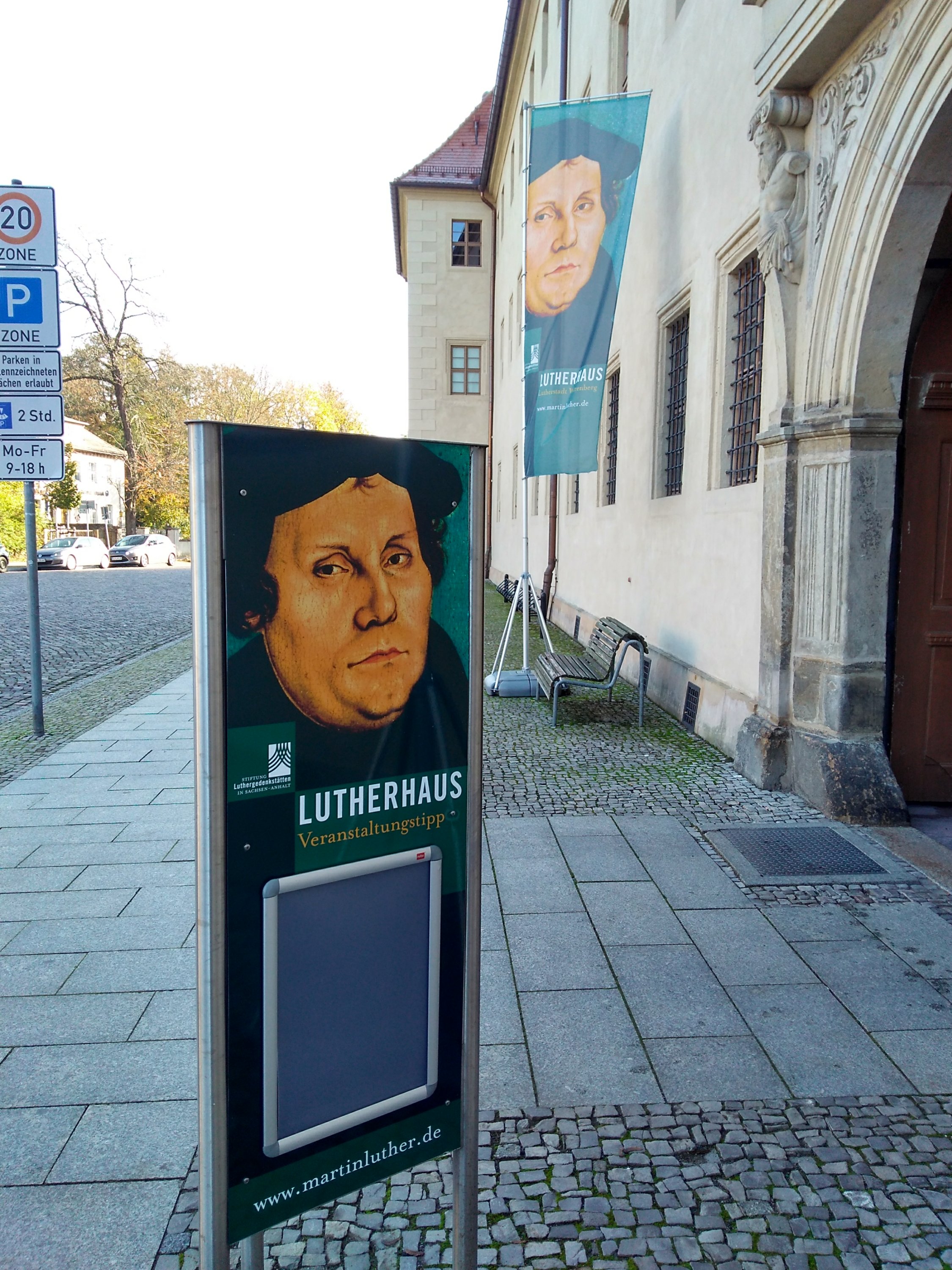
We visited Lutherhaus, where Luther and family lived during his years of teaching at the University here. It is now a museum full of interesting things.
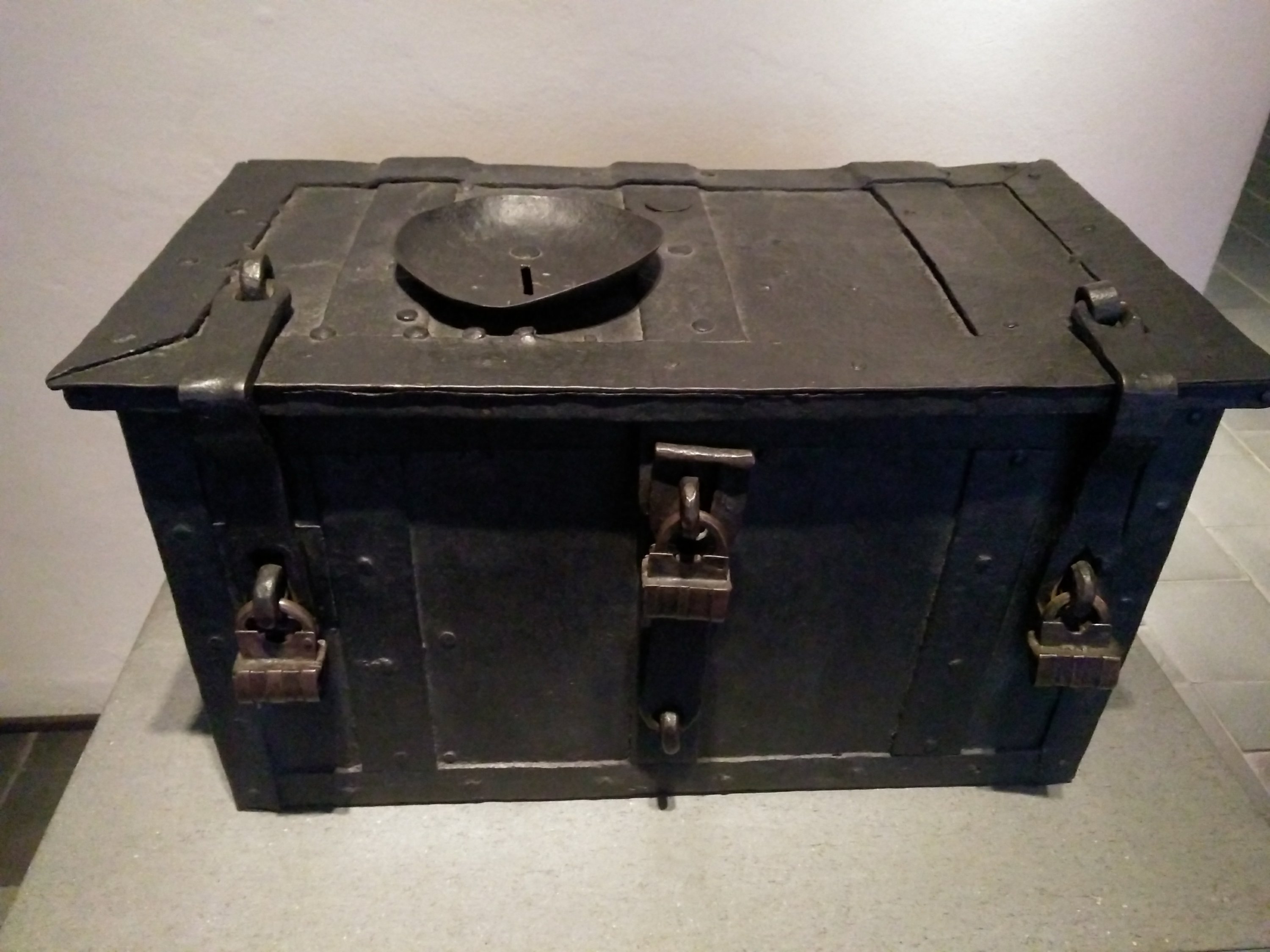
Like this indulgences box. The real thing!
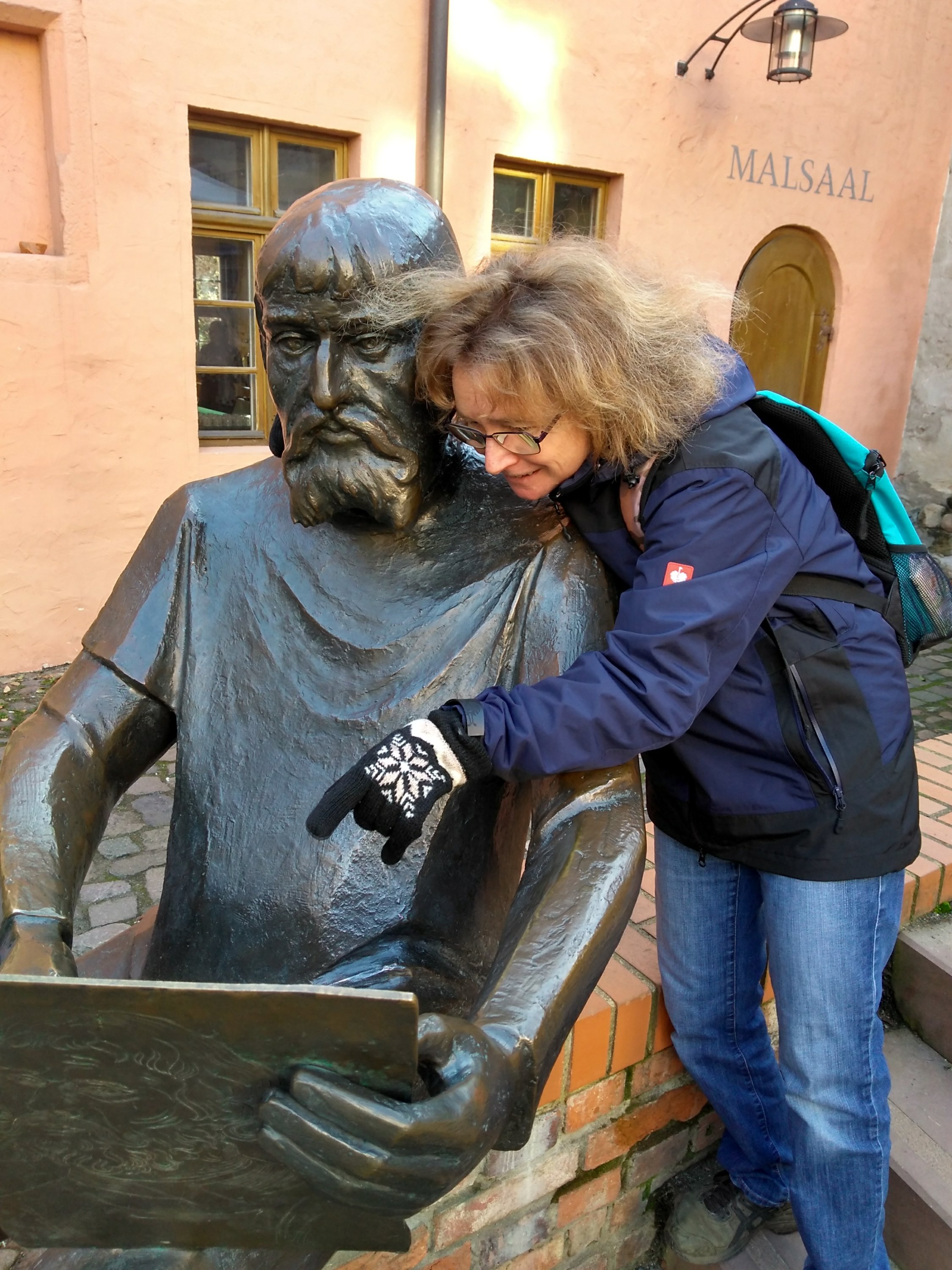
We also walked around the University courtyard and the studio site of Lucas Cranach (Luther’s artist friend who painted many pictures of Martin and Katherina and many others, and also ran a famous art school).
Claudia looking over Cranach’s shoulder
We decided to see the large Yadegar Asisi panorama of Wittenberg life during the time of Luther. It was rolled out for the 500th anniversary celebrations here and is still a popular tourist attraction. (Photos were not allowed, sorry.)
If you are inclined to visit Wittenberg, I highly suggest you try to come on Reformation Day. I guarantee you will be glad you did.
Nothing like a little respiratory virus to make a person slow down a bit. Yes, it happened, but I was with my friends who encouraged me to just take it easy, rest a lot, and try some of their herbal remedies. Helmut, also, was coughing and not feeling great.
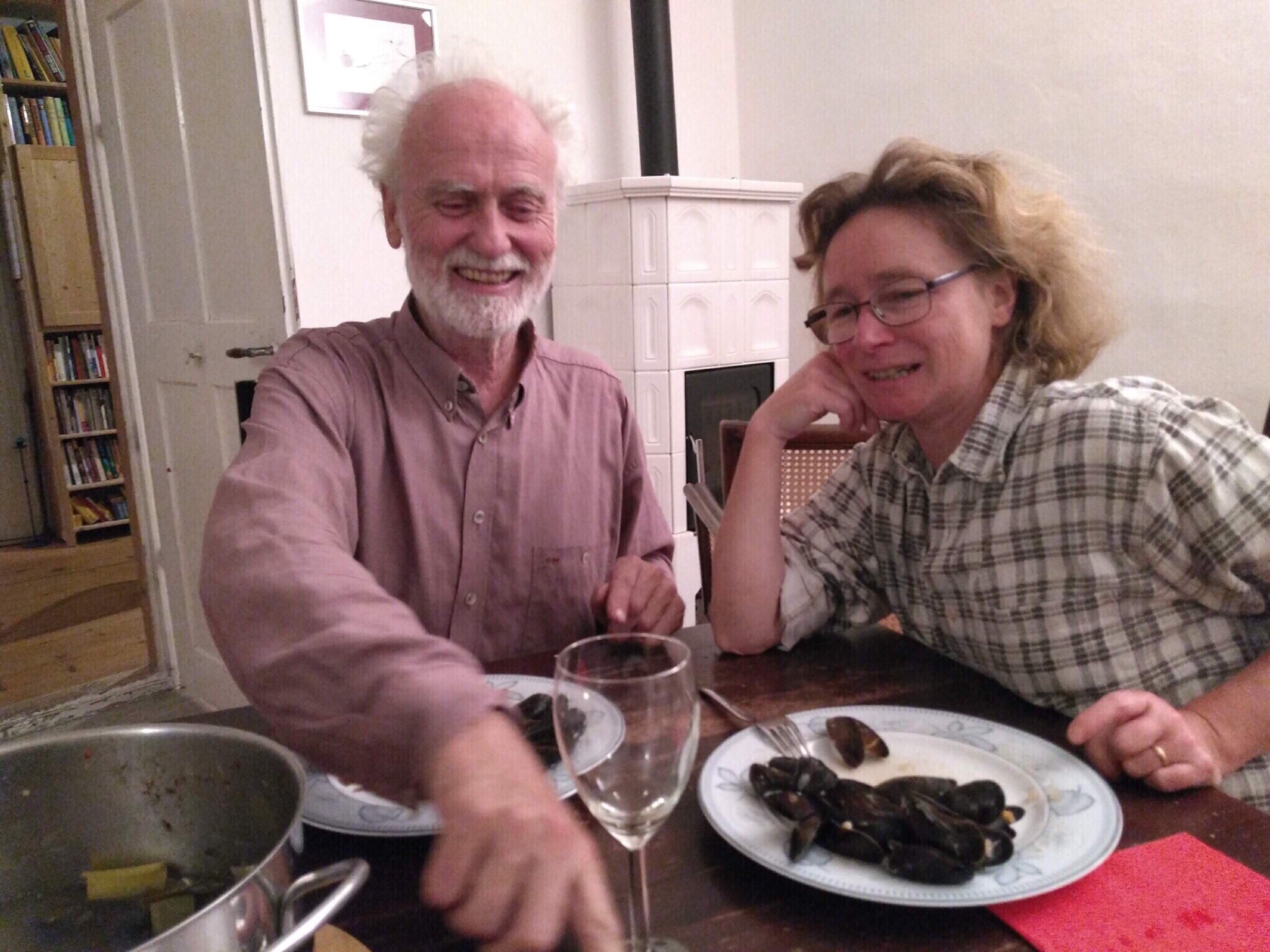
We spent some of these days back in Aicha. Thankfully, my appetite was not affected so I could enjoy the mussels we had one night, and the fabulous fondue another.
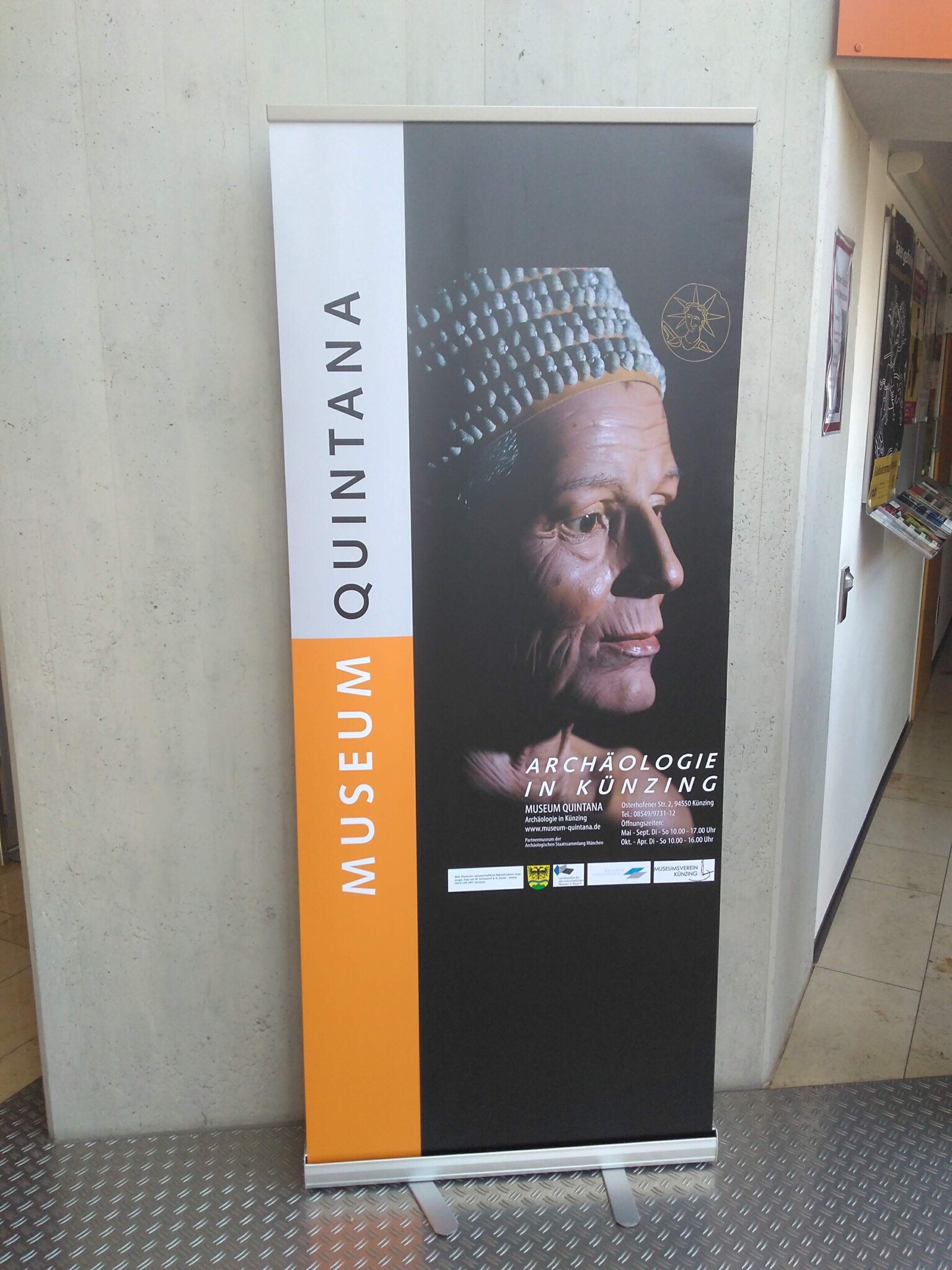
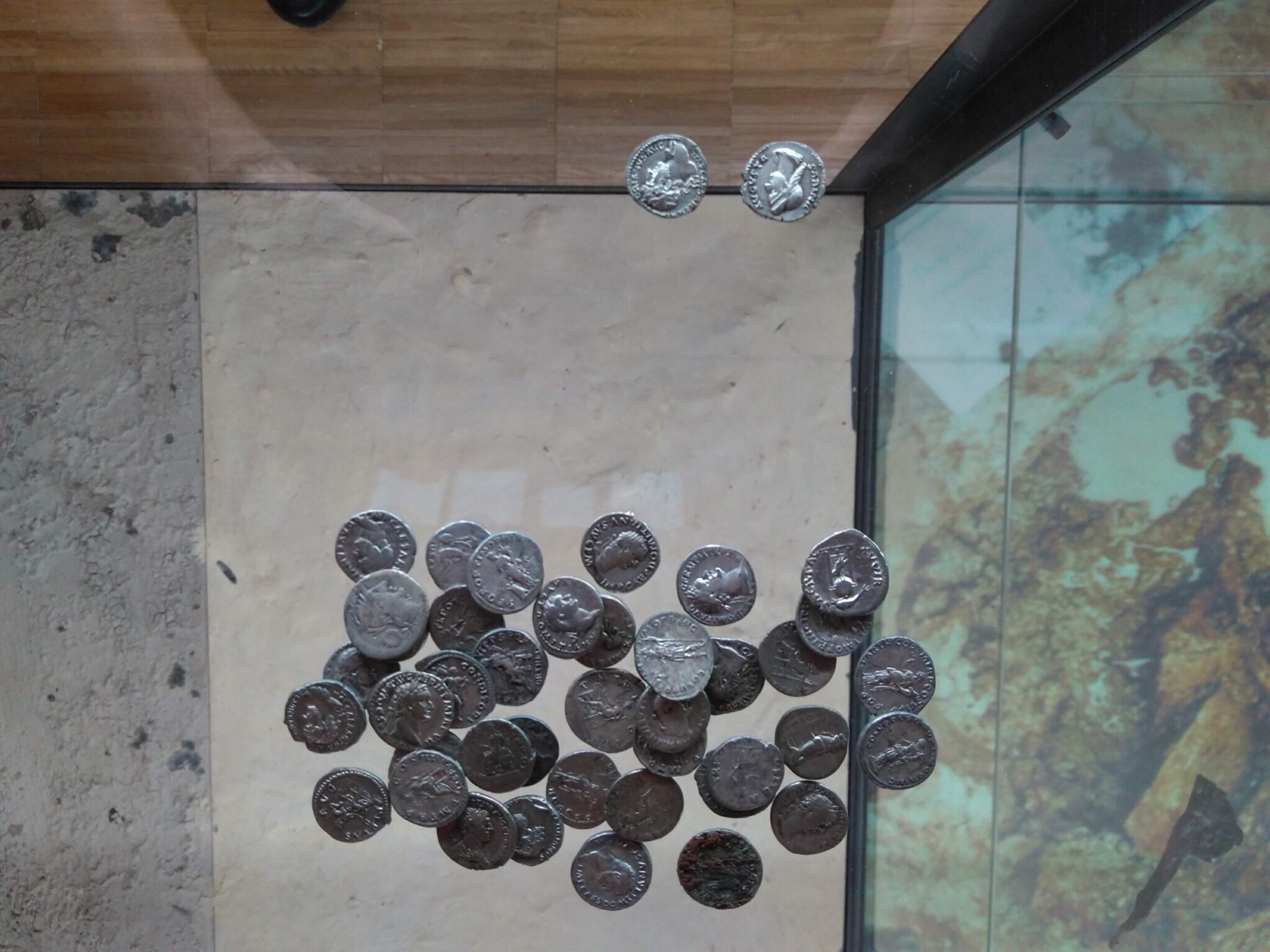
Claudia and I went to a museum in a nearby town where there has been some recent and not-so-recent archeological digs. The antiquity all around continues to amaze me.
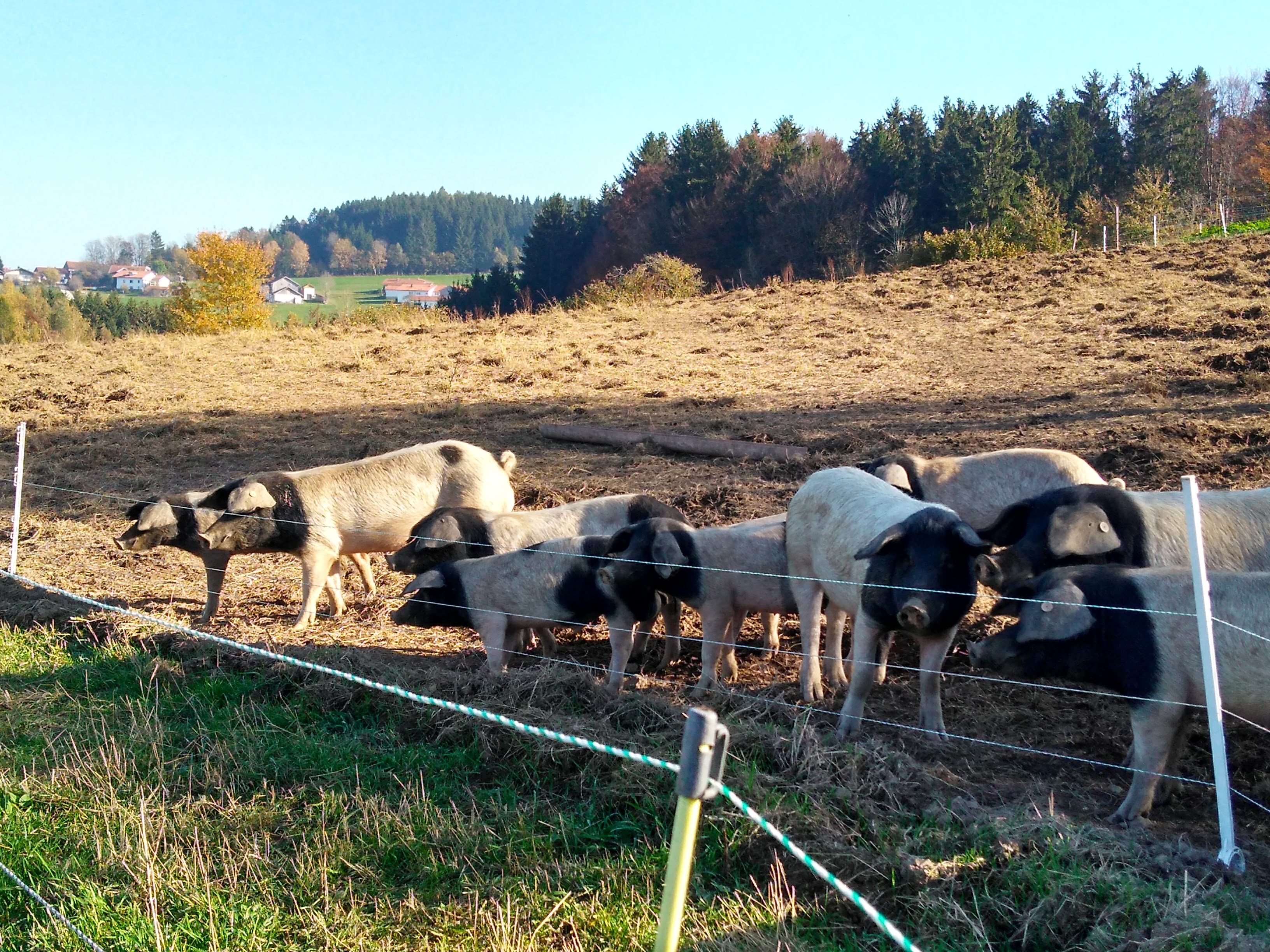
One beautiful, fall day we drove around the Bavarian countryside and found a small organic pig farm where they chatted with the farmer for awhile.
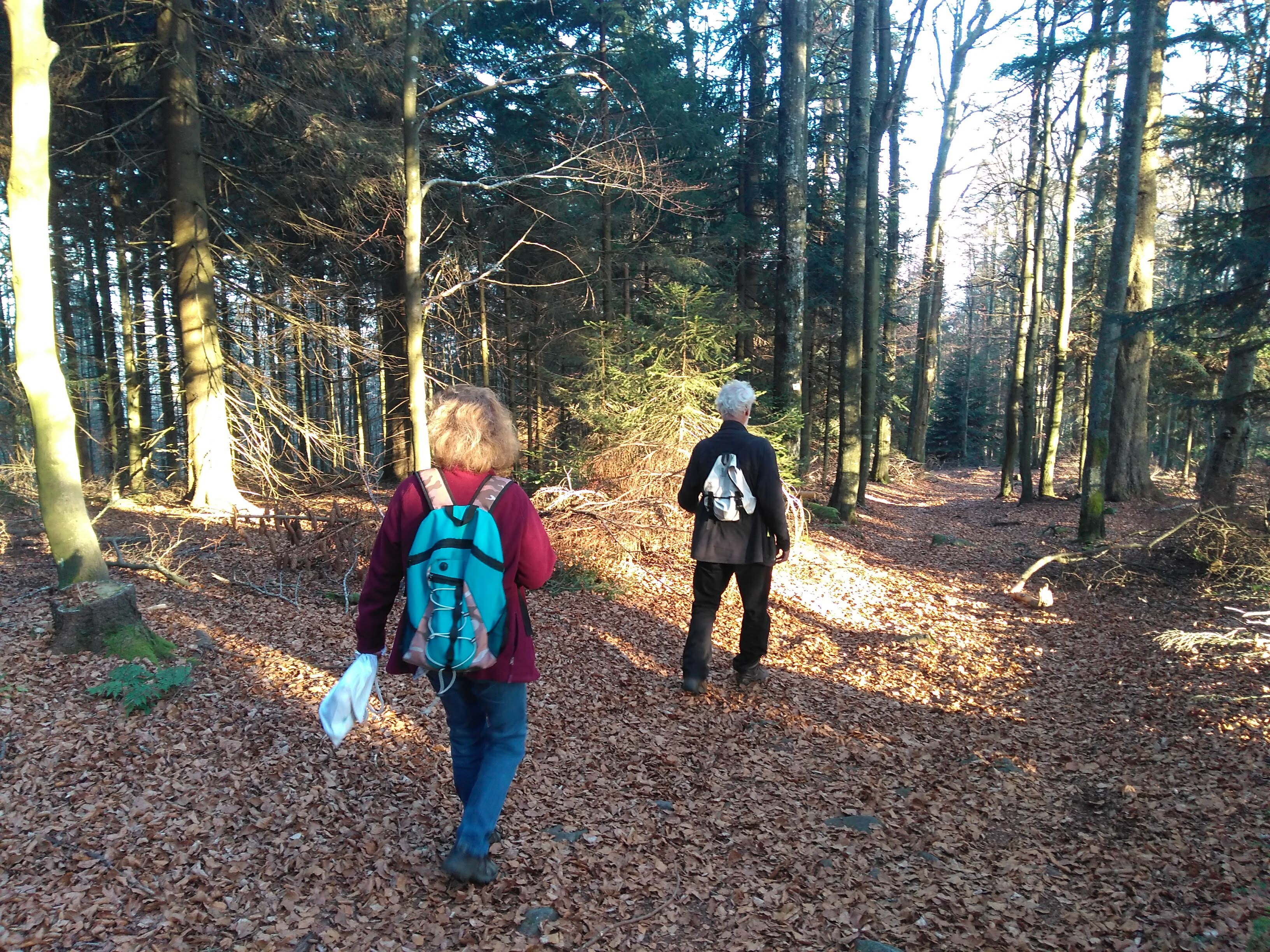
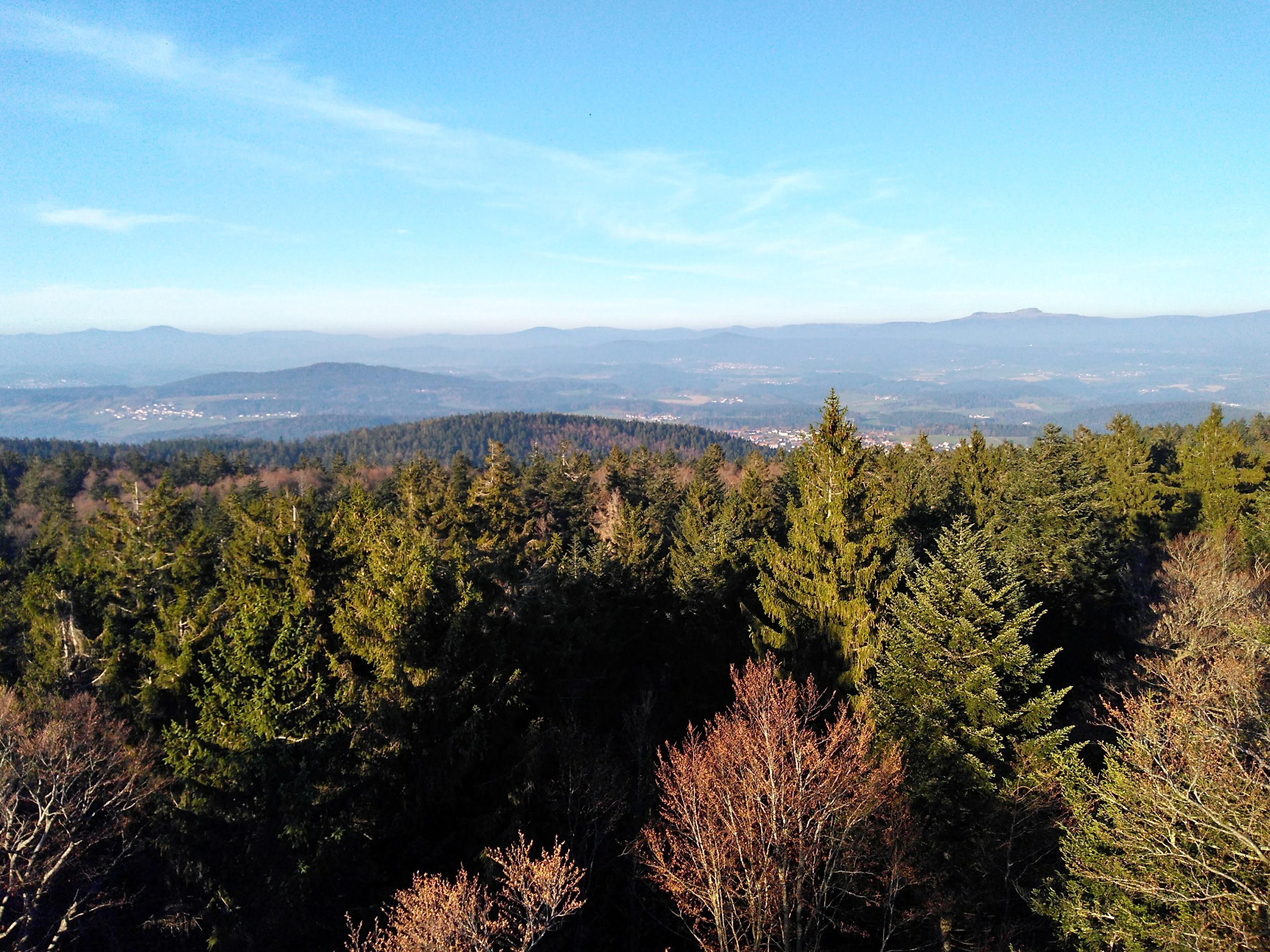
Then we went for a walk in the forest, to a spot with a lovely view.
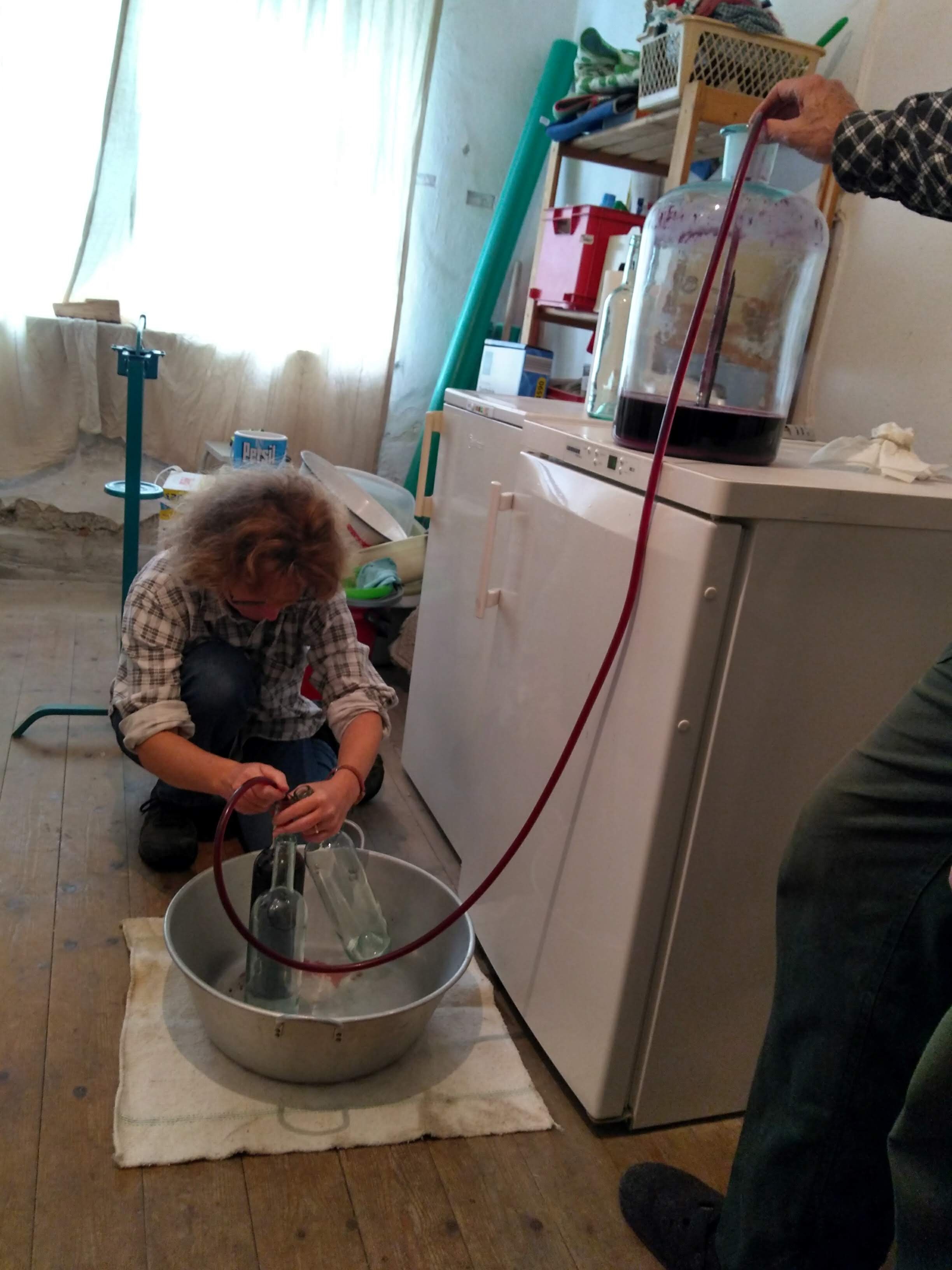
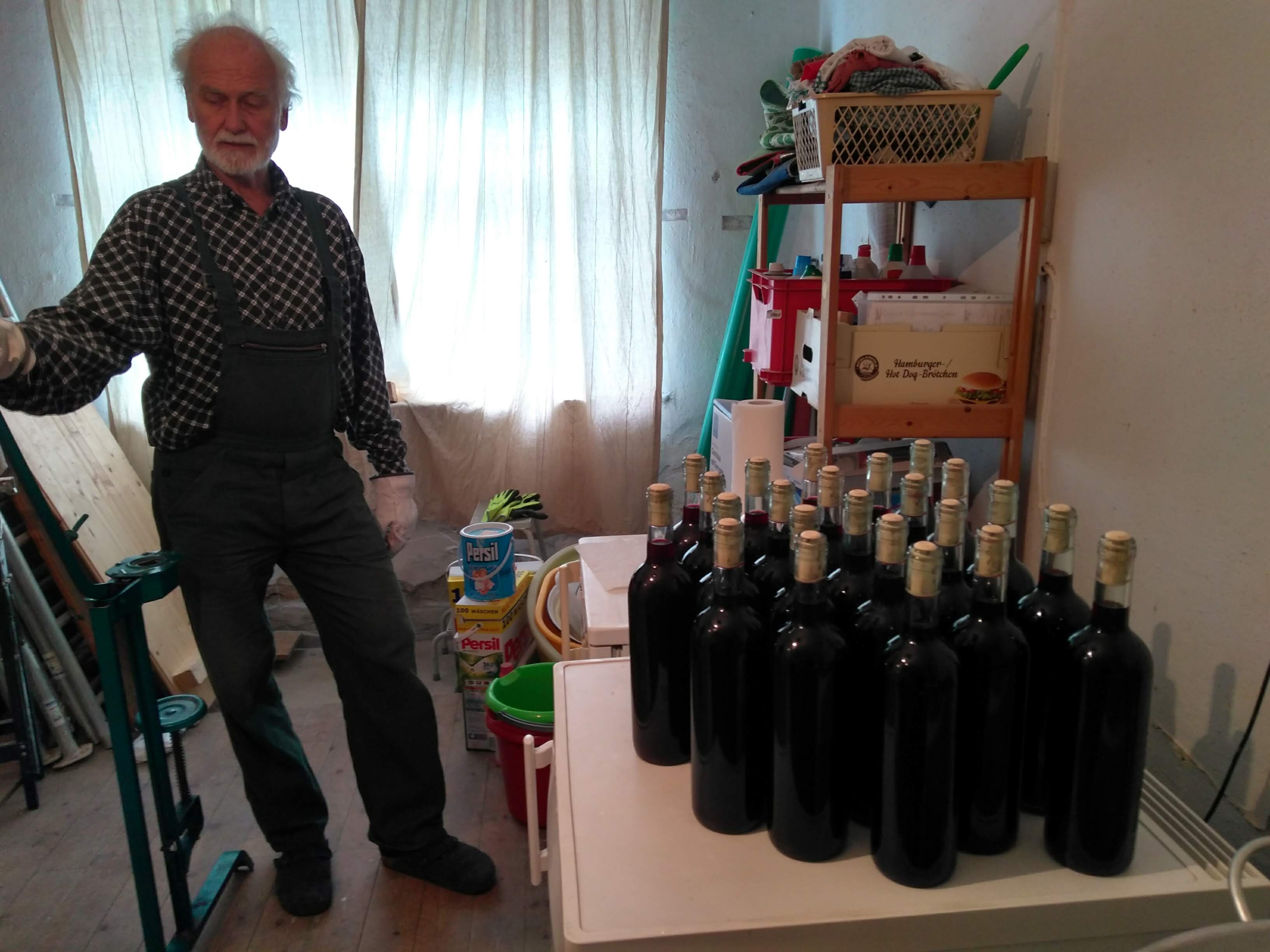
Of course there was wine to be bottled before we said goodbye to village life and headed to Munich.
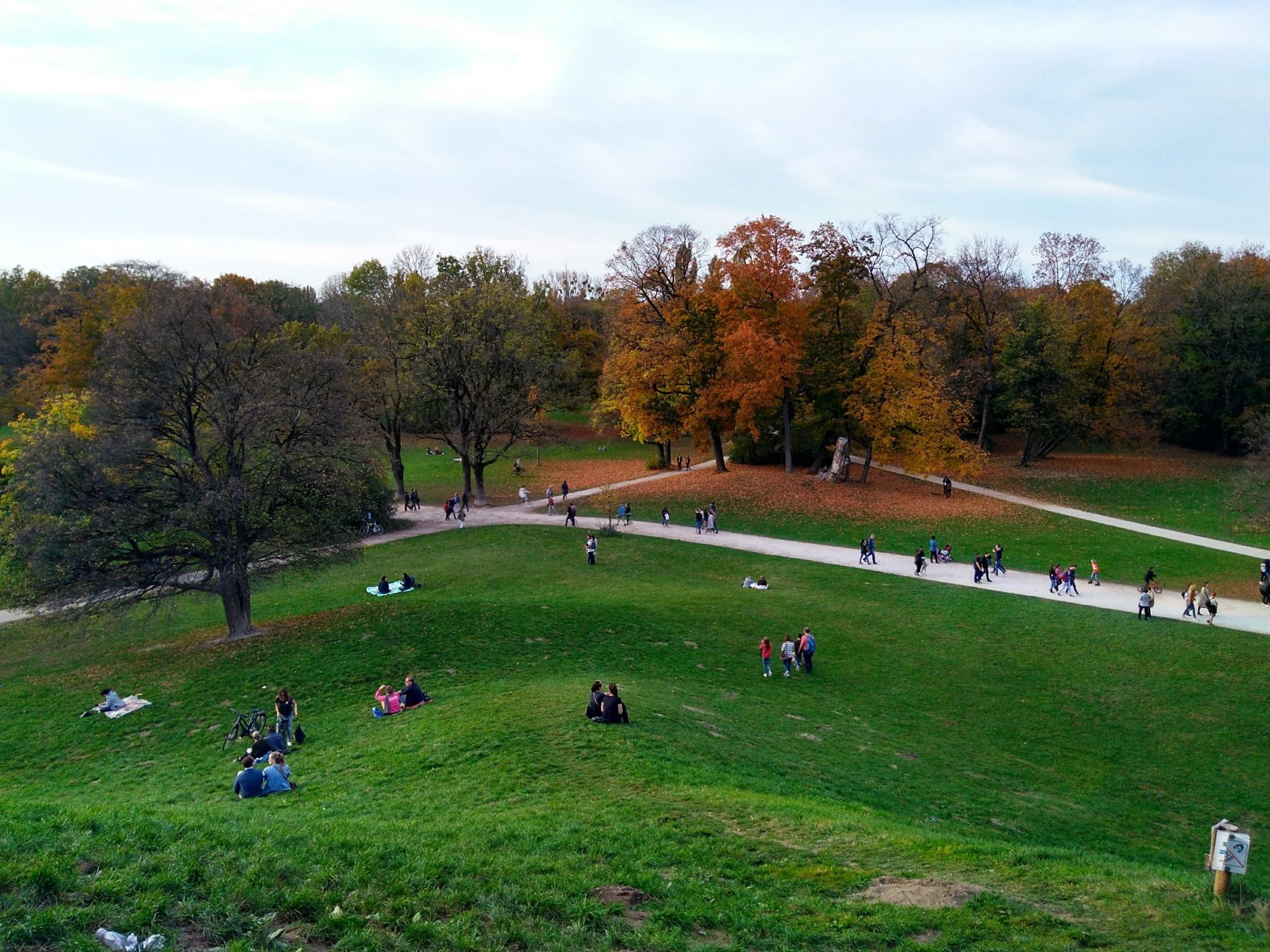
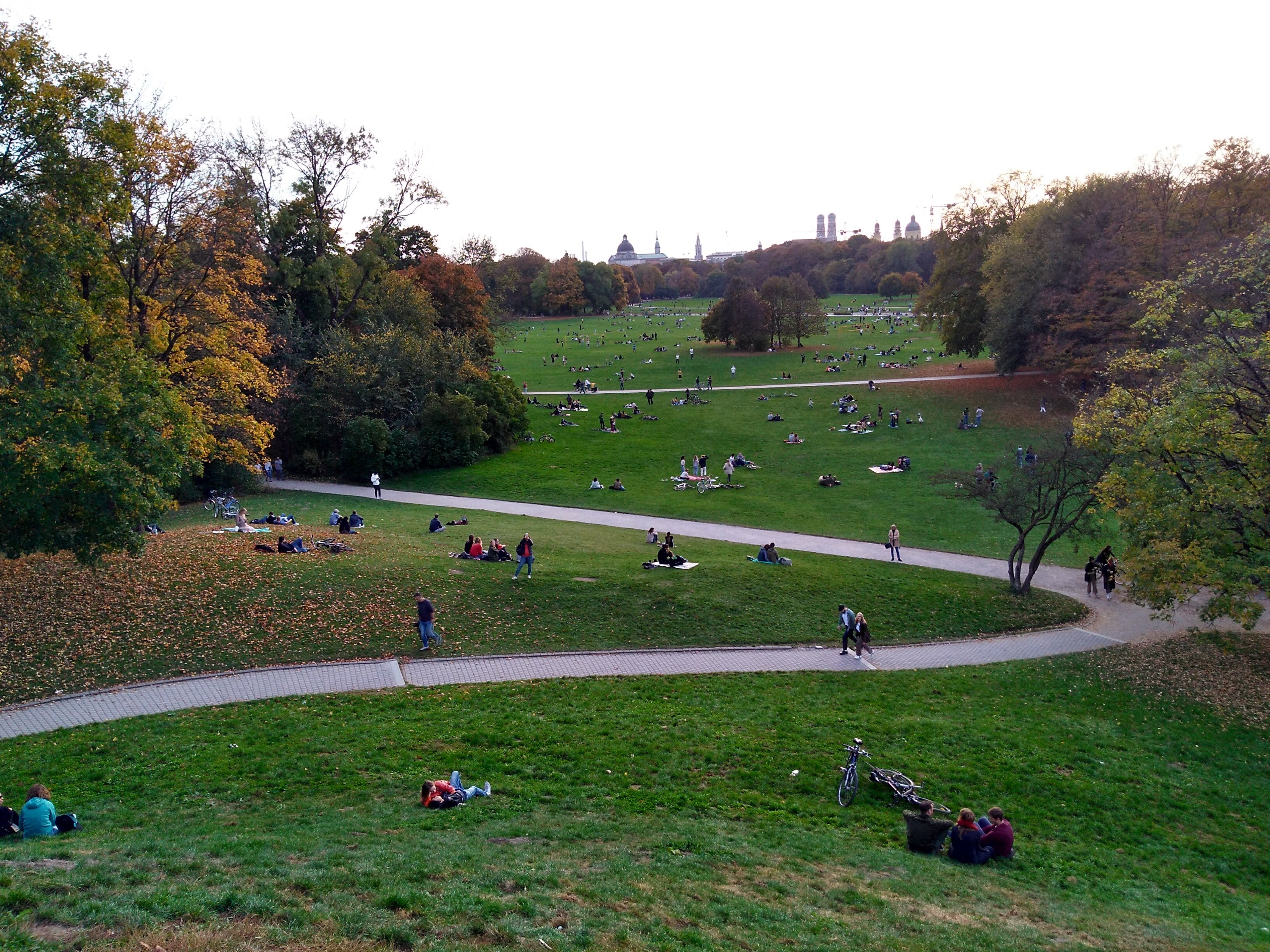
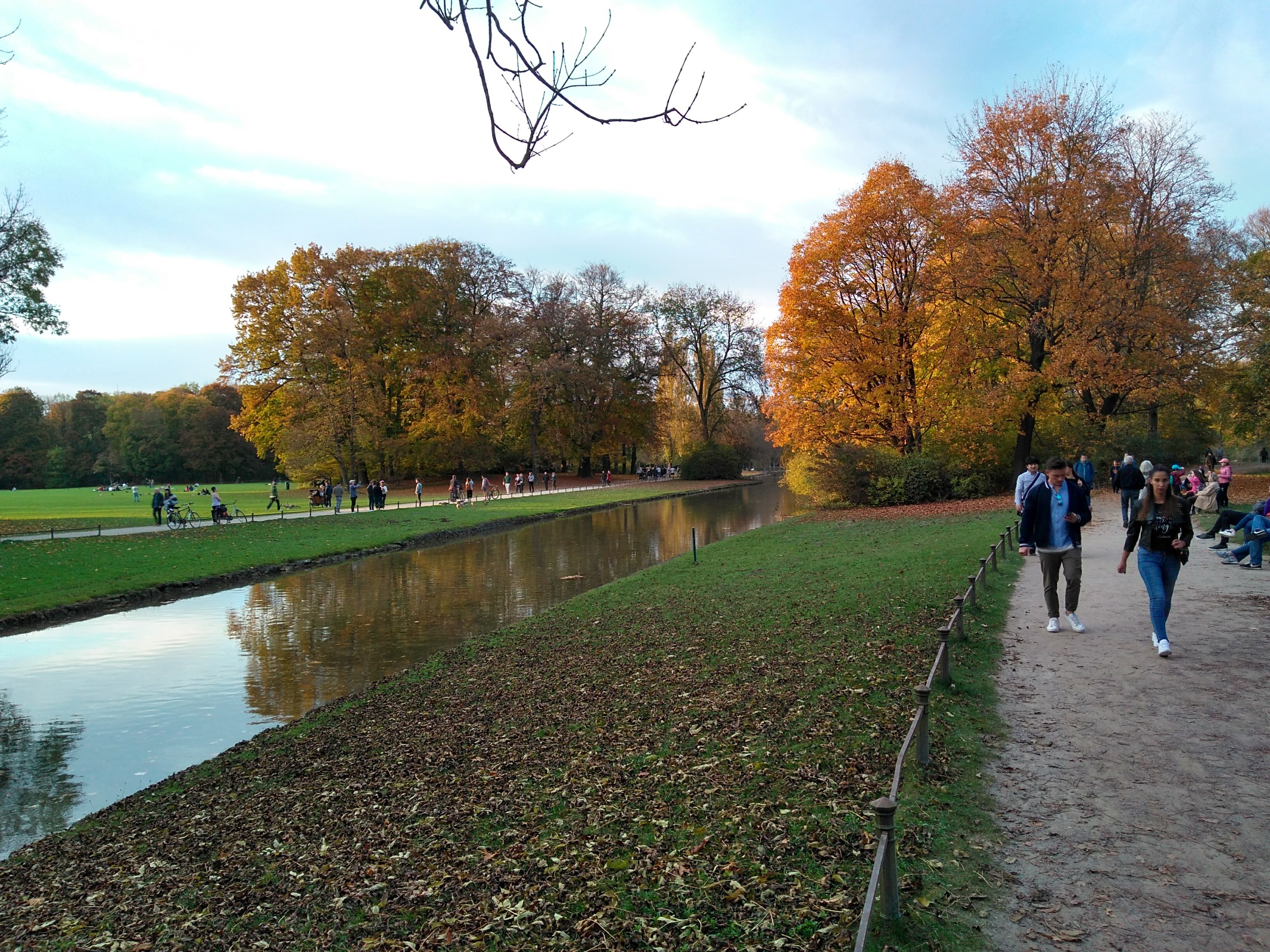
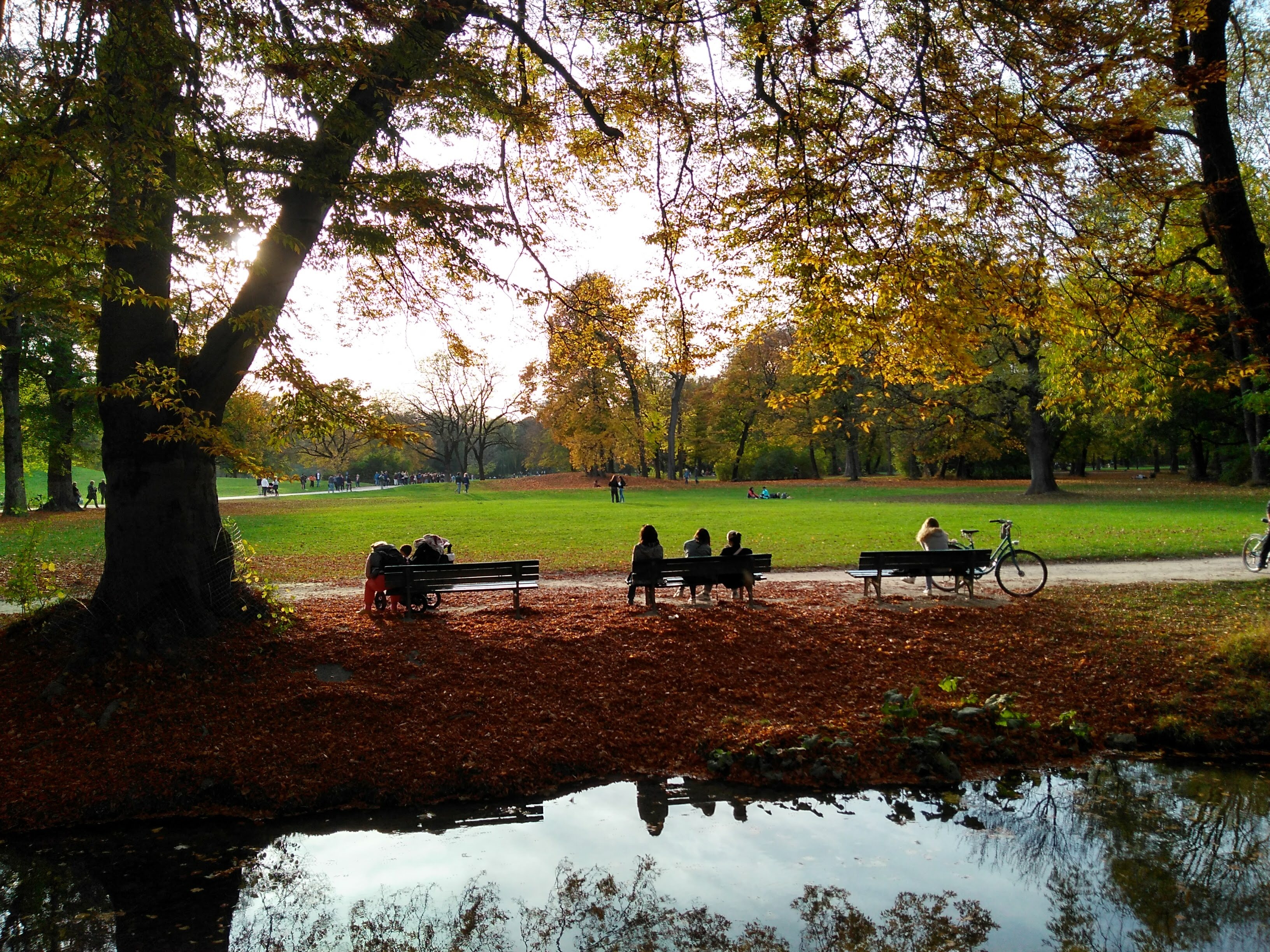
Back in the city, we took a short Sunday outing to Englisher Garten (think Park…. very, very large, beautiful park akin to NYC Central Park). This place was amazing. And there were many people out enjoying one of the last weekends of autumn. The following photos will give you a taste of this great green spot right in the heart of Munich.
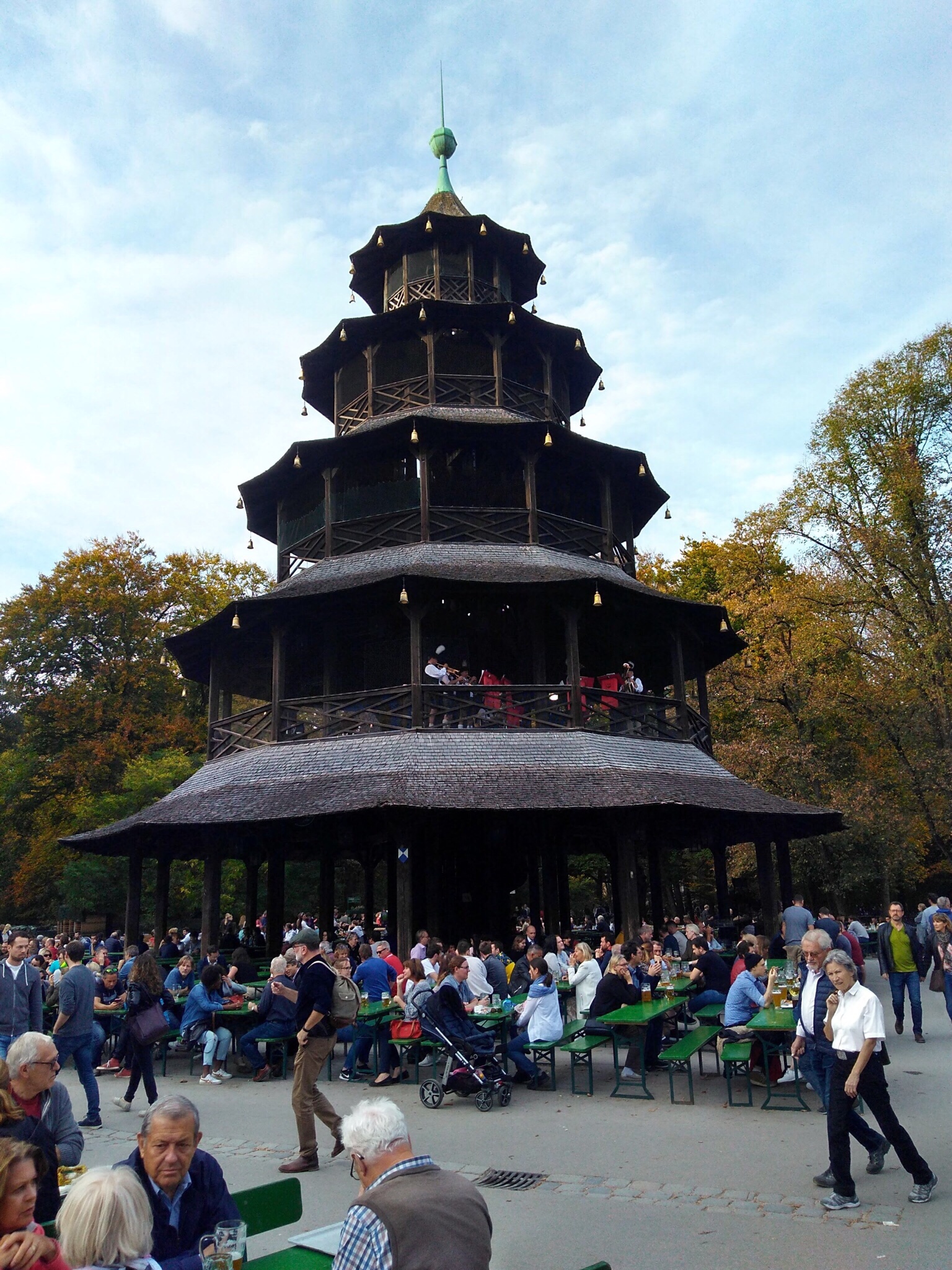
And of course there was a beer garden. Note the Bavarian band playing American tunes in the Chinese pagoda.
Sadly, no beer was to be had by us, due to those nasty colds.
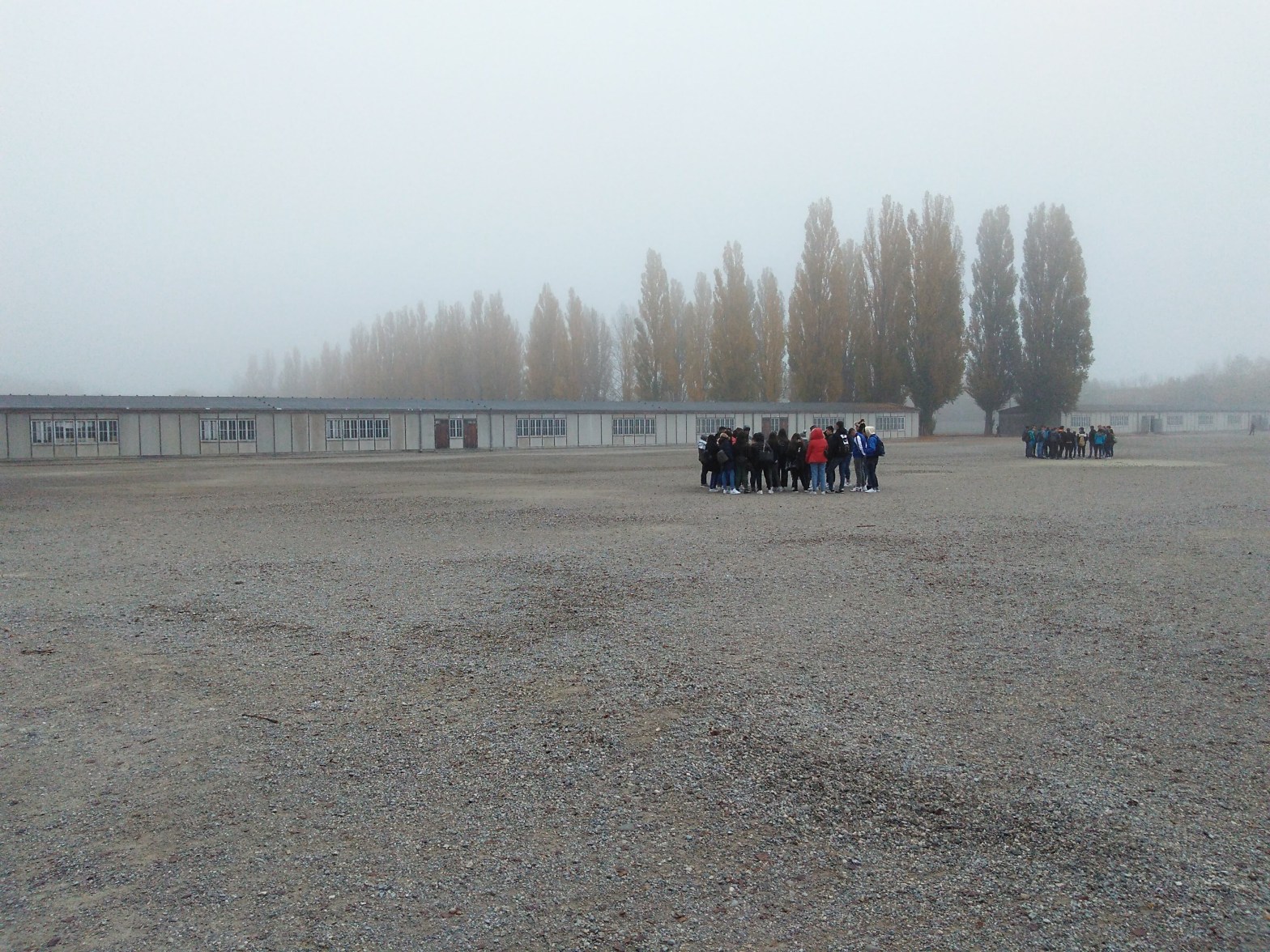
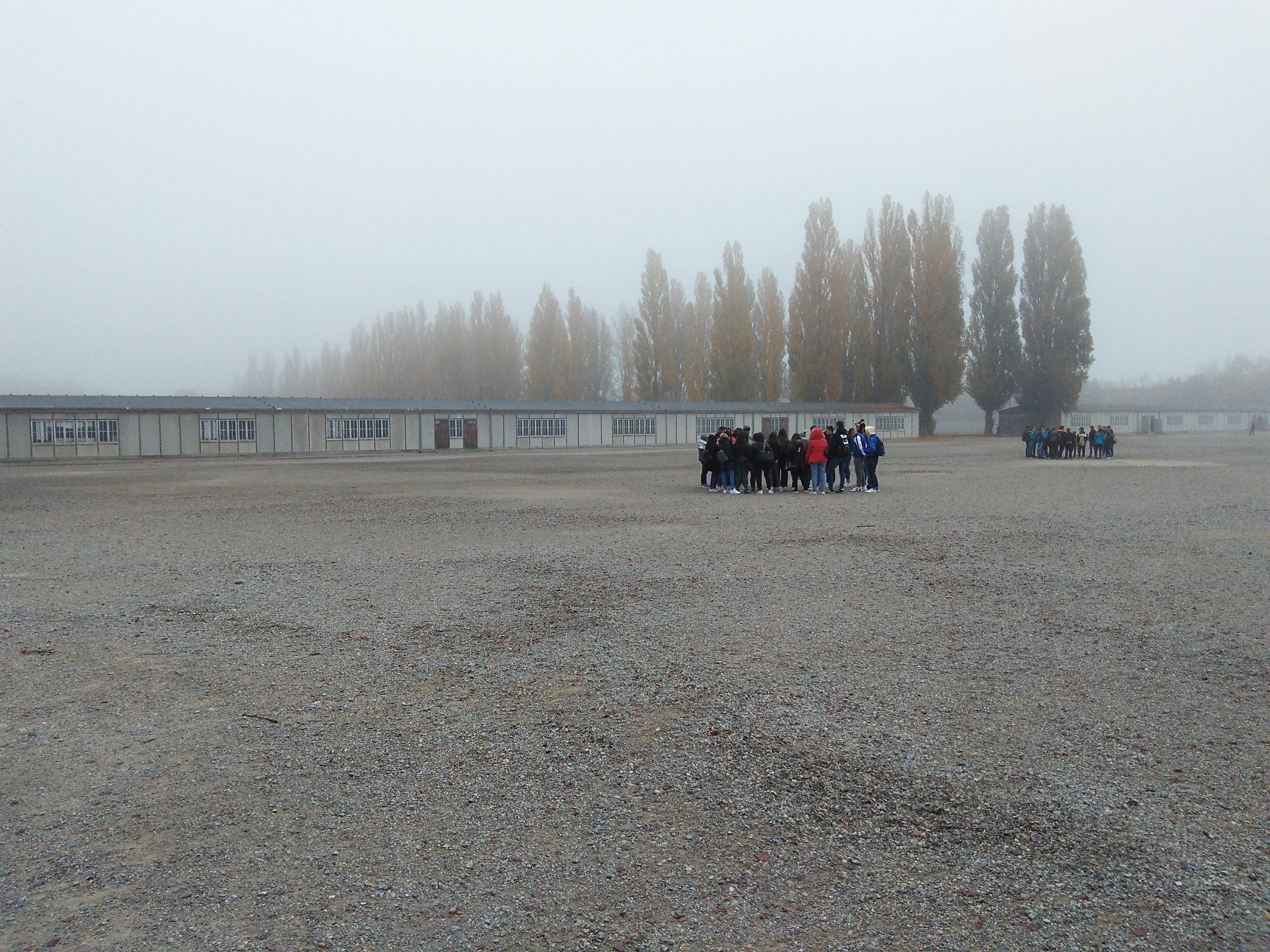
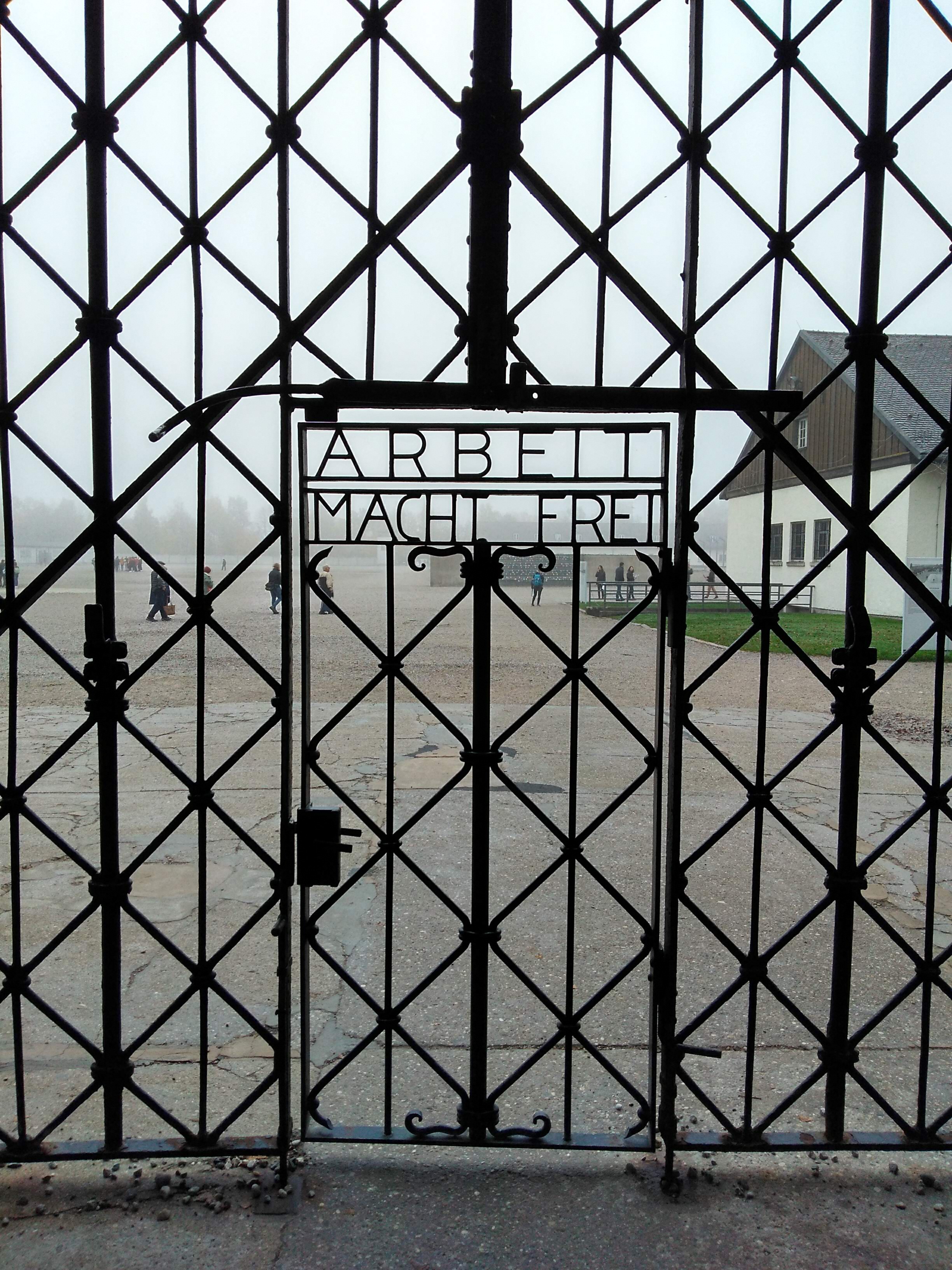
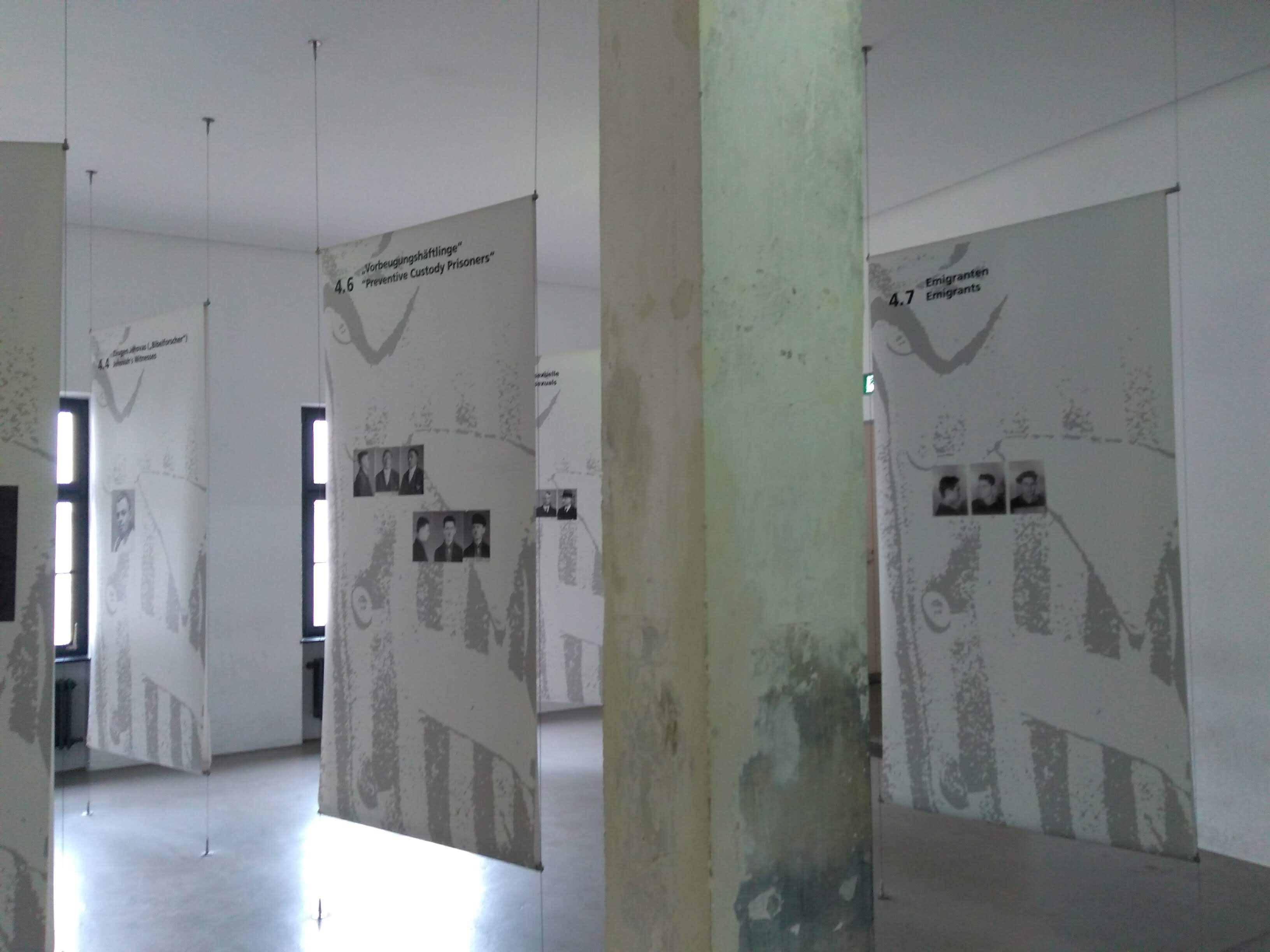
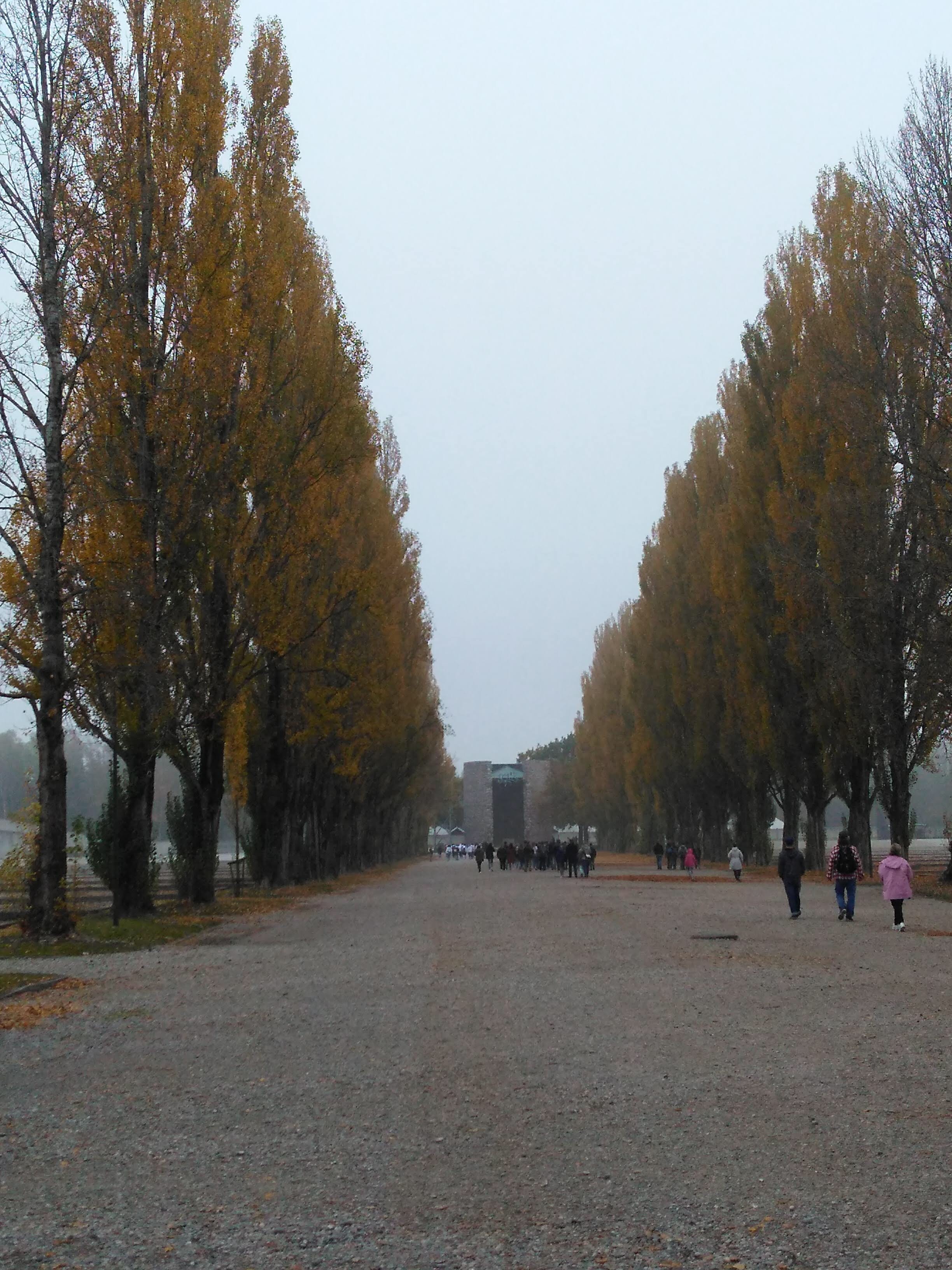
It was a somber morning. The gray, foggy weather seemed fitting for this look back at the Holocaust atrocities that occurred just a few decades ago in this very place.
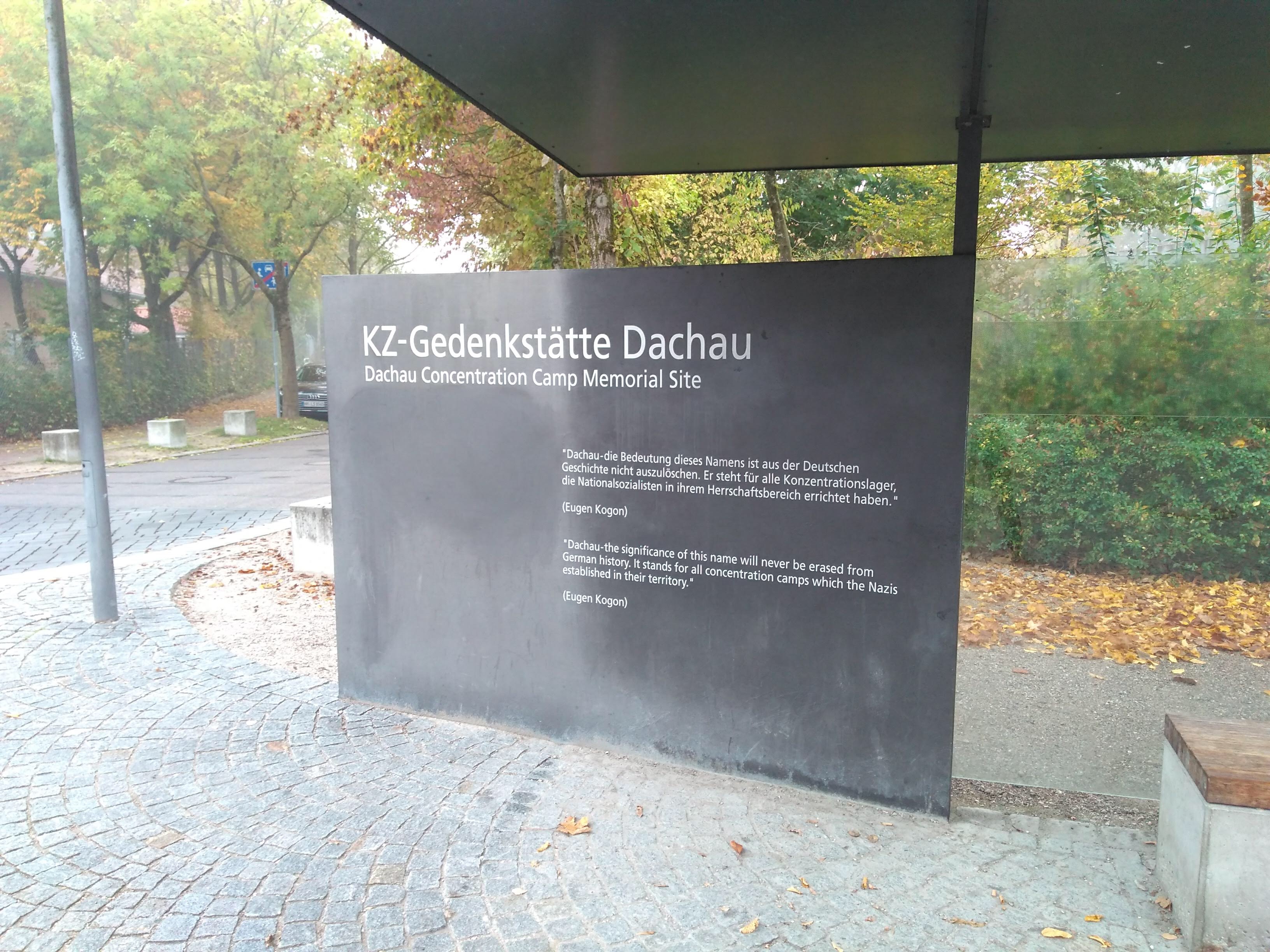
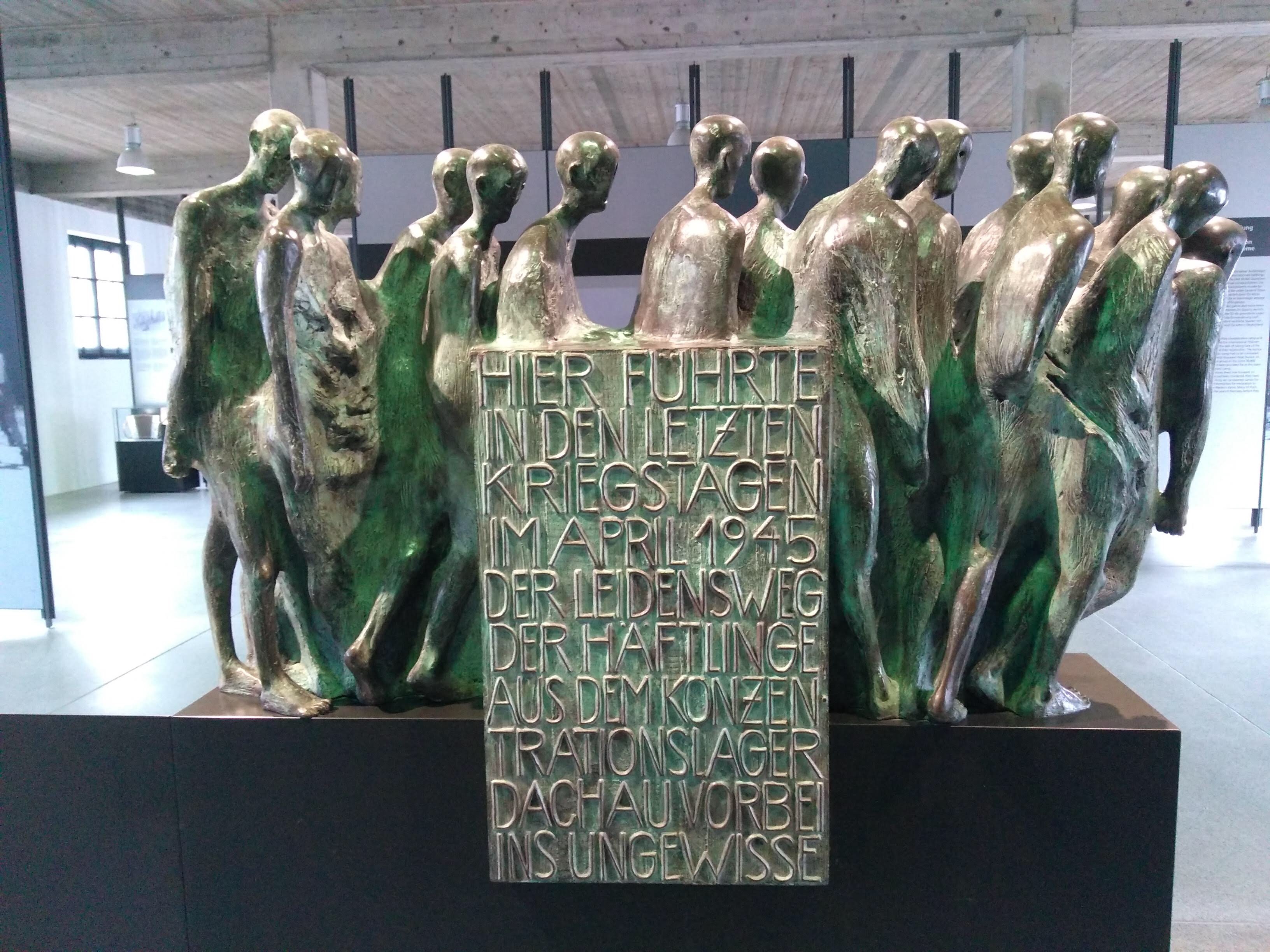
There were many groups of high school age students on this Tuesday, and also lots of other visitors. It is difficult to find words to express the thoughts and emotions of this experience. Perhaps these photos will suffice. May we never forget…
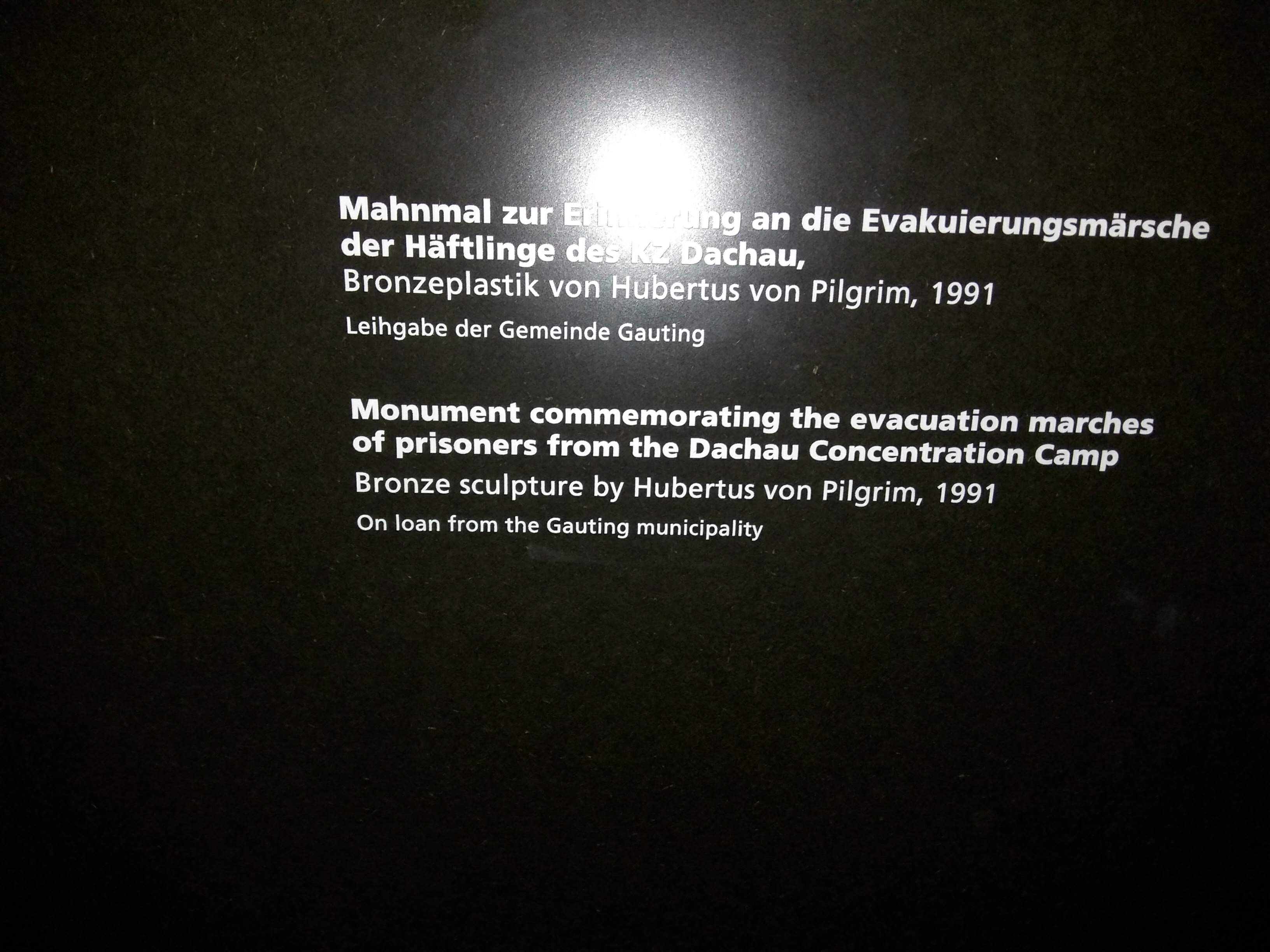
A 1991 sculpture—-information in the next photo.
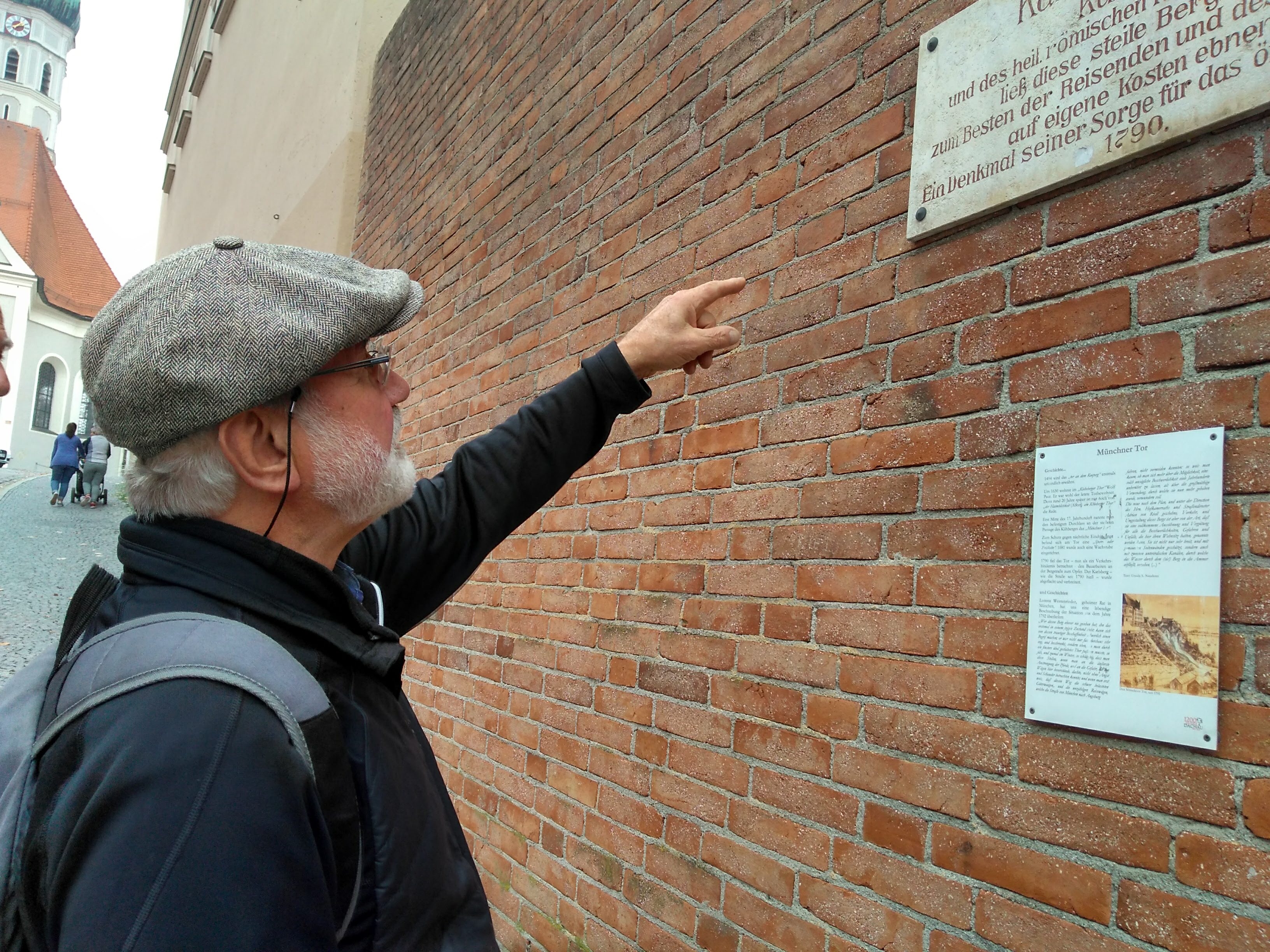
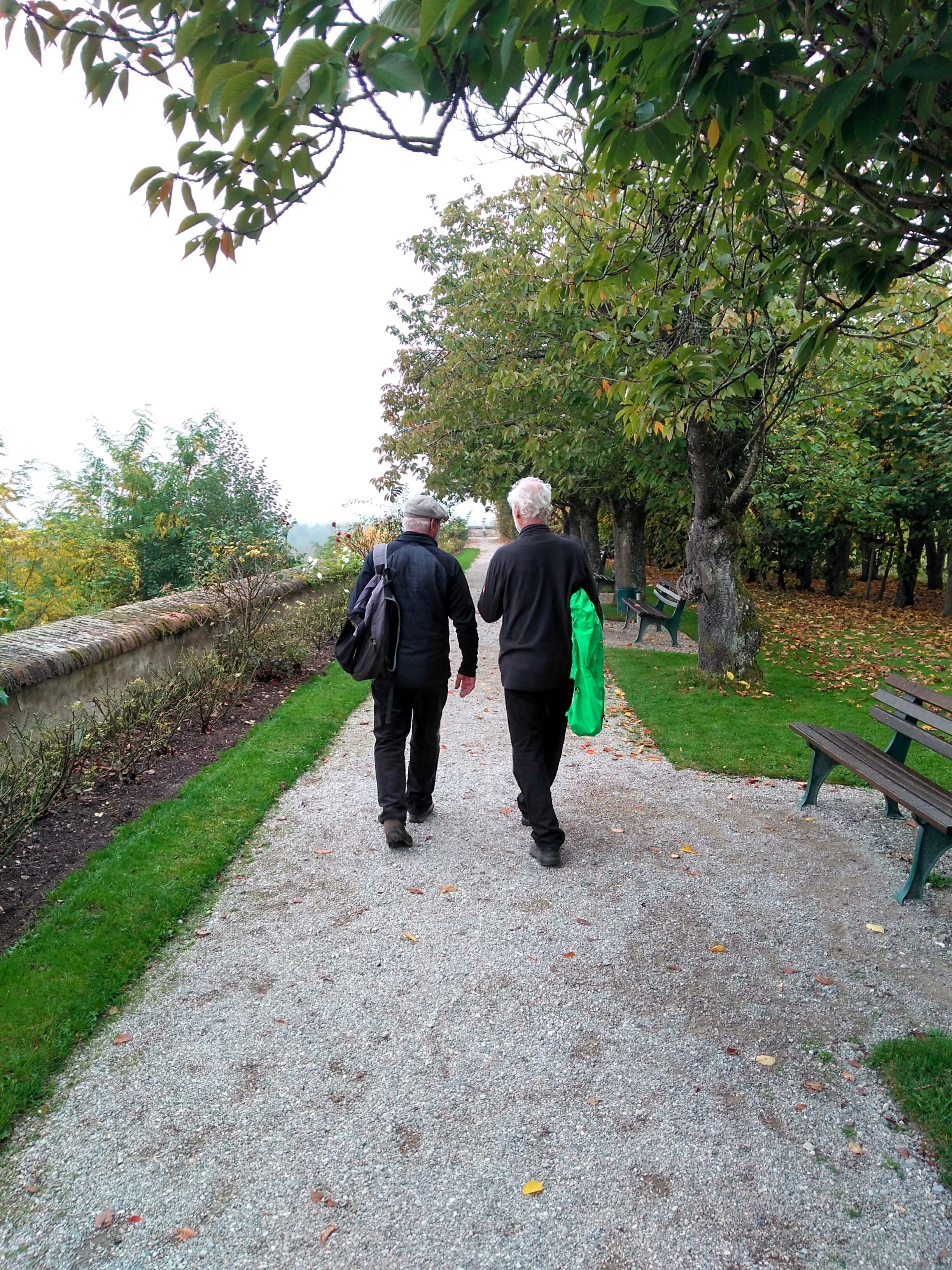
A friend of my hosts is a recently retired teacher who lives in Dachau. Gustav invited us to meet him for lunch and then have a walk around the town. Dachau has a rich history which is now overshadowed by the atrocities of the 1930’s and 40’s.
This is Gustav
We walked up a hill, along the old city wall, and saw the site of the former “toll booth” where everyone entering the city had to pay a toll back in the day. At the top of the hill was…you guessed it: another castle.
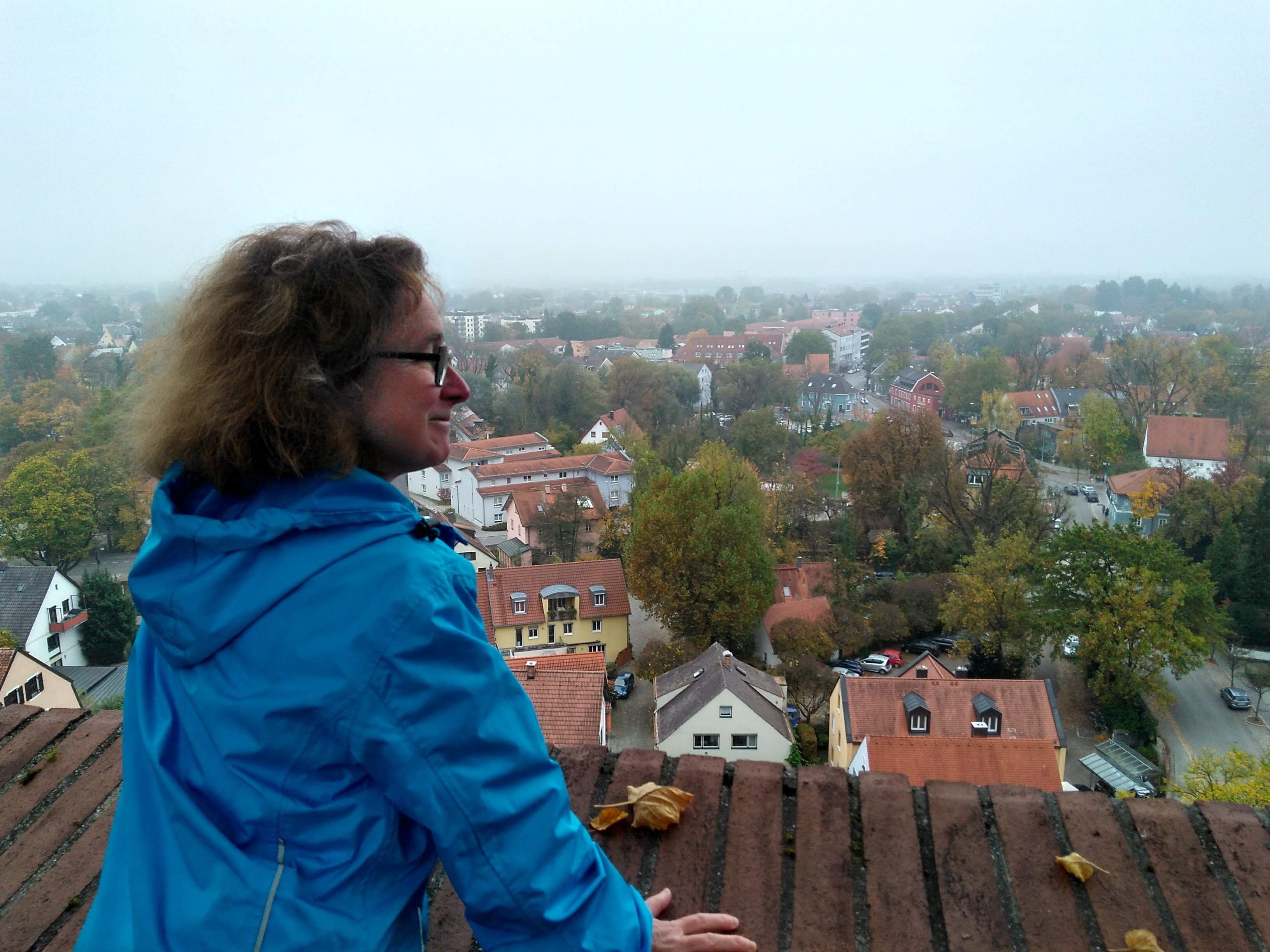
I guess I neglected to get a photo of the castle, but here’s the view we had.
We could see some of Munich, to the south, and if the weather had been clearer, we could have seen miles further, to the Alps. (Gustav later showed us a photograph to prove it.)
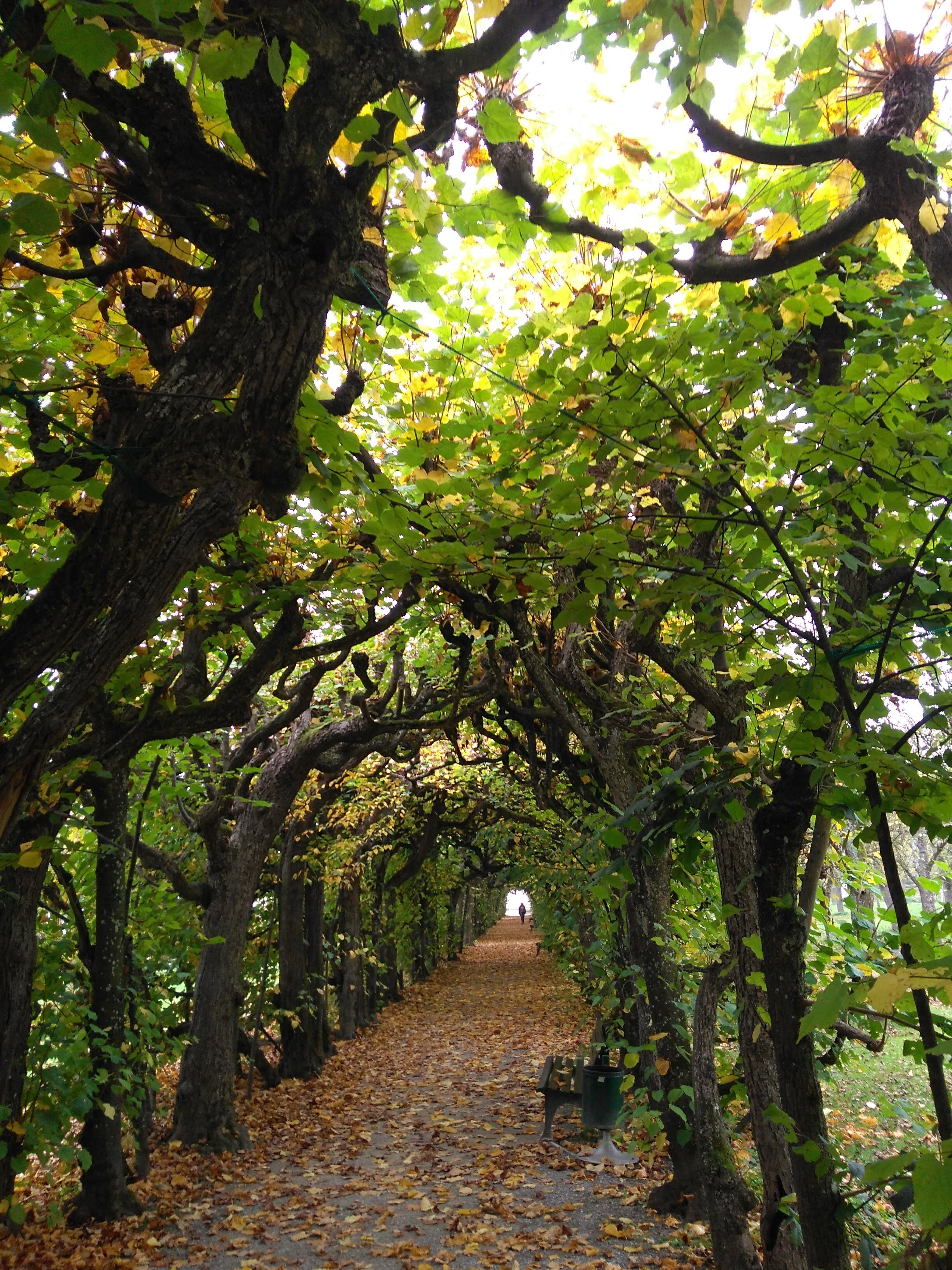
And a magical path, walking under these beautiful, old treesGustav and Helmut
There were no photos allowed in the little art museum where we saw many impressionist era paintings by members of the Dachau art colony in the late part of the 19th century (and early 20th century).
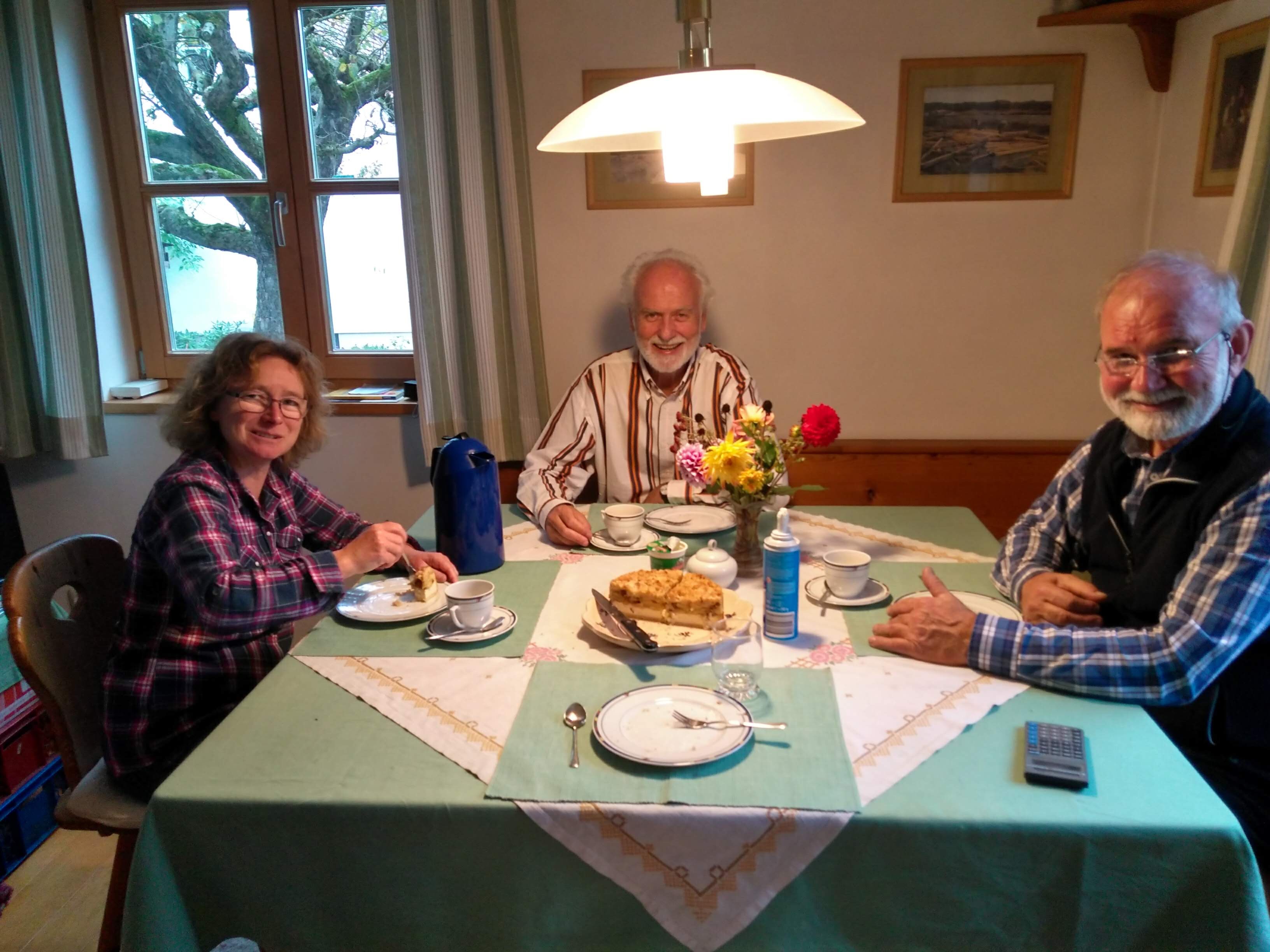
We ended the afternoon with homemade Apfelkuchen (apple cake) at Gustav’s house before our drive back to Munich.
Returning from Berlin, Claudia and Helmut surprised me at the train station. Having intended to navigate myself to their Munich apartment, instead I was able to just follow them to the special weekend-only bus (which of course I didn’t know about).
The following two days were full of sightseeing and of course more delicious German food.
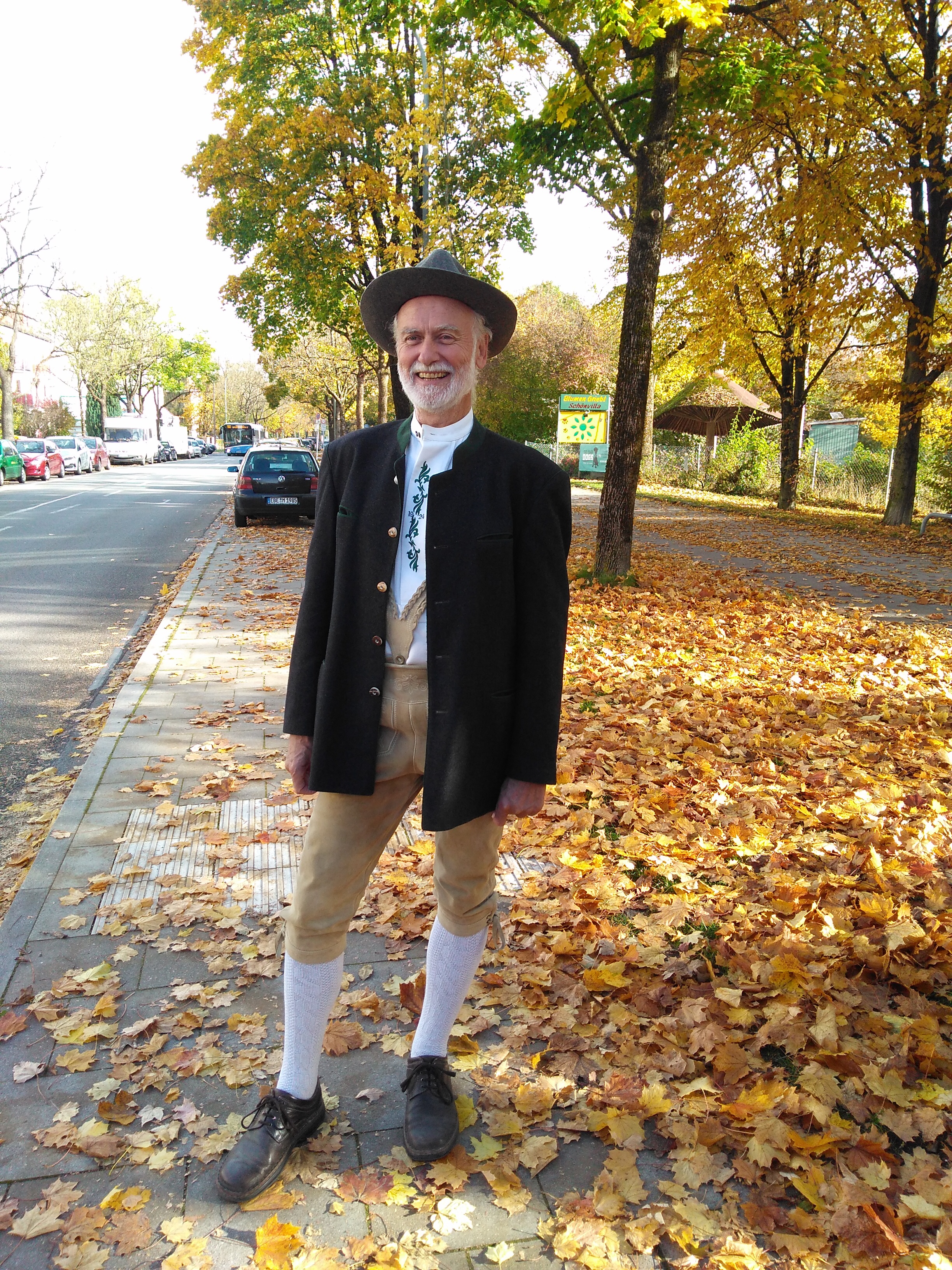
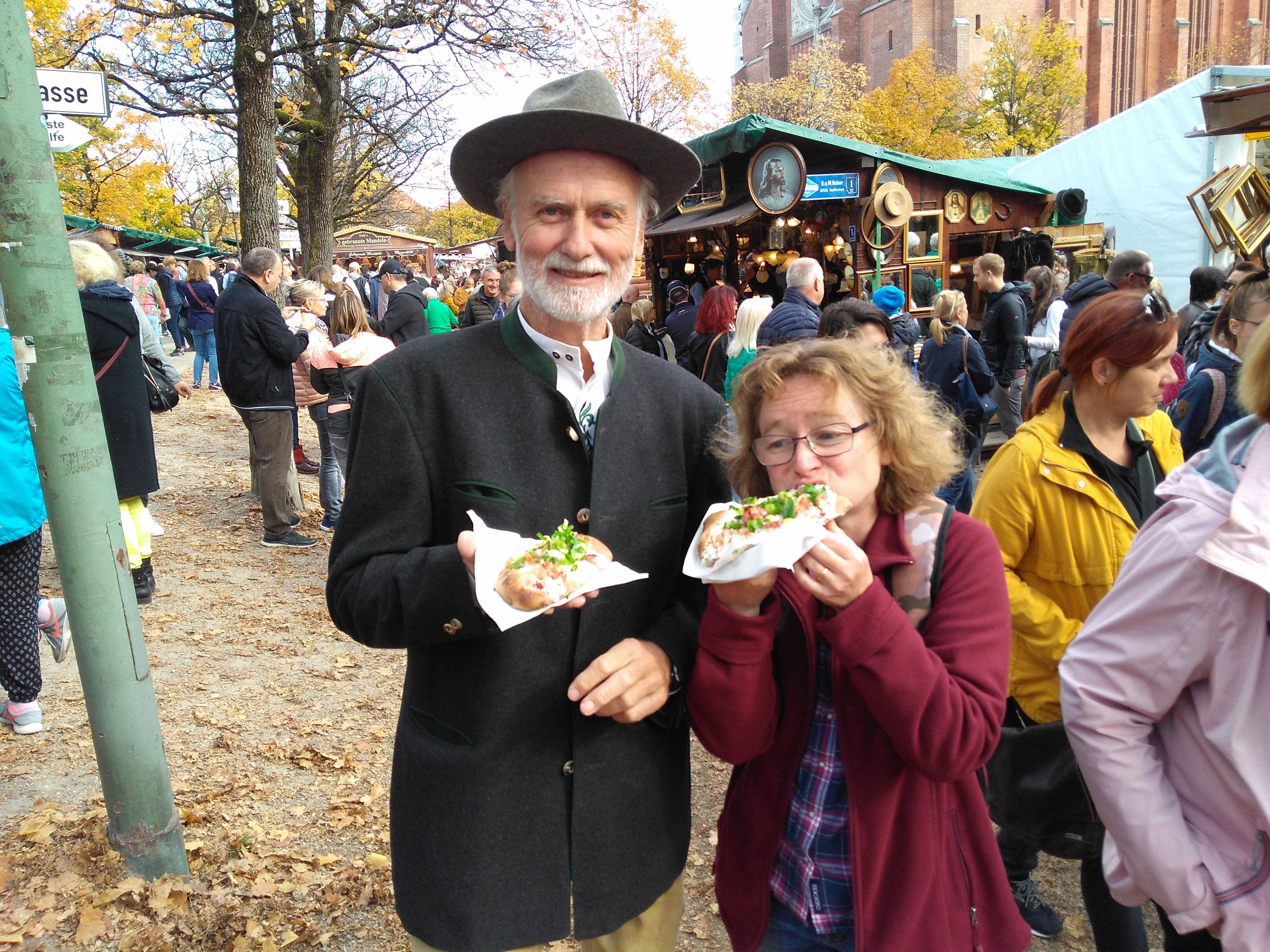
Helmut recently inherited some traditional Bavarian clothes from a cousin, and he donned those for a trip to the annual “Auer Dult” festival—-this country has many festivals!
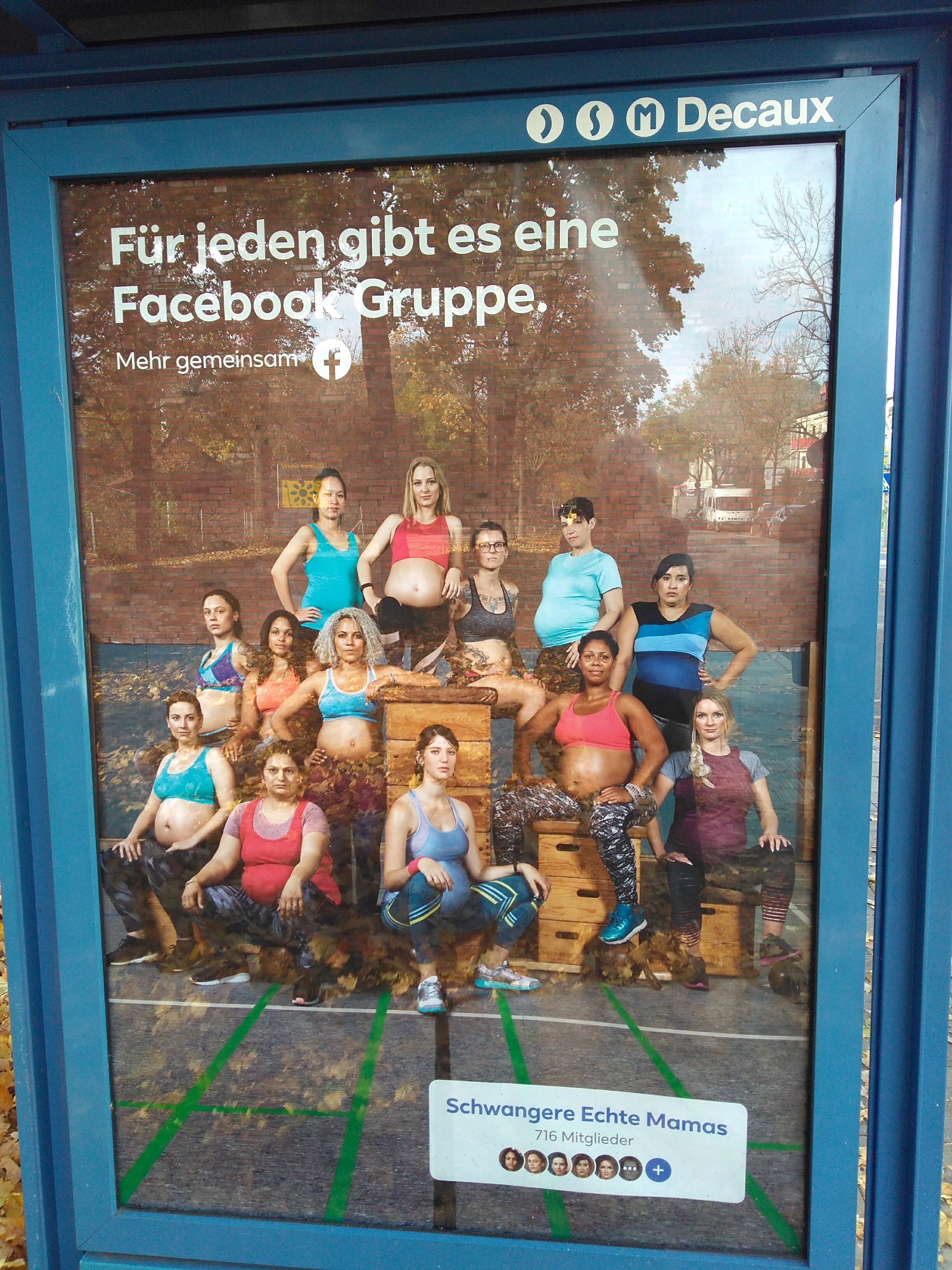
I had to smile at this ad at the bus stop: “There is a Facebook group for everyone.”
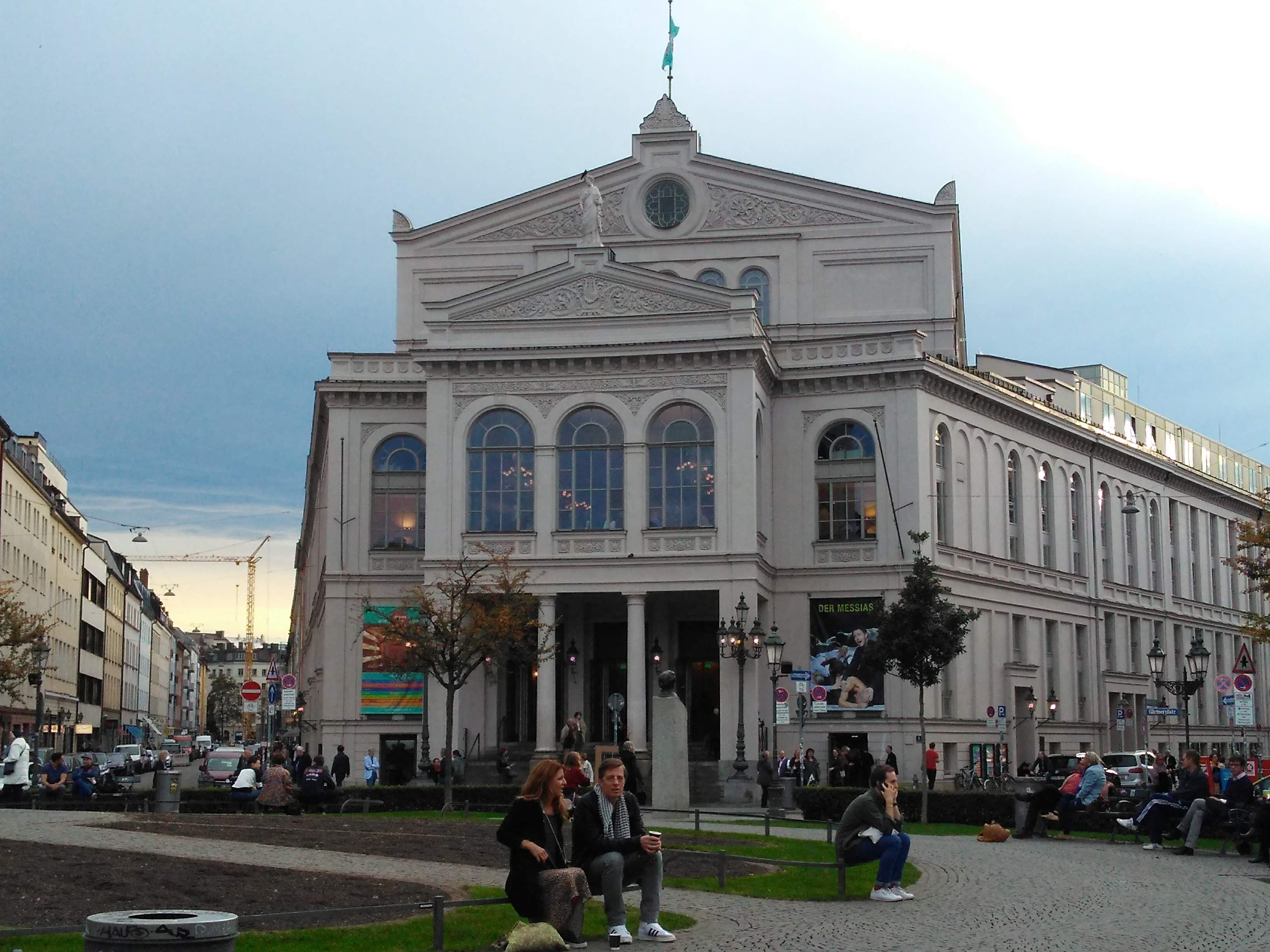
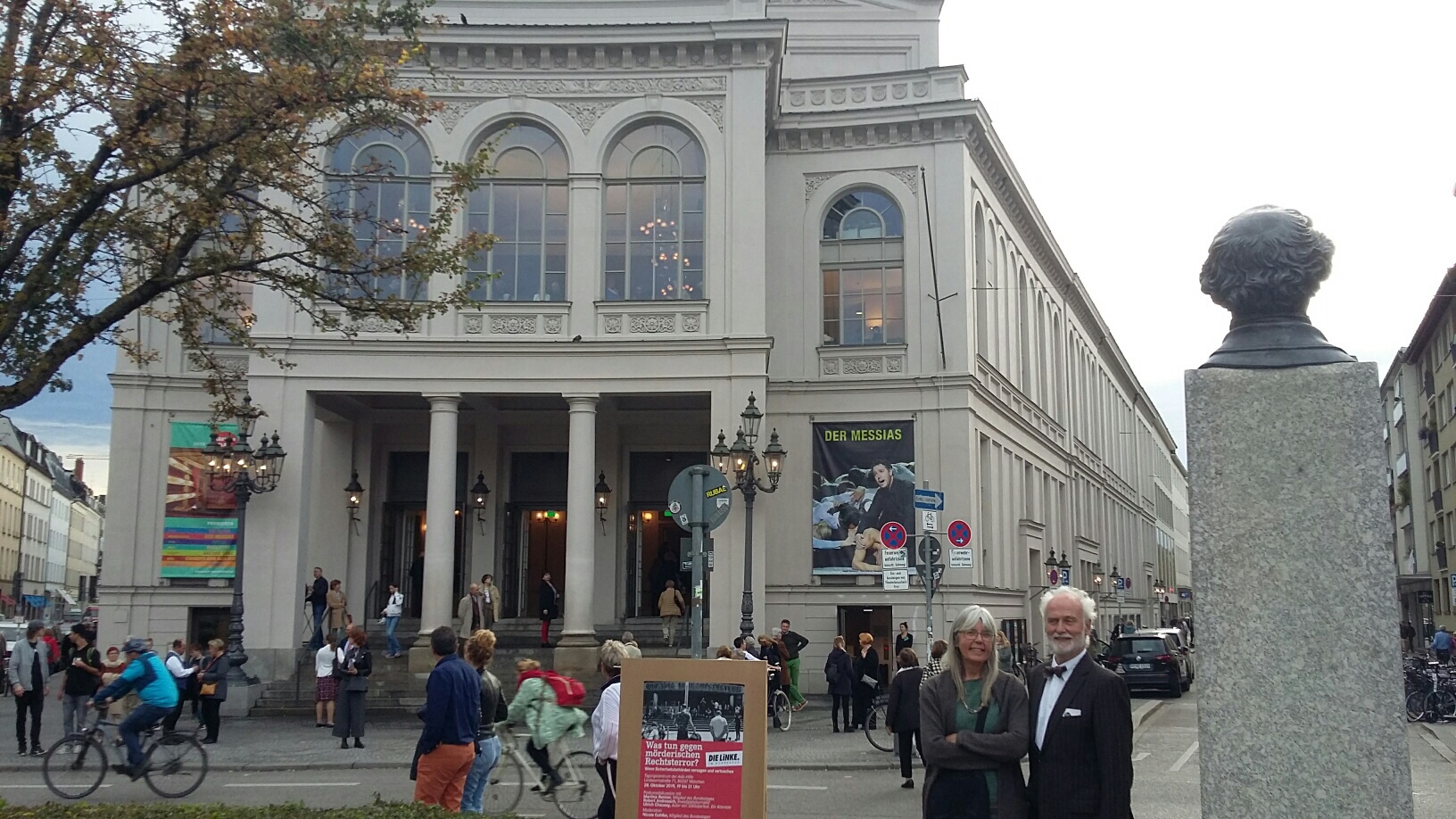
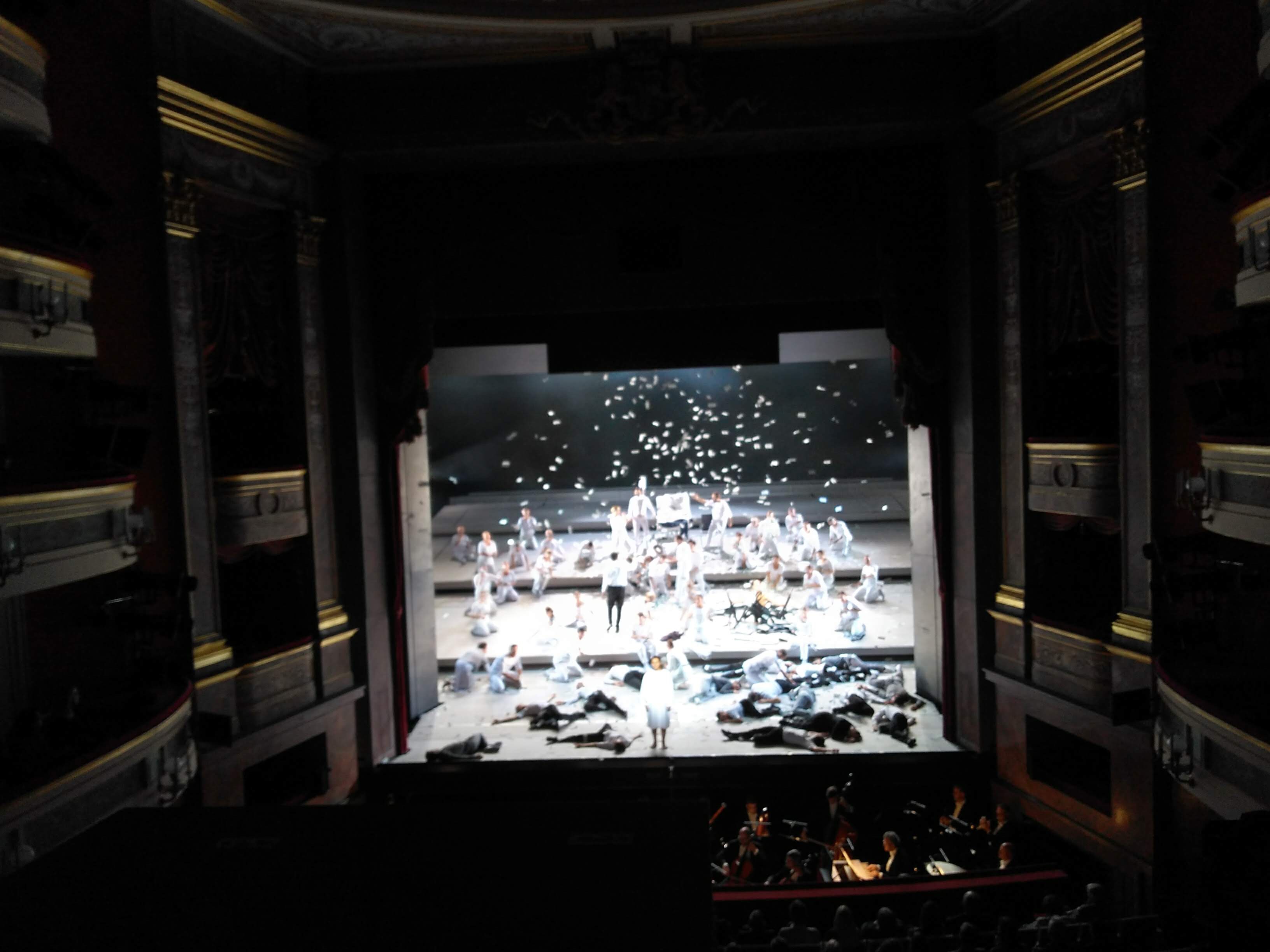
We attended a performance of Handel’s Messiah at the gorgeous Gärtnerplatz Theater.
This production was unlike anything I have experienced. Earlier in the day, they talked about the Gärtnerplatz’s bold forays into provocative expressions of the arts, and how I should not expect a traditional performance of this classic work. They were right!
Juxtaposed with Handel’s work was a contemporary dance with some spoken words, telling a tale of mankind’s search for meaning (I think). Like with all good art, viewers were led to explore ideas and questions, not always understanding what was happening. It was exquisitely performed. I LOVED it.
The following day we explored some new (to me) parts of the city. One neighborhood was very close to where Helmut grew up, and he described bicycling to school, sledding in the park, and other activities from his childhood.
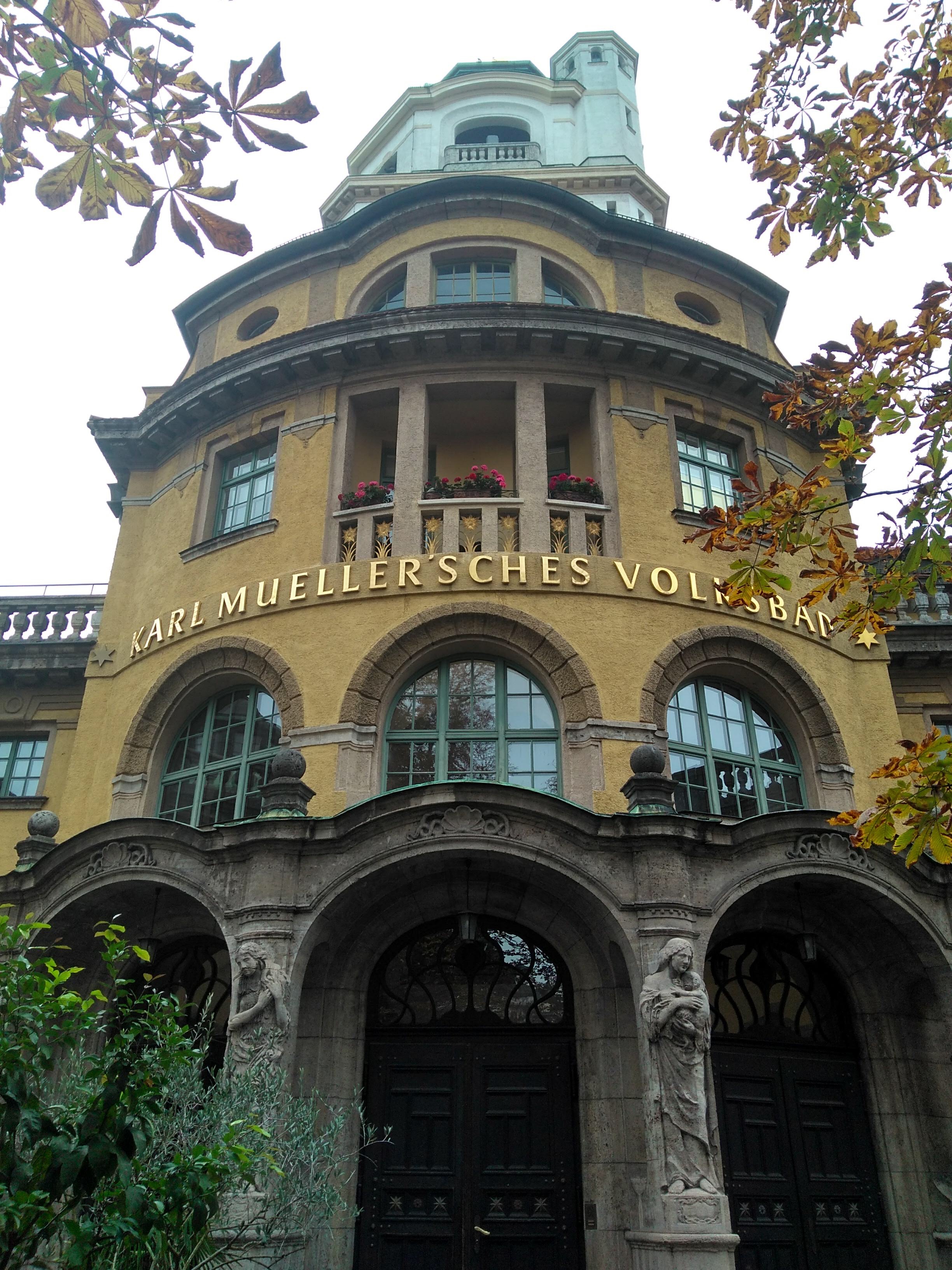
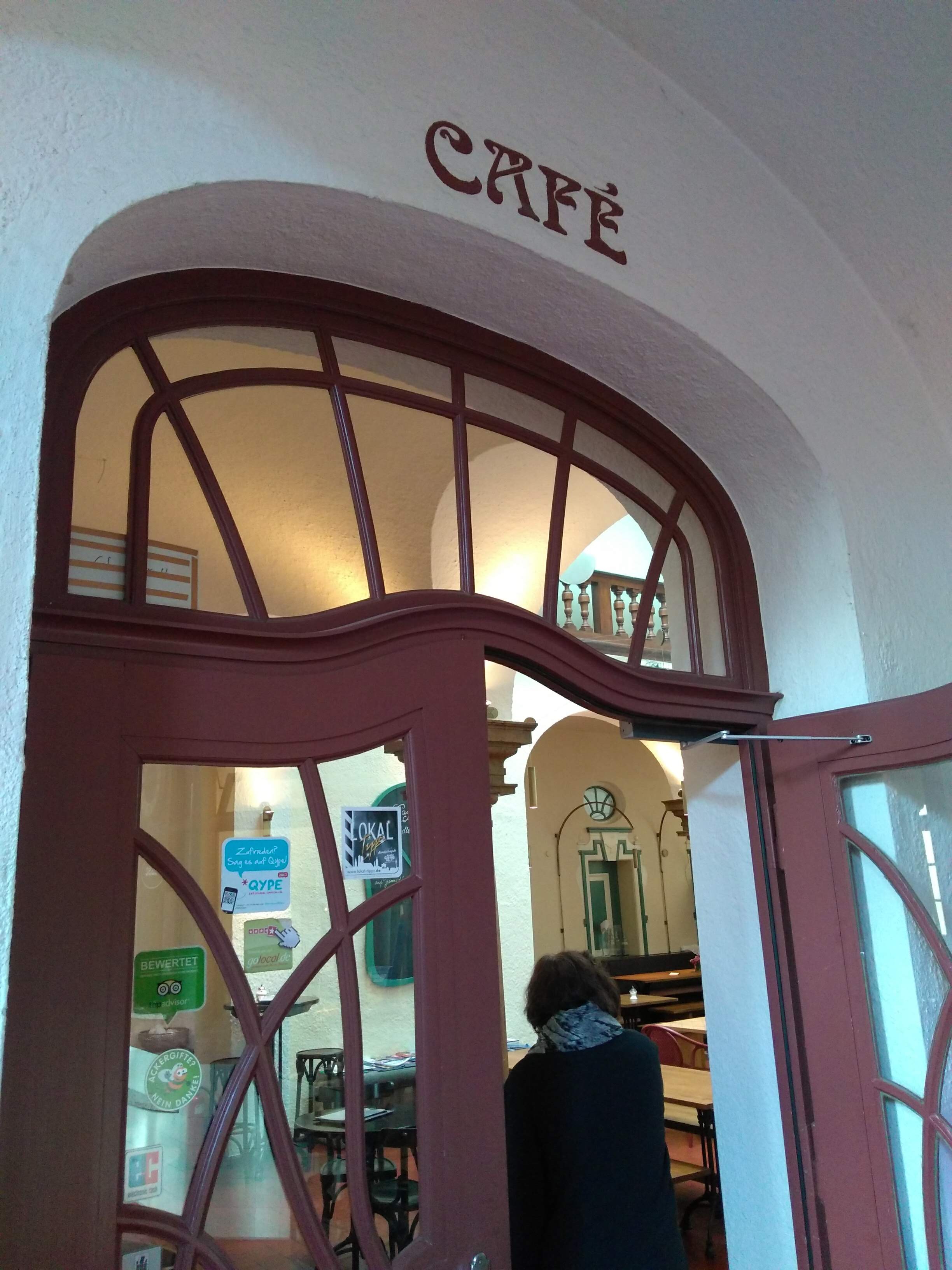
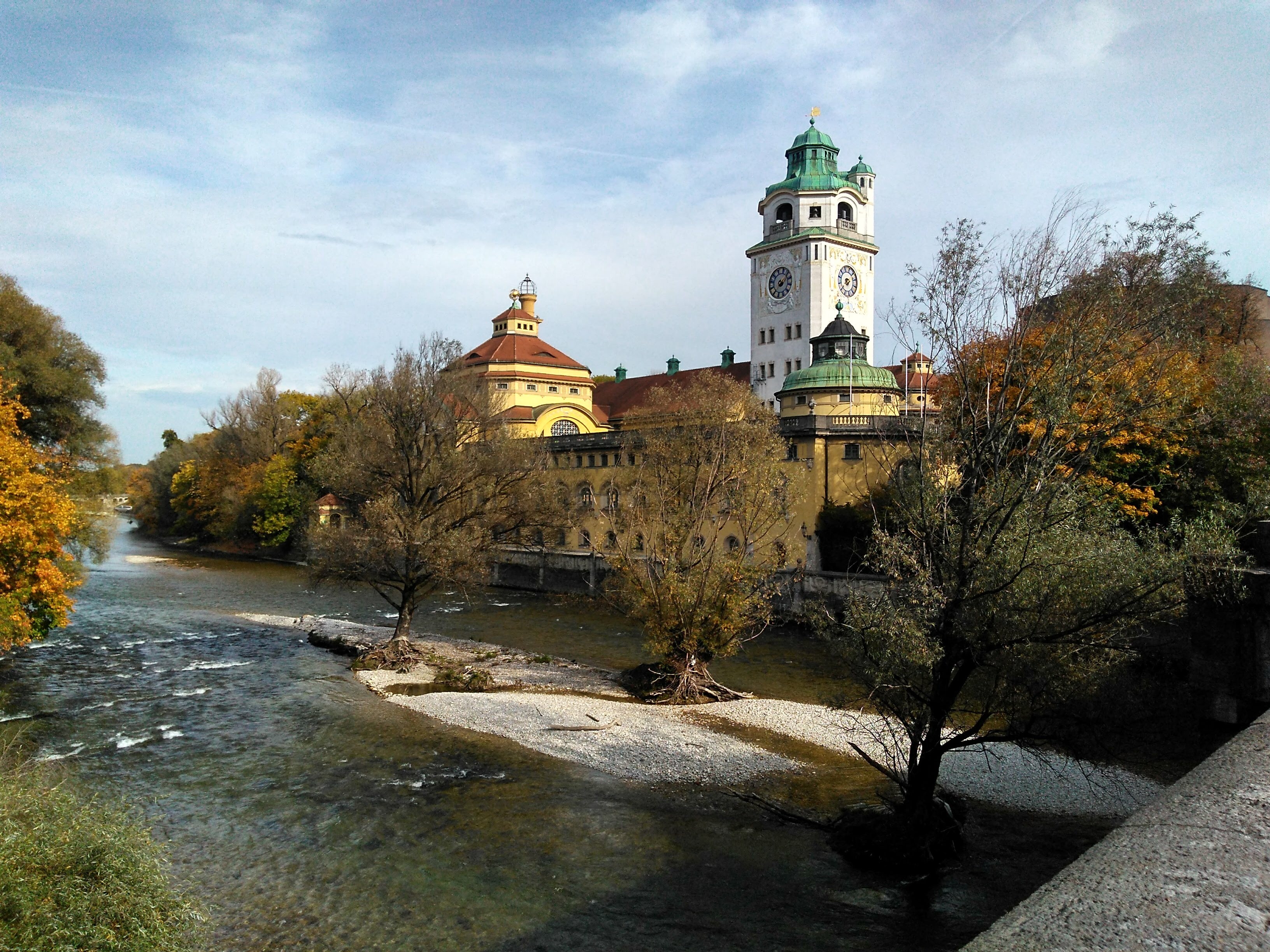
We visited a bathhouse, built in 1901, where people still swim and take saunas! It also has a little cafe where we ate lunch.
View of the bathhouse from across the Isar River
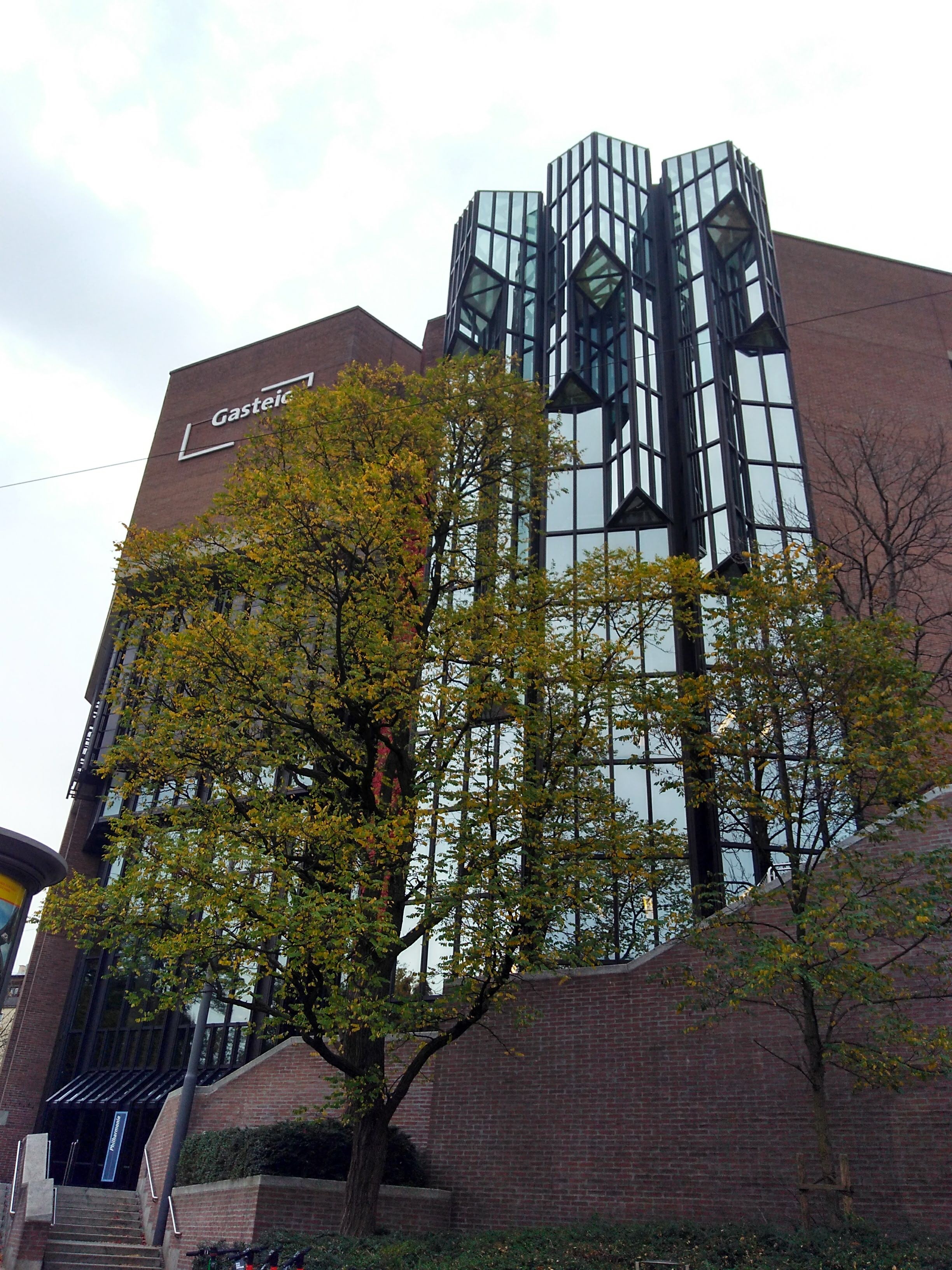
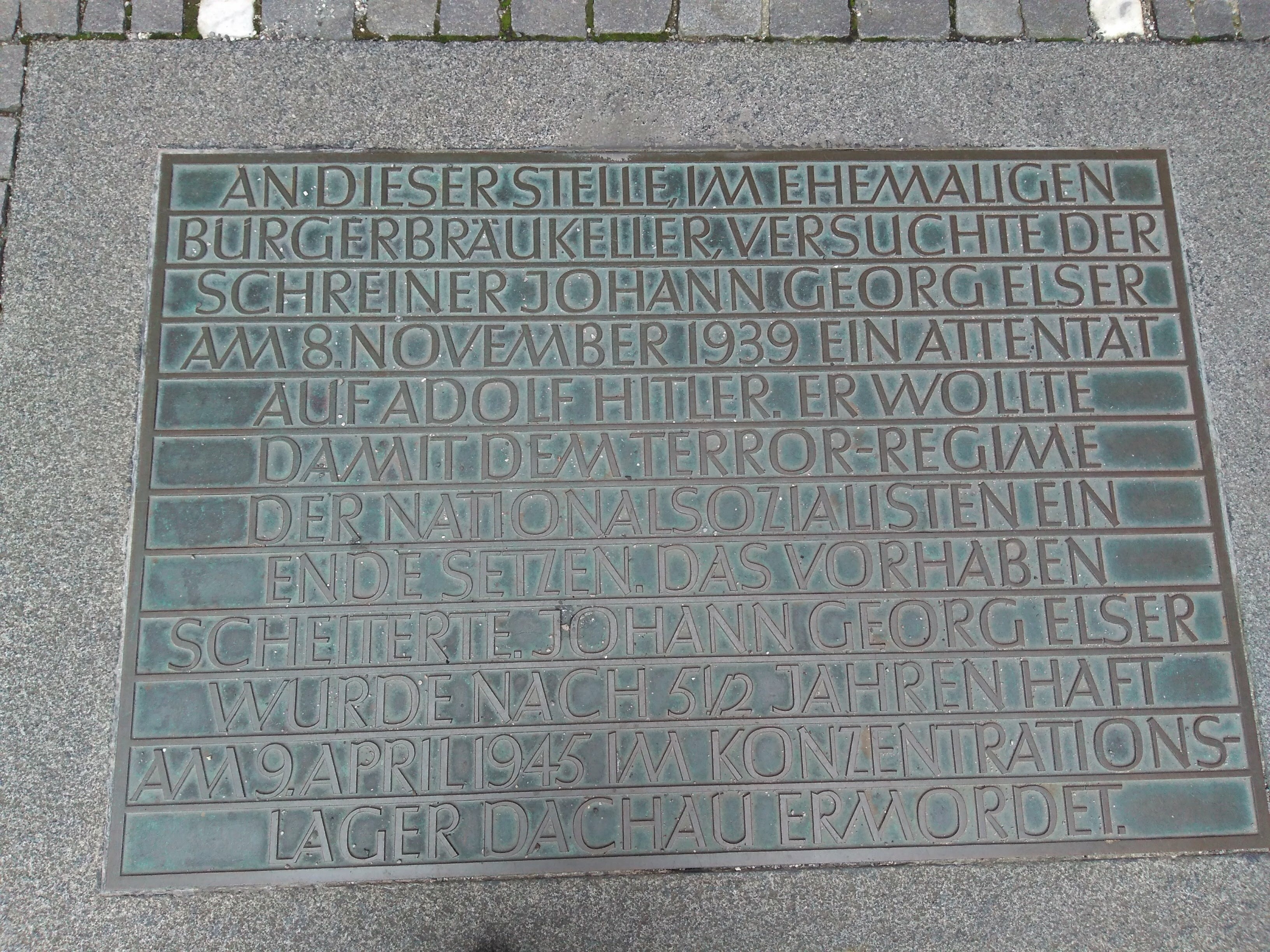
We visited a beautiful community center and library located at the site of where Johann Georg Elser attempted to assassinate Hitler in 1939. At that time it was a restaurant, and unfortunately Hitler left the building 20 minutes earlier than expected, so the attempt was unsuccessful. Elser was captured sometime later and taken to the concentration camp at Dachau.
The memorial plaque, for those of you who can read German
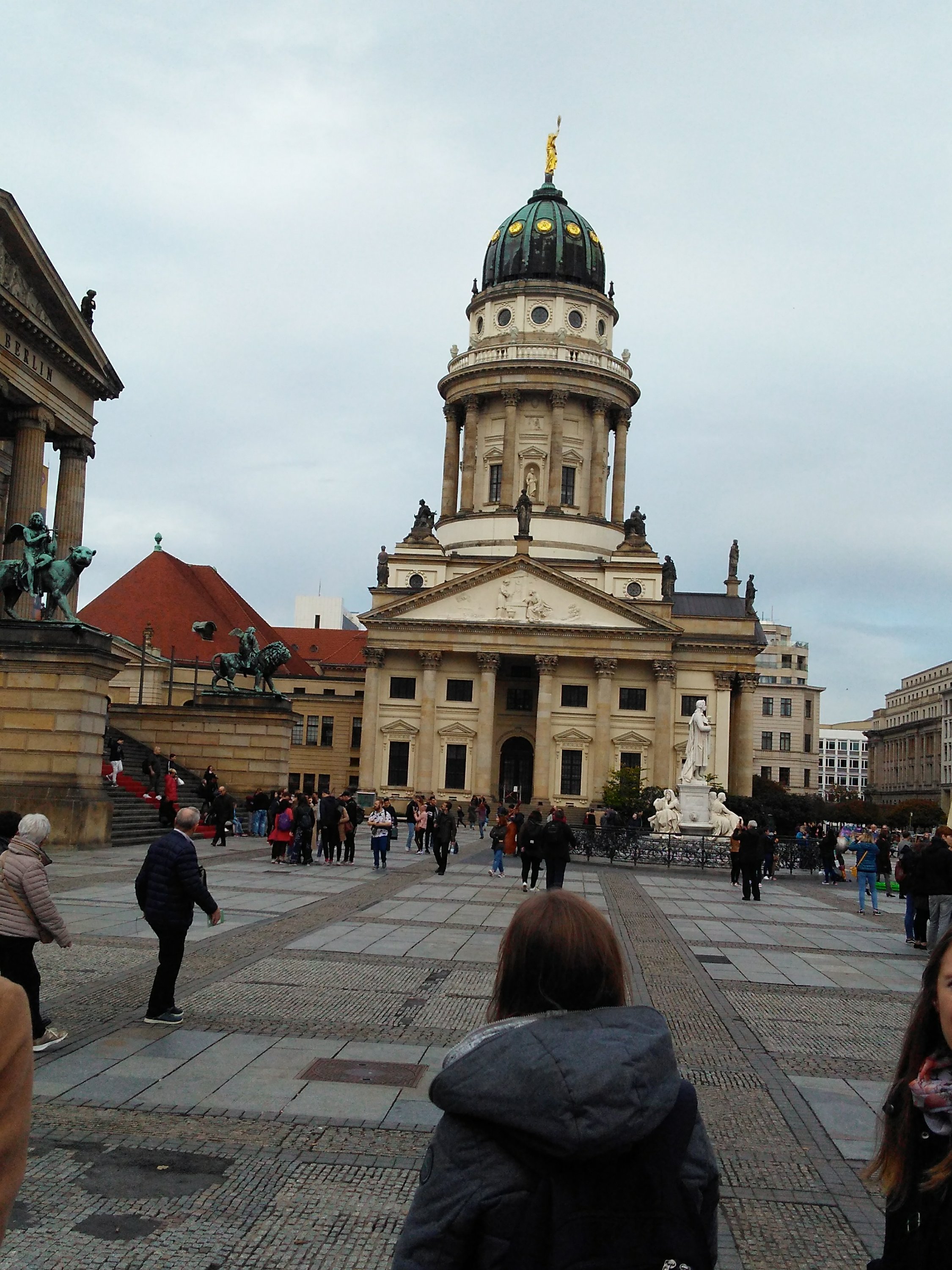
With just two days in Berlin, I barely scratched the surface — are you sensing a theme here? But I very much enjoyed seeing and learning about this great city and its people.
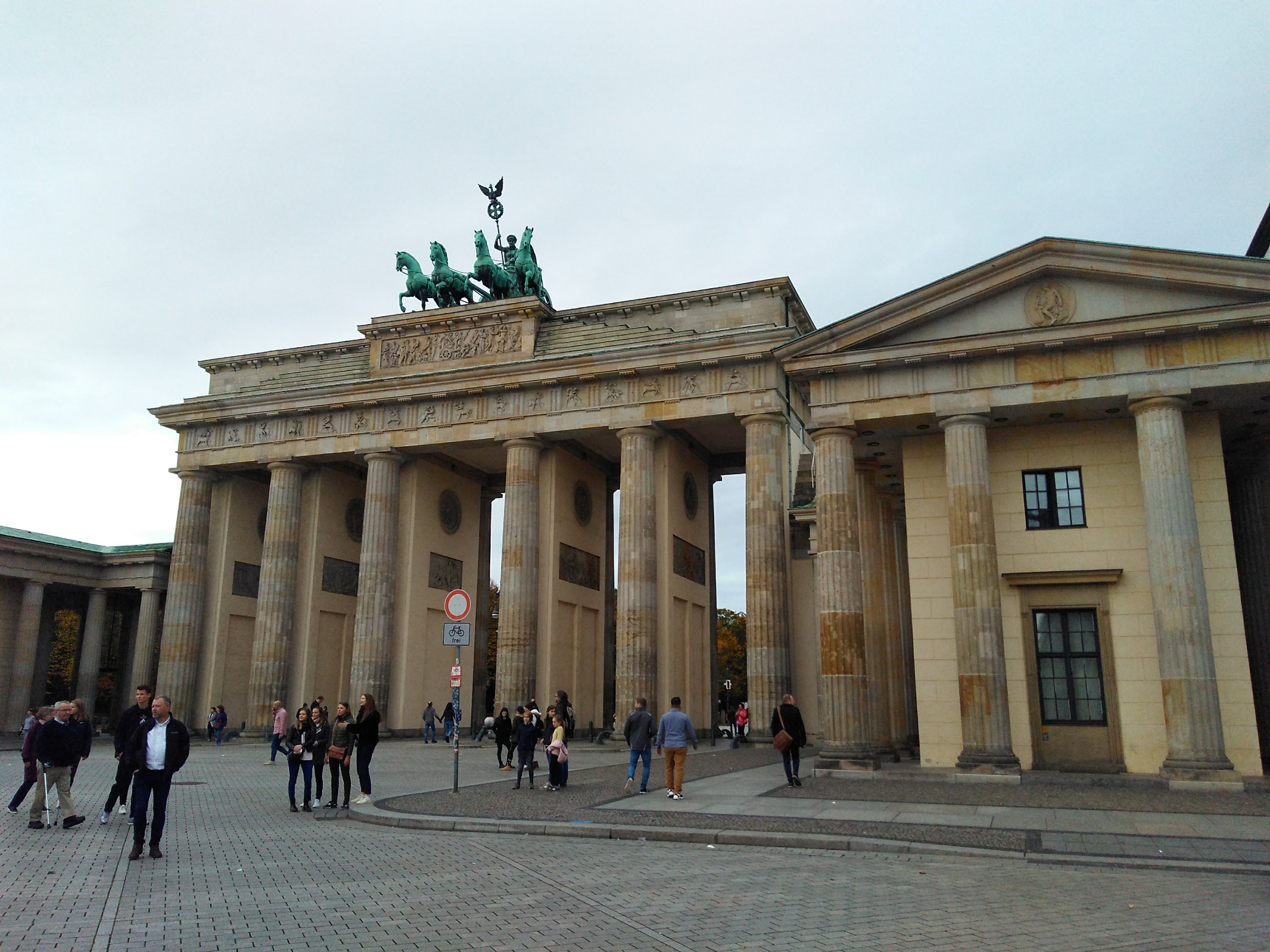
Brandenburger Tor
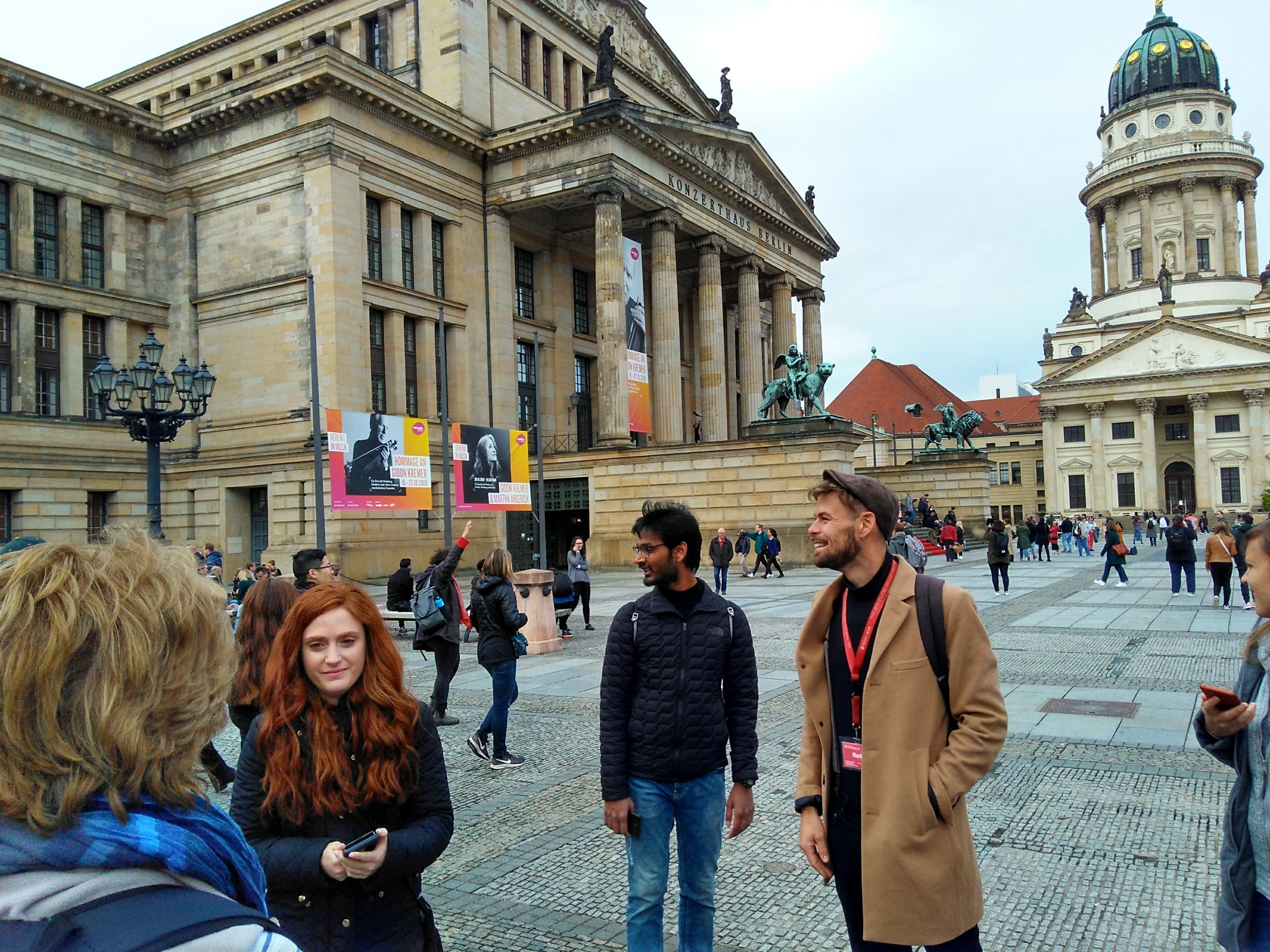
I took two walking tours, one on each day, and the guides for both were top-notch. The first was a basic introduction to Berlin and its deep history.
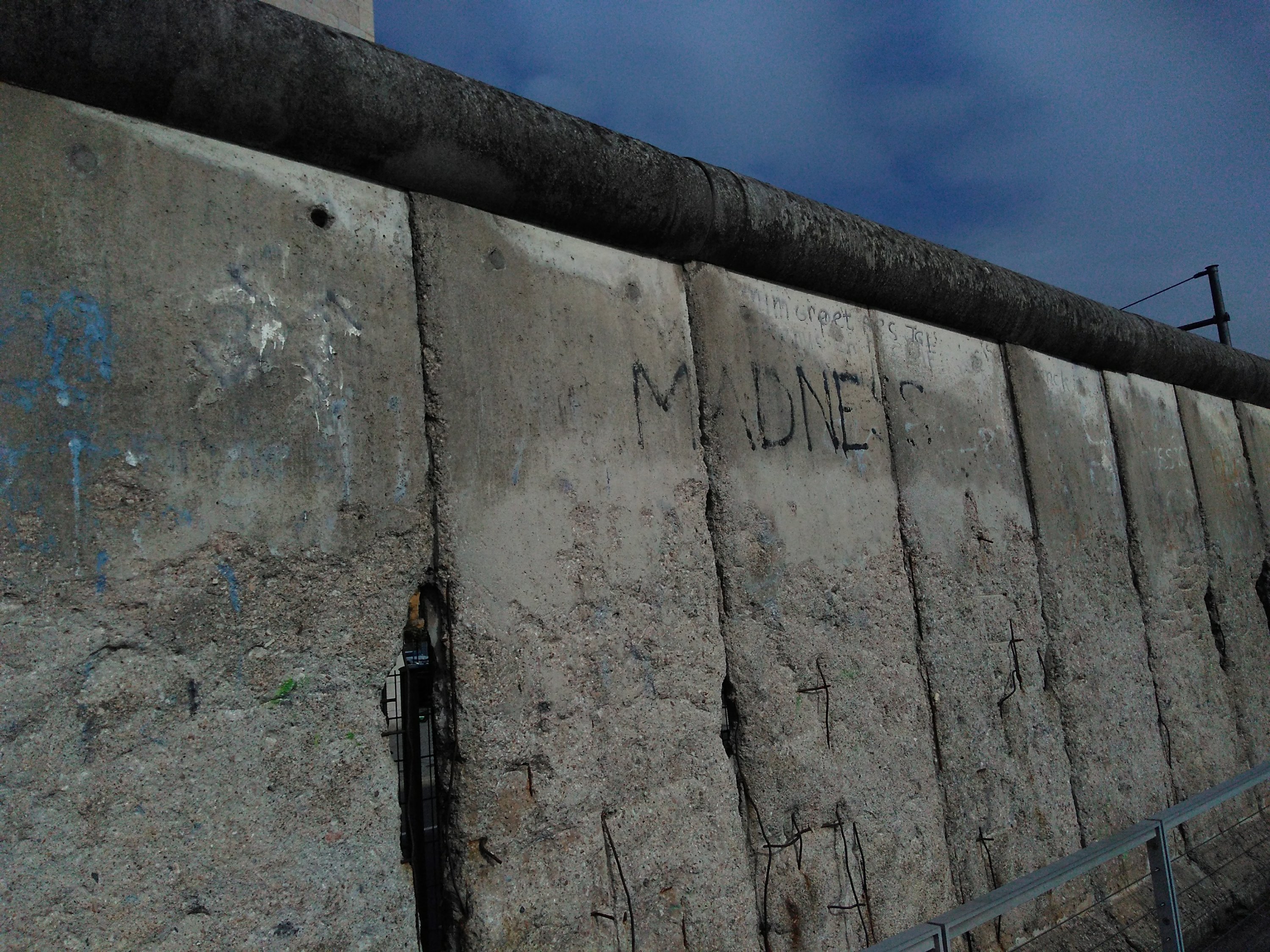
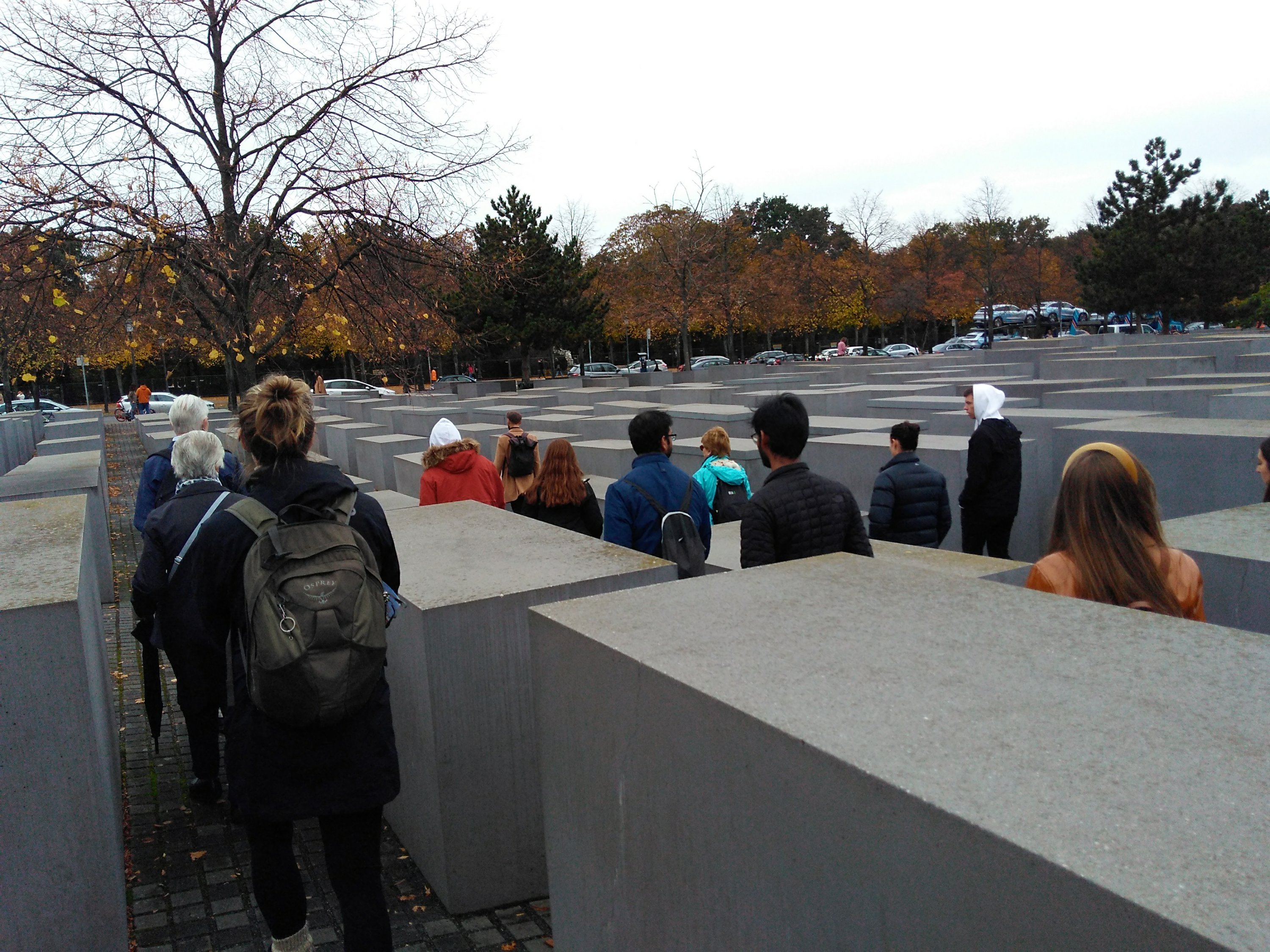
A remaining portion of the wallMemorial to the Murdered Jews of Europe
In the photo below we are looking down, through a transparent tile, in the plaza where the first Nazi book burning took place in 1933. Although you can see only our relections, we could see into the basement of what was then the university library. The shelves are empty.
A plaque at the site contains a quote by a Jewish poet Heinrich Heine, “Where books are burned, in the end, people will also be burned.” He wrote that in 1823, more than 100 years before the annihilation of millions of Jews and others by the Nazi regime.
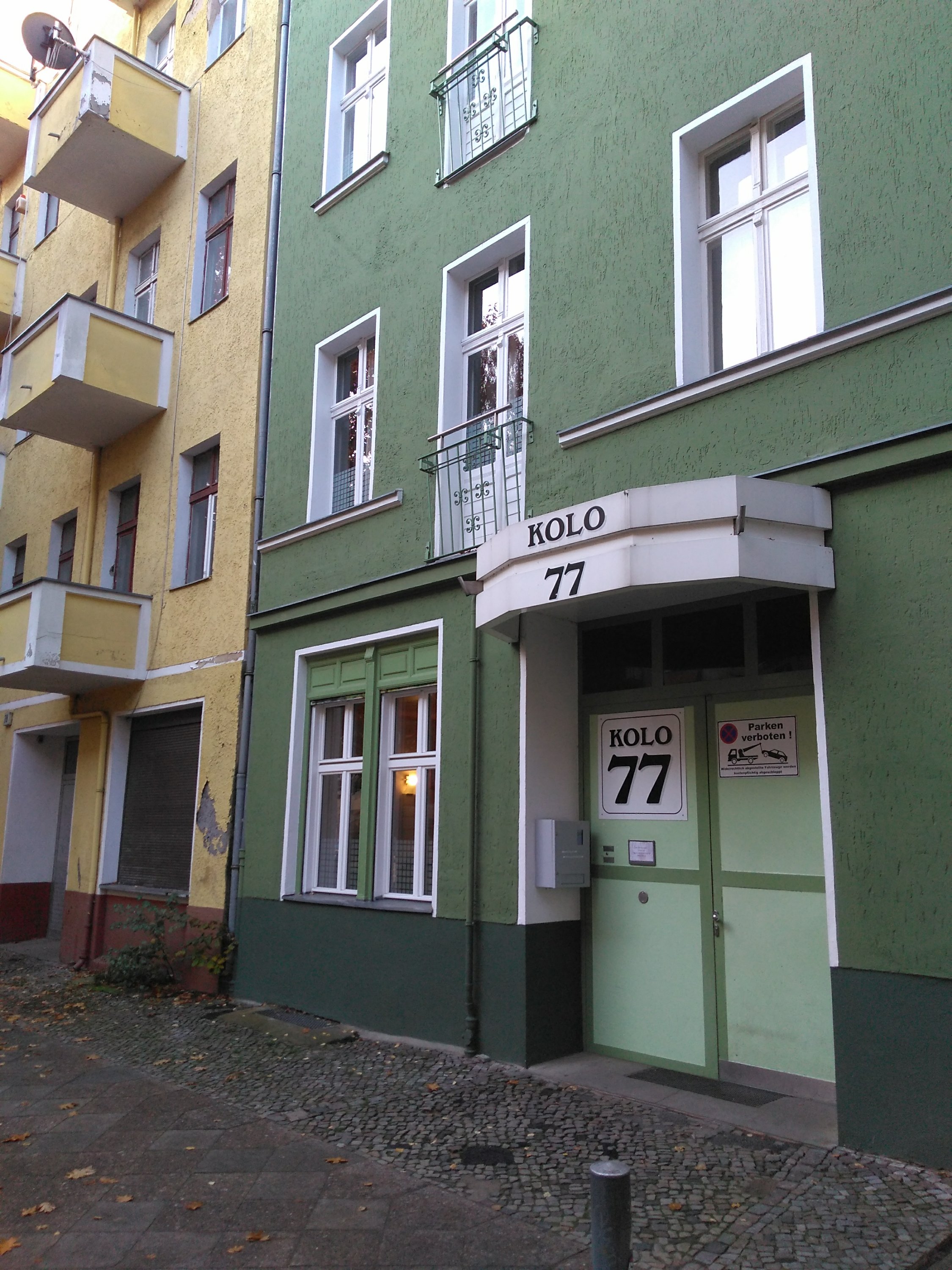
I stayed in a little apartment a short train ride (and then 15 minute walk) from downtown. Although I felt perfectly safe walking in that neighborhood, I did not want to be out by myself after dark. Therefore I missed seeing the evening light displays that were in celebration of the 30th anniversary of the wall coming down. But it was really the buzz of the town.
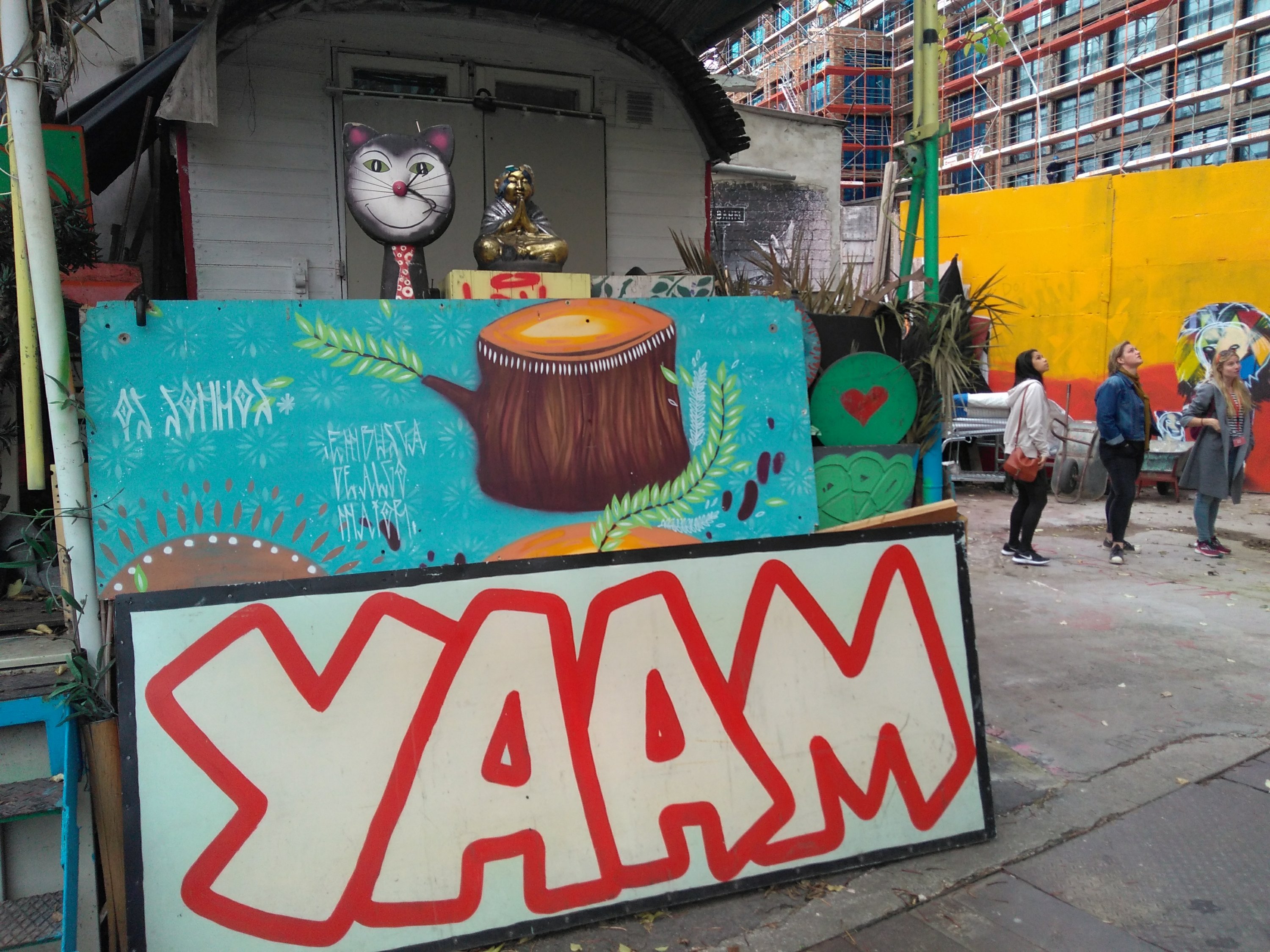
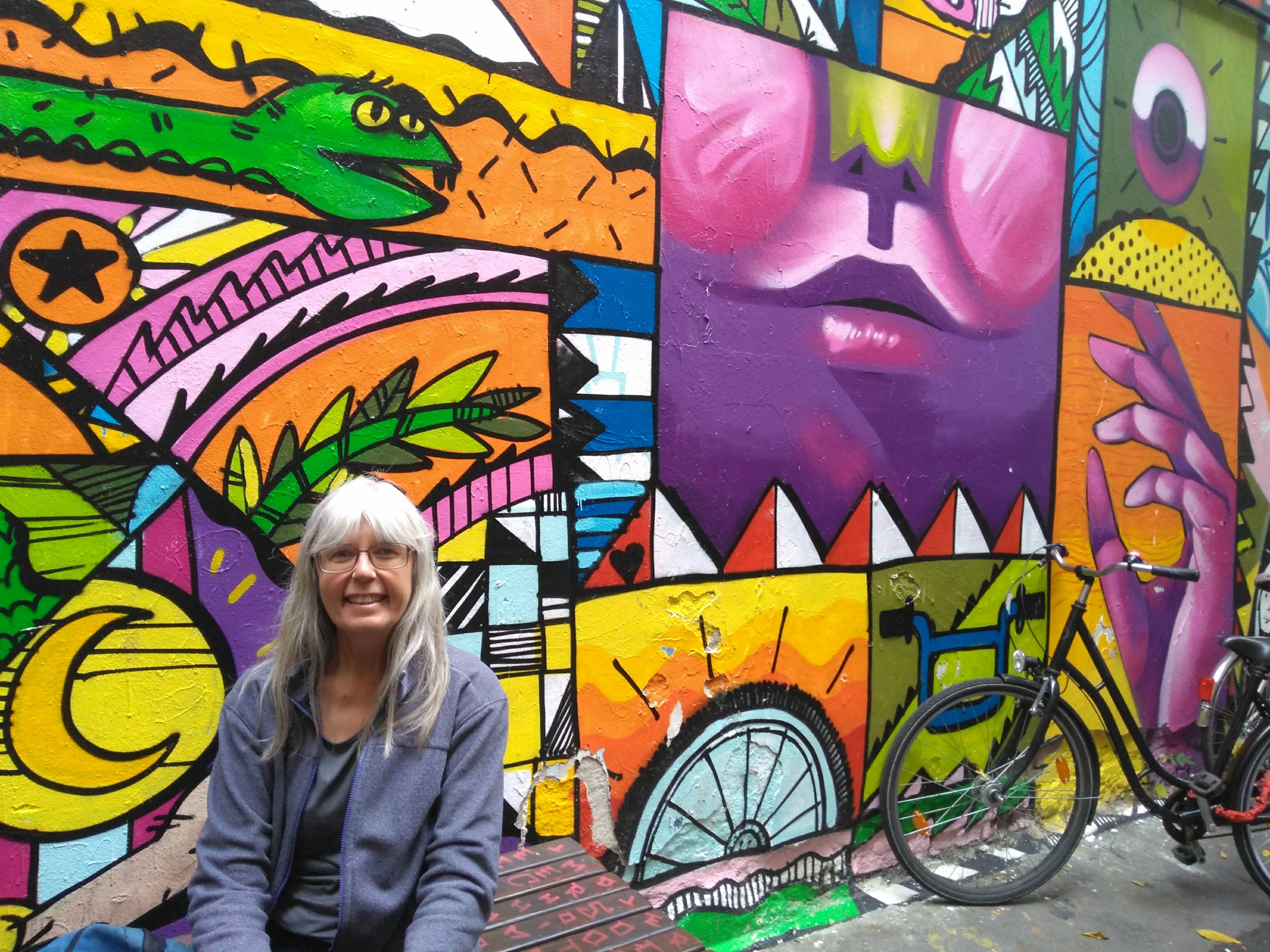
My second tour was titled “Alternative Berlin” and we took city transportation to several neighborhoods where we looked and learned about Berlin’s street artists, musicians, and the more…alternative… lifestyles.
It was so very interesting to hear about how the wall take-down and the reunification of Germany impacted this sector of the city.
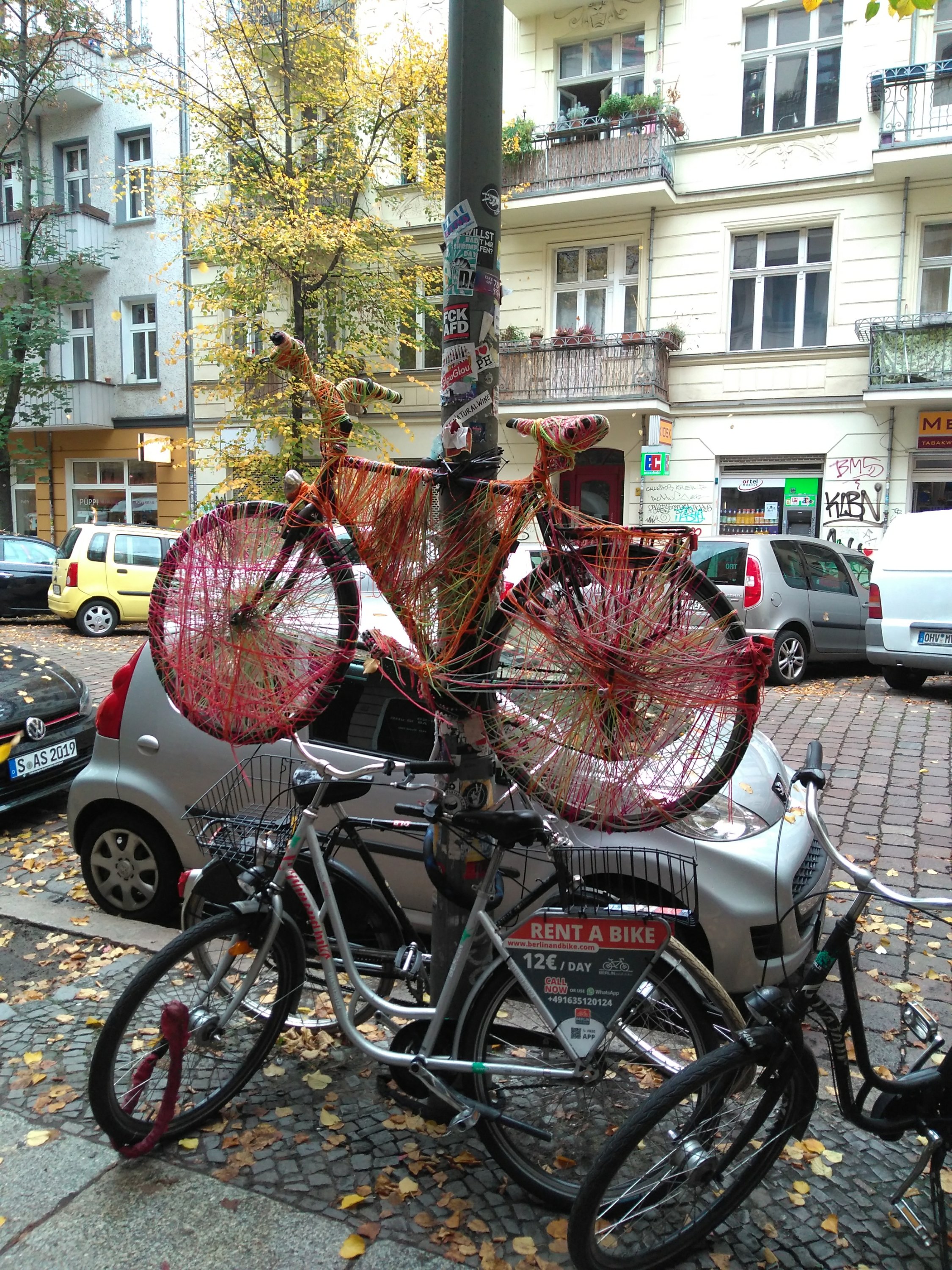
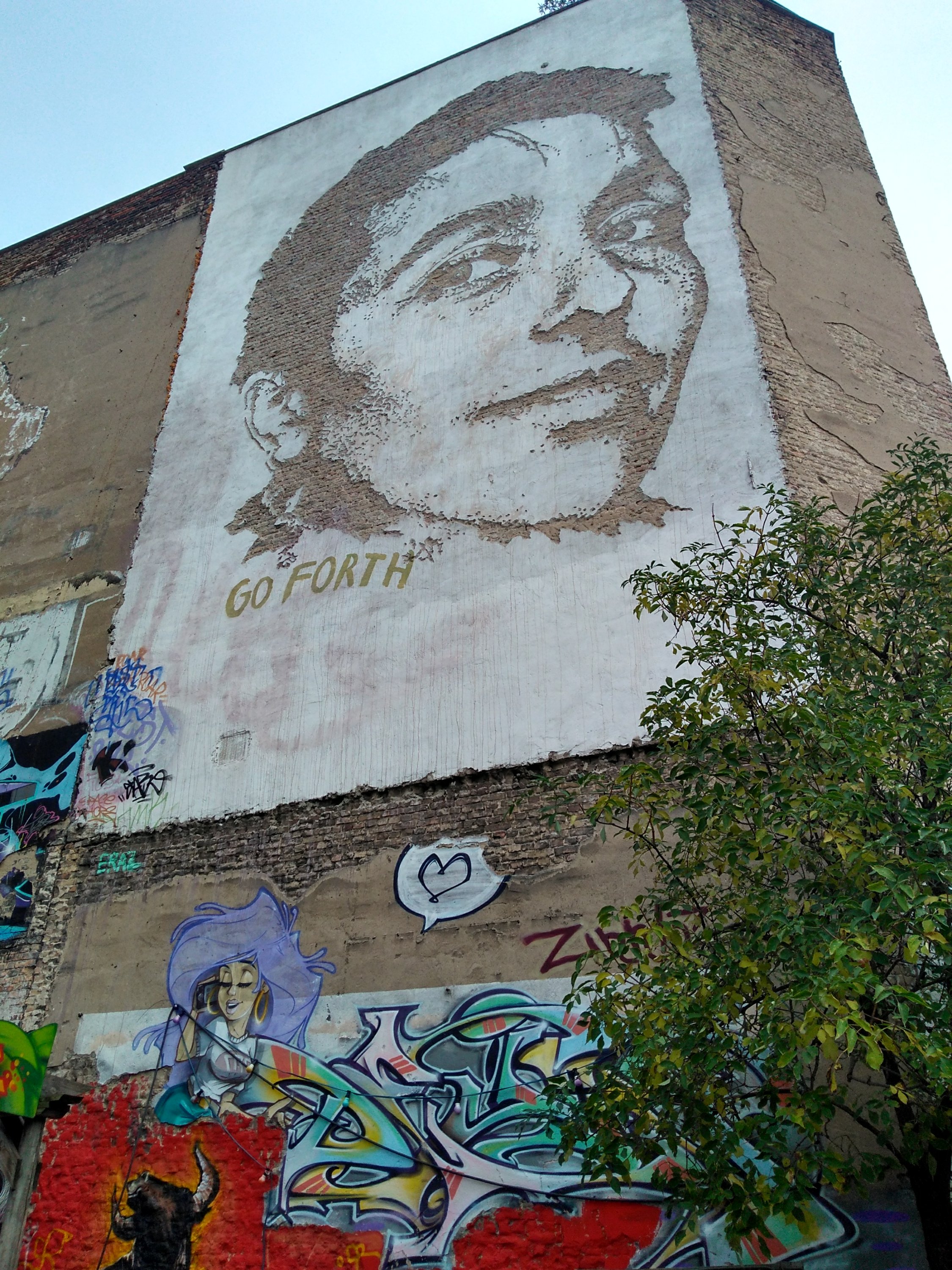
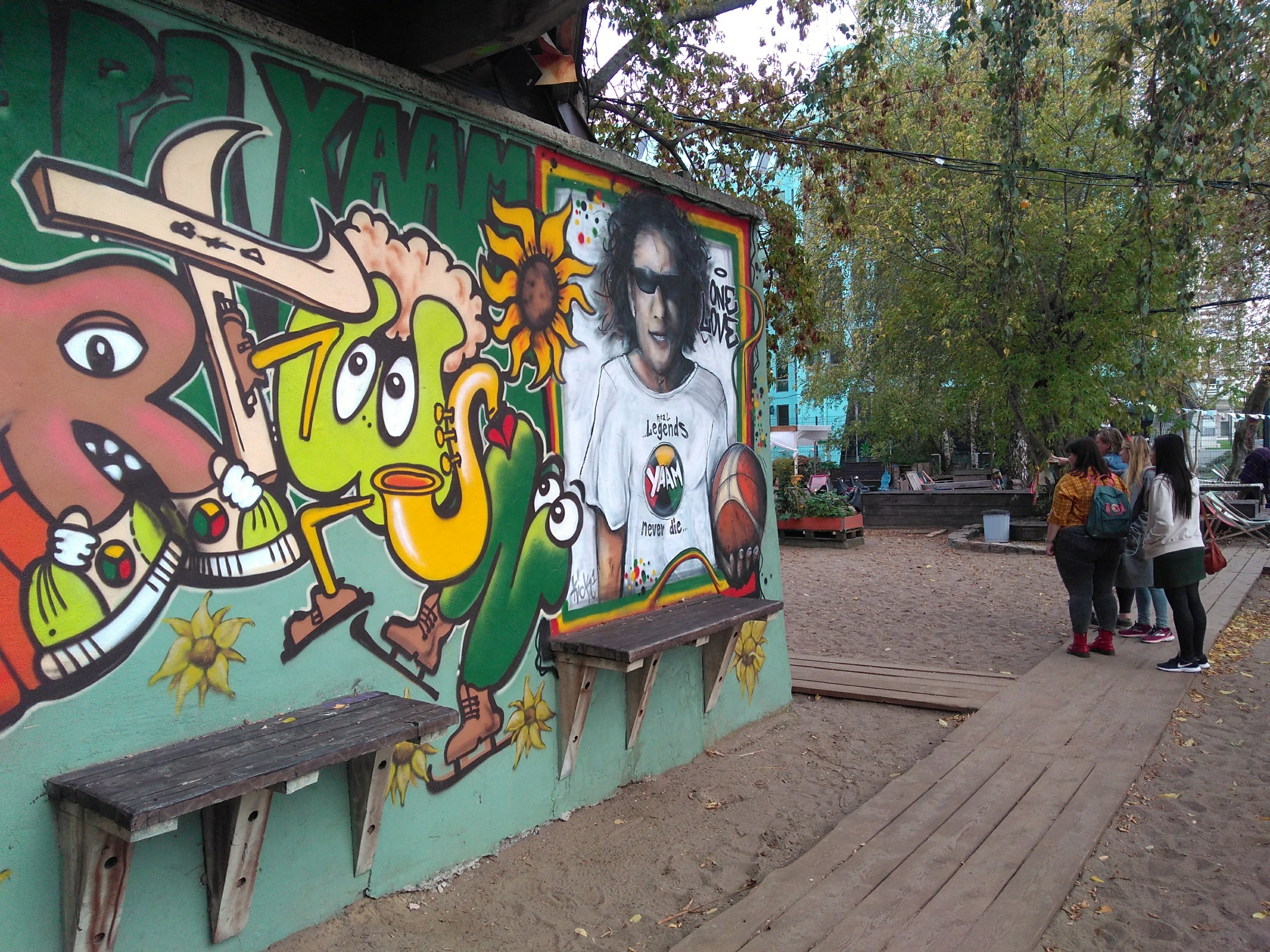
My tour guide was very good about acknowledging the artists for many of the pieces we looked at, but I was unable to write it all down, so I’m including pictures without citations, with apologies to the artists.
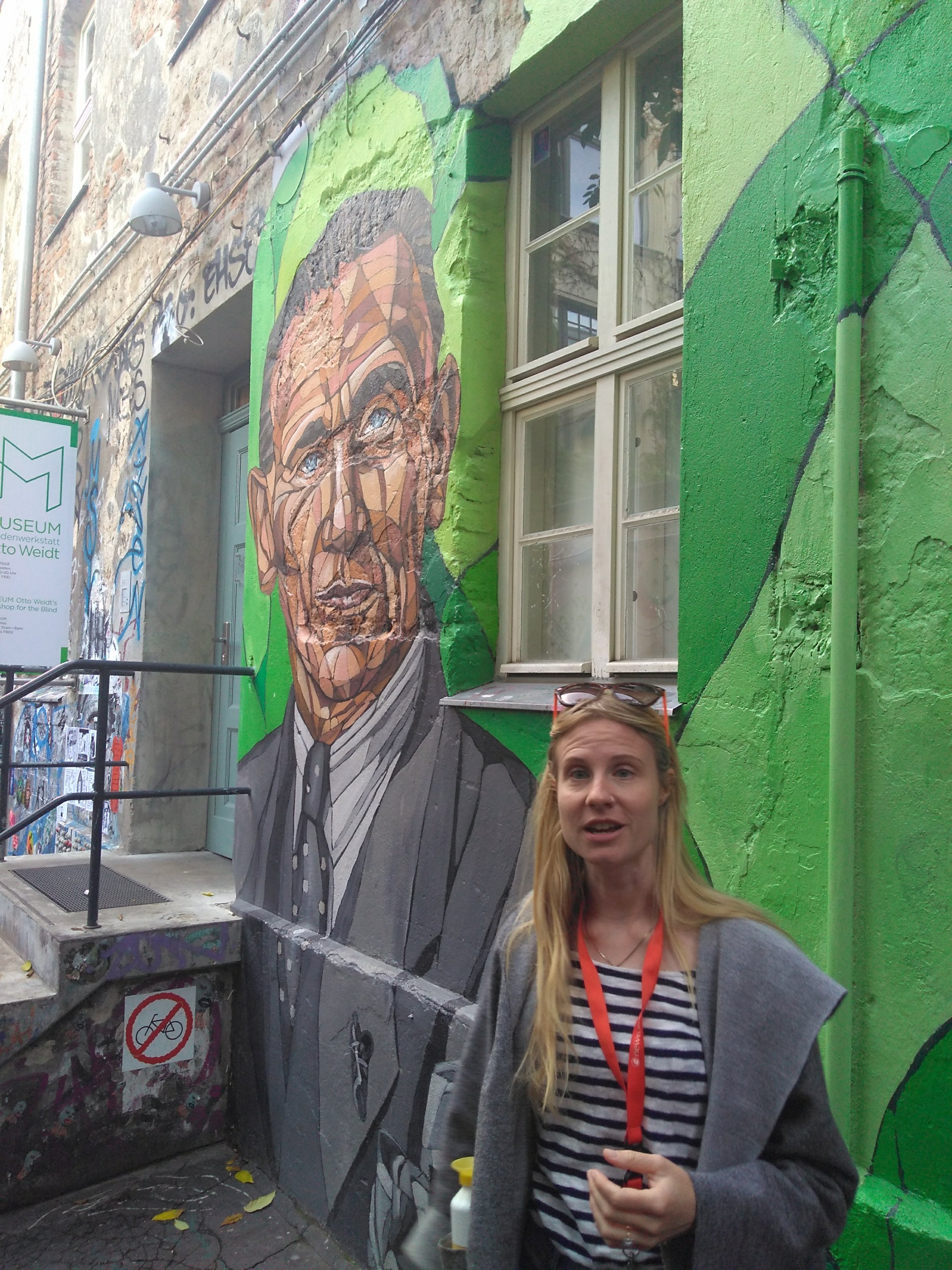
Portrait of Otto Weidt outside of the museum in the location of his broom and brush factory at which he employed blind and deaf employees during the 1930’s and 40’s. Many of his people were taken to concentration camps in spite of his bribes.Young African Art Market
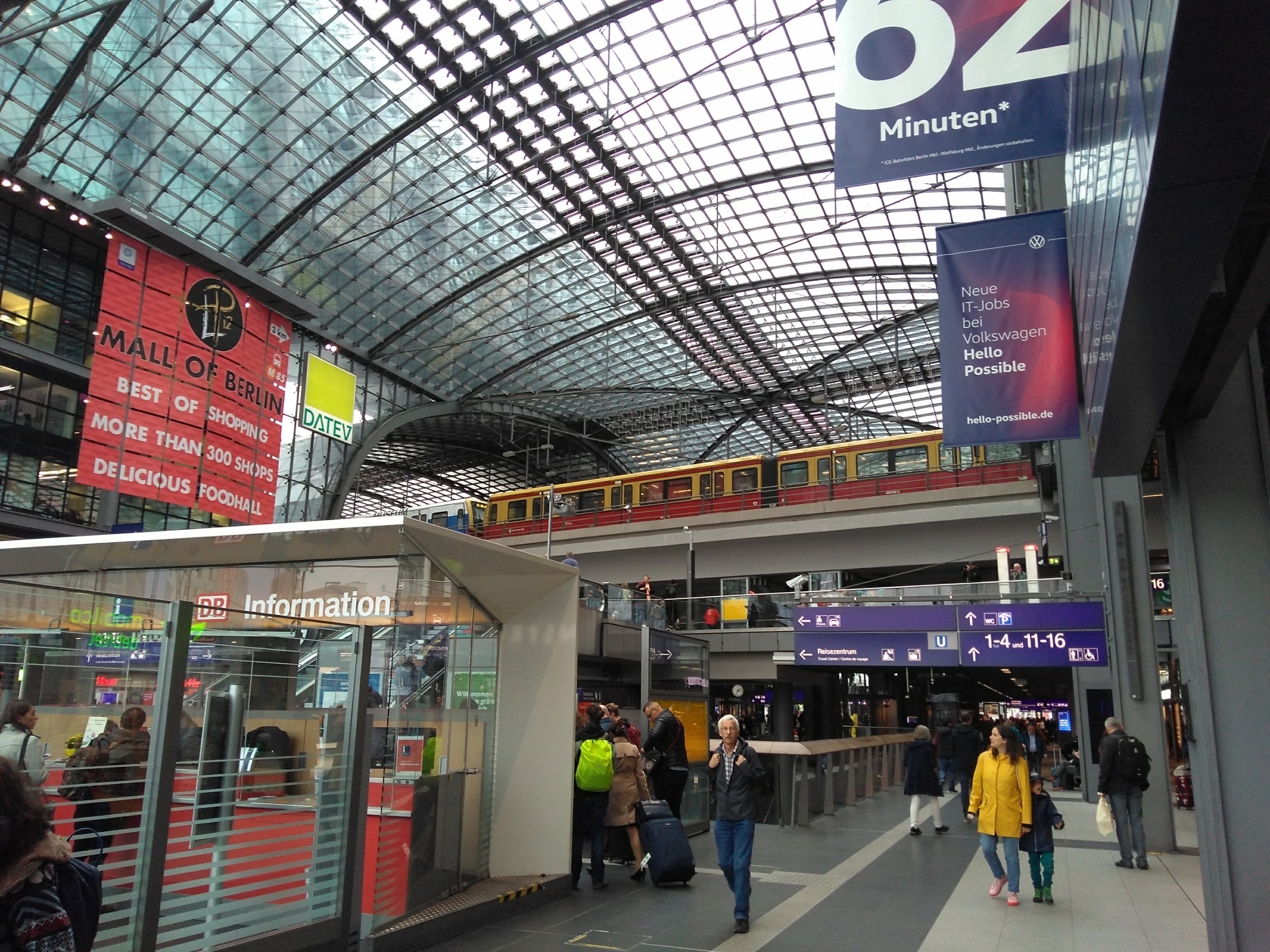
There are definitely places we visited on this tour that I would like to have gone back to. But alas, in the blink of an eye I was finding my way back to the Hauptbahnhof (main train station) to catch my train back “home” to Munich.
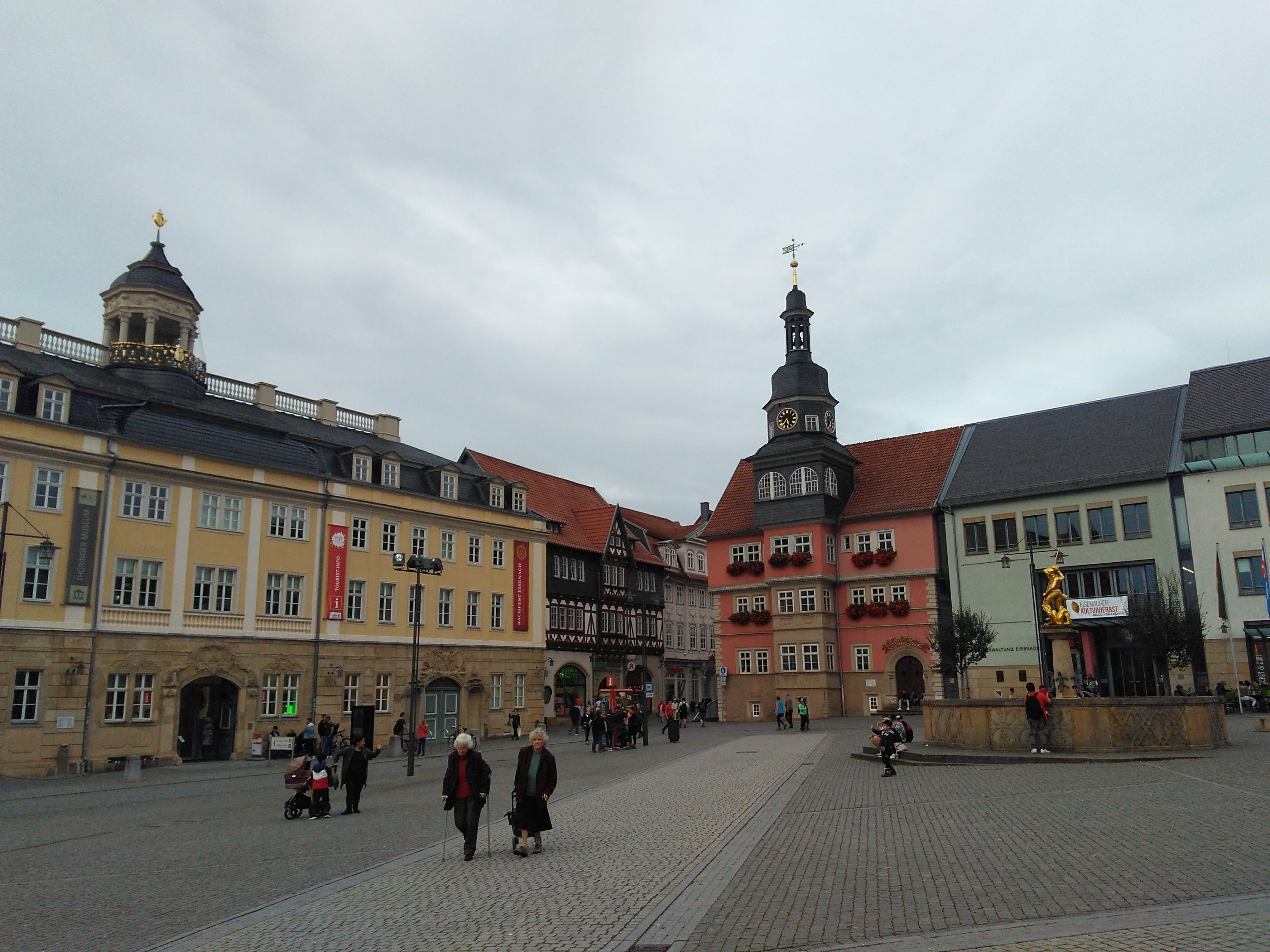
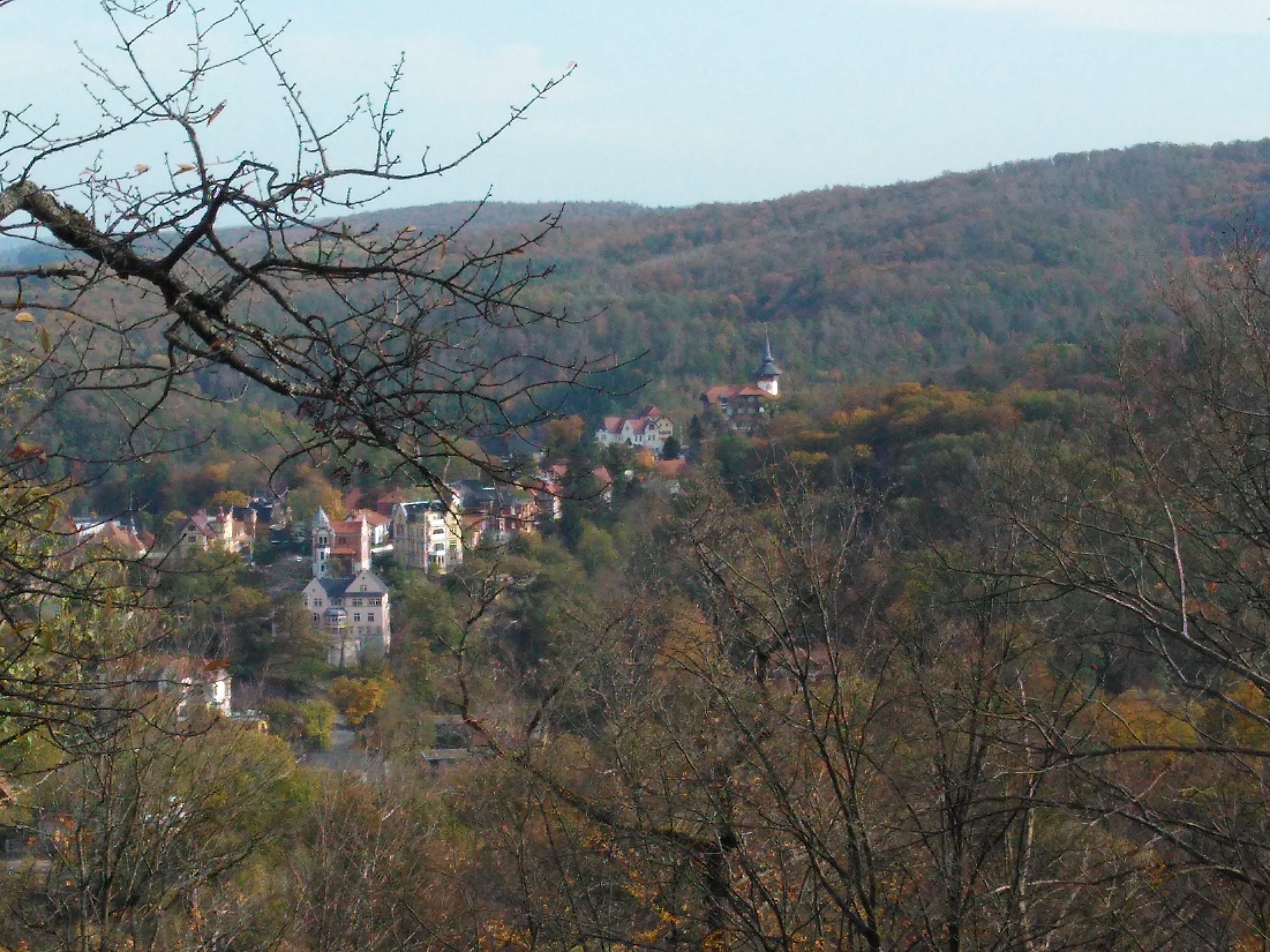
One day in Eisenach was really not enough, but it was all I had.
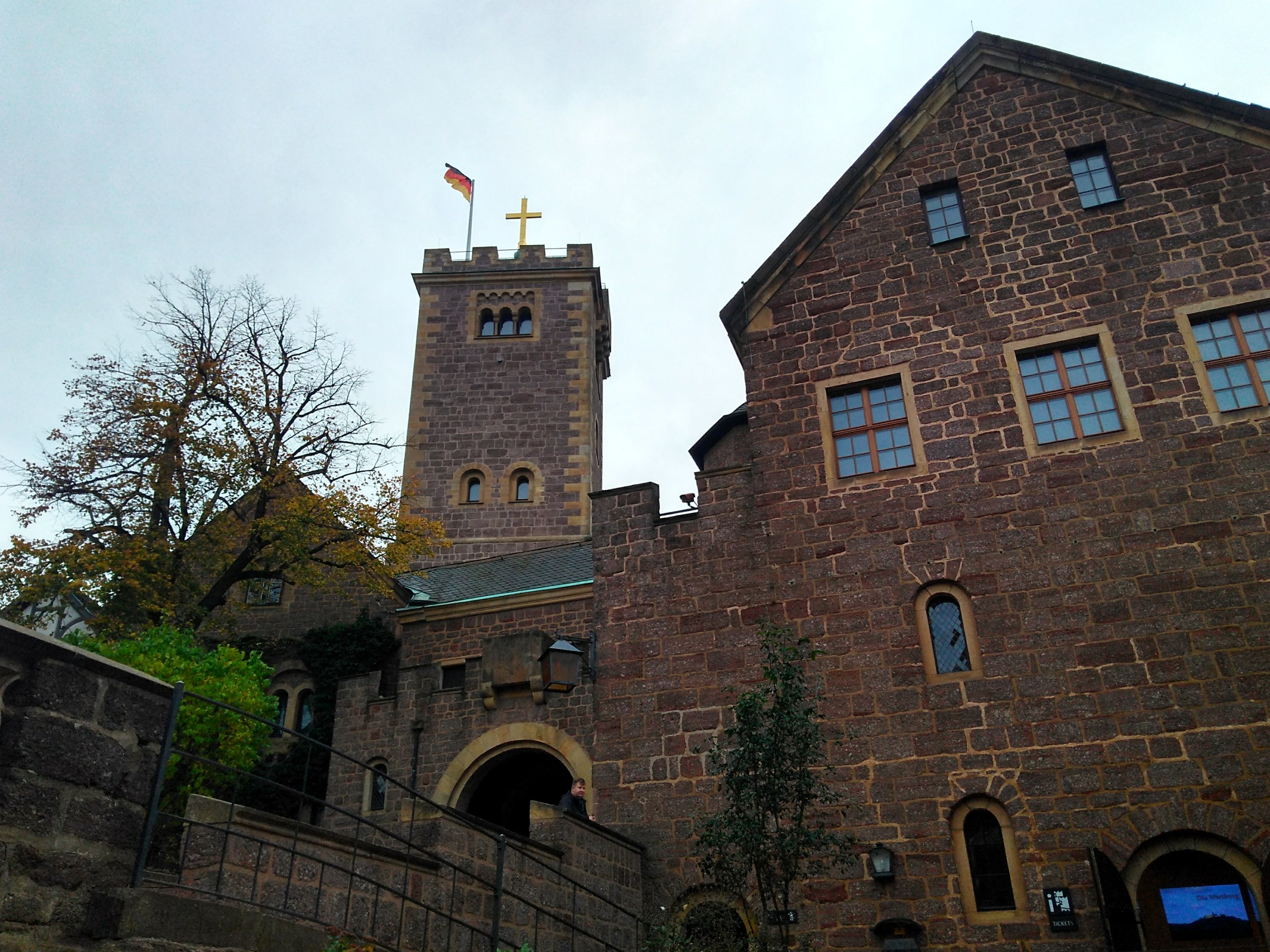
My main reason for going there was to see Wartburg Castle, where Martin Luther was whisked to after his little tiff with the Pope and other top brass at the Diet of Worms. He lived there for about a year, praying, studying, and translating the Bible into German!
It was a nice walk up, up, up the hill to the castle. The only way you can see the inside of the castle is to take a guided tour, and I missed the one English language tour for the day. So unfortunately there was a lot of aural explanation that I was not able to follow. And a lot of other castle history that I, frankly, wasn’t that interested in. But I saw the sites and read the English that was on some of the plaques.
Wartburg Castle up close
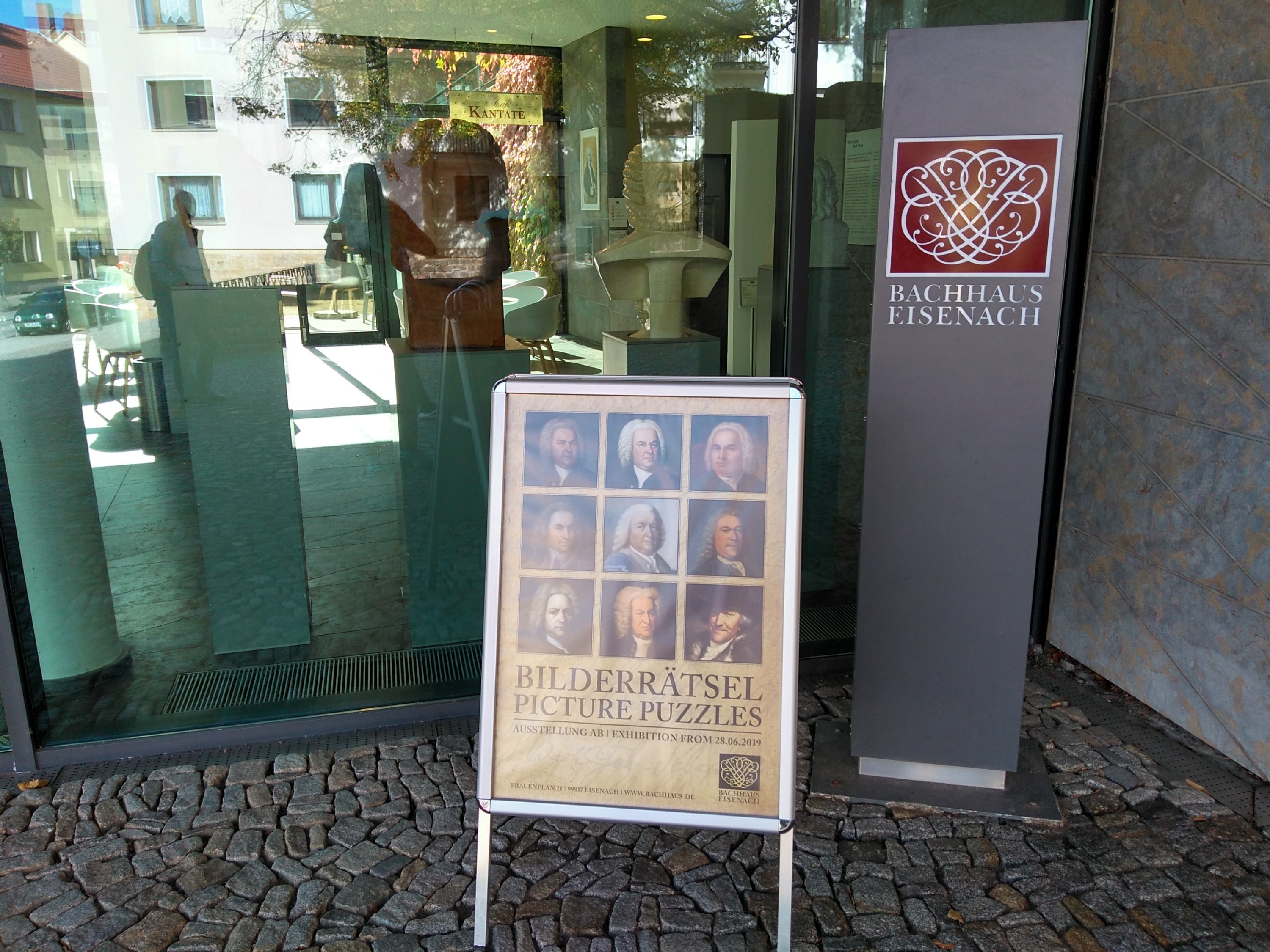
At the last minute I learned that there is also a large, wonderful Bach museum in Eisenach (another tip-of-the-hat to my brother for this information). So of course I had to squeeze that in.
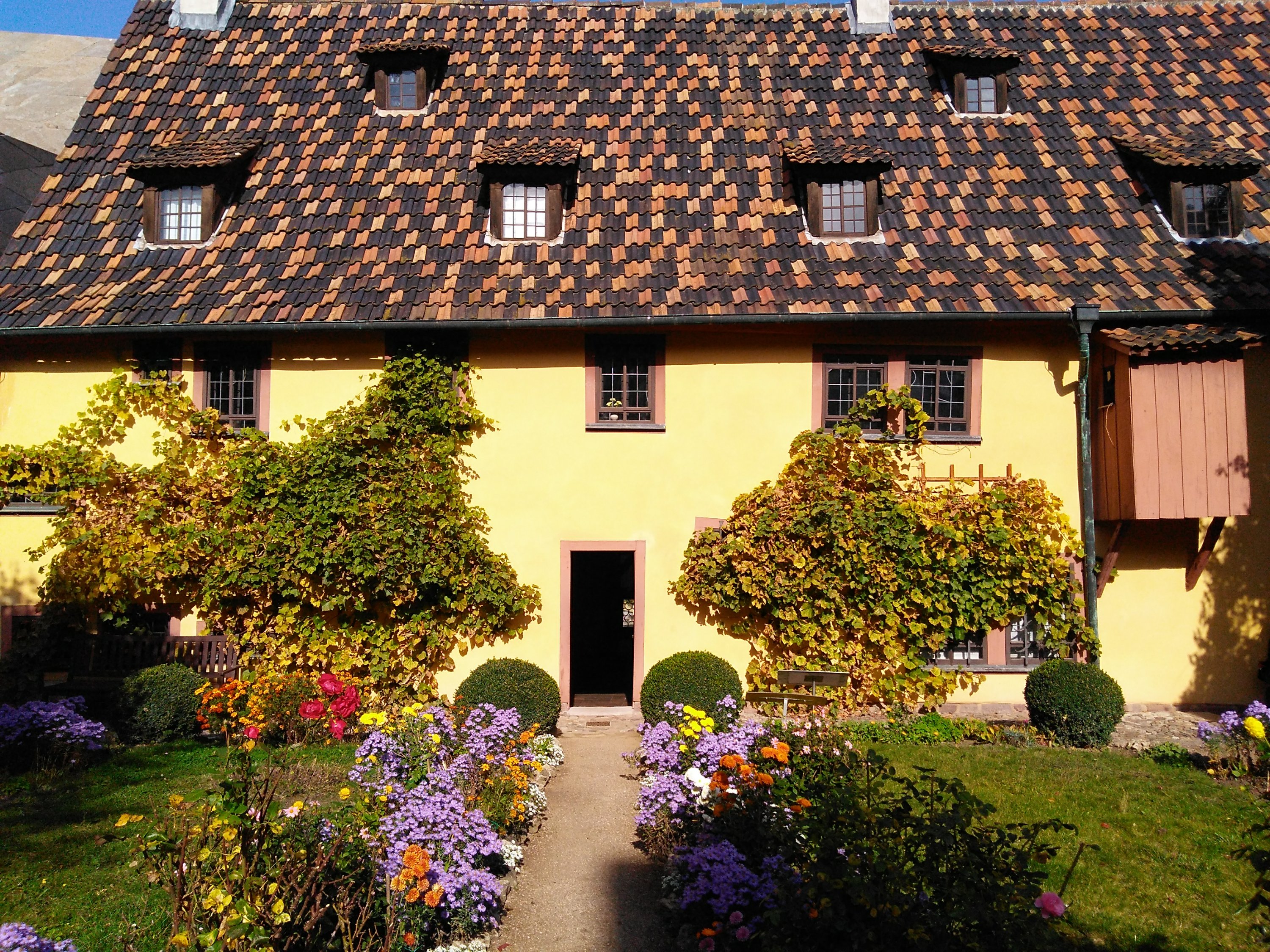
J.S. Bach was born in Eisenach and the Bach Society there in 1905 purchased the home where Bach was born. They have built around it a stellar museum and tribute to this music master. Once each hour there is a live music performance. The keyboardist not only played pieces on five different period instruments, but spoke about each one, in German AND English. Of course the music itself needs no translation!
This is Bach’s house from the back
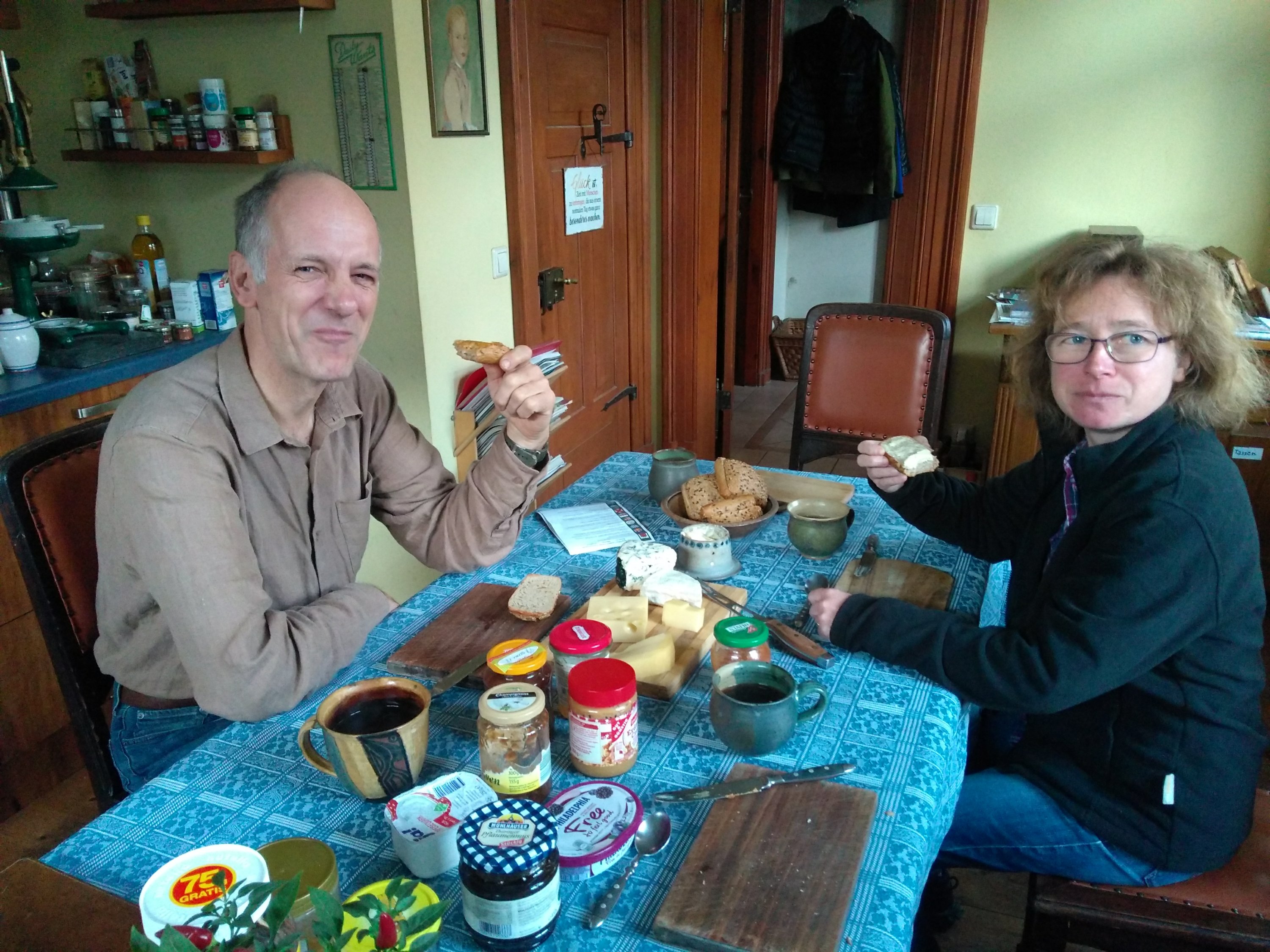
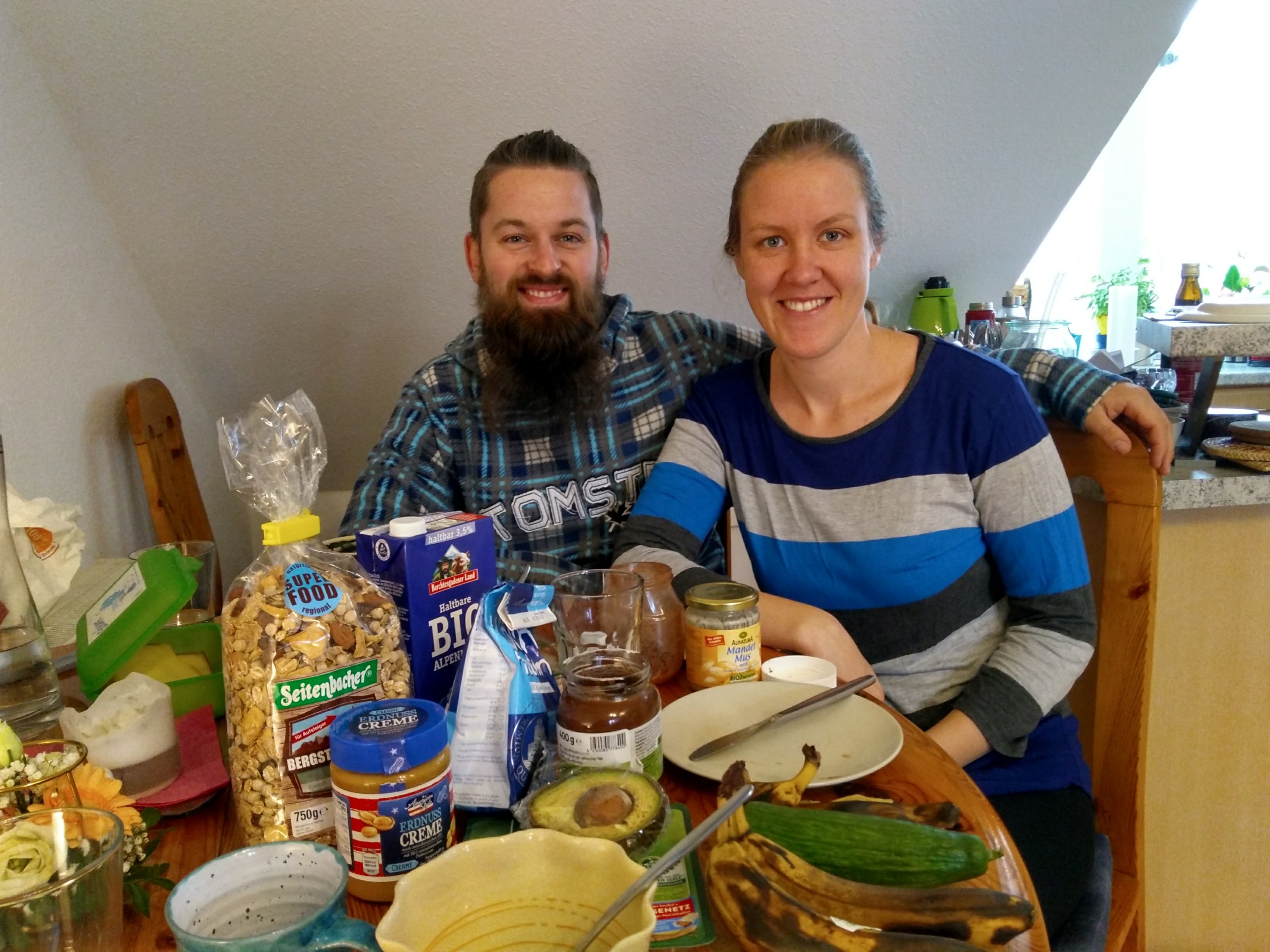
And to cap it all off, my most wonderful Couchsurfing hosts, Veronika and Manuel, invited me to have breakfast with them the next morning before I had to catch the train to Berlin. They are both social workers and super interesting folks. We had good conversation about the state of our countries and the world and they gave me some pointers on how to find peanut butter in grocery stores here.
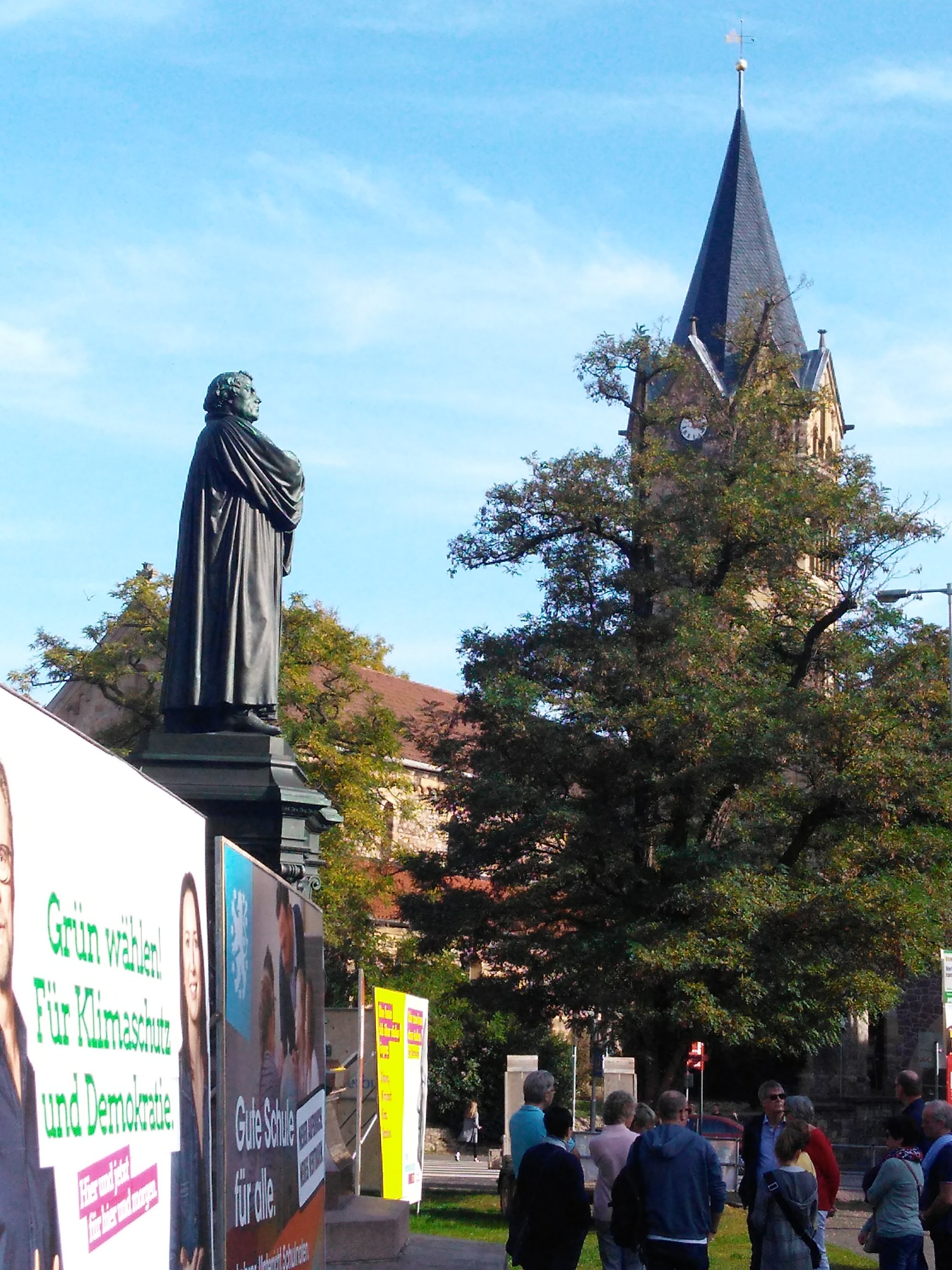
I have reached a part of Germany where one doesn’t have to look to hard to find a Protestant church. In fact the town of Erfurt is loaded with them, and I stayed in one. Well, a building connected to one.
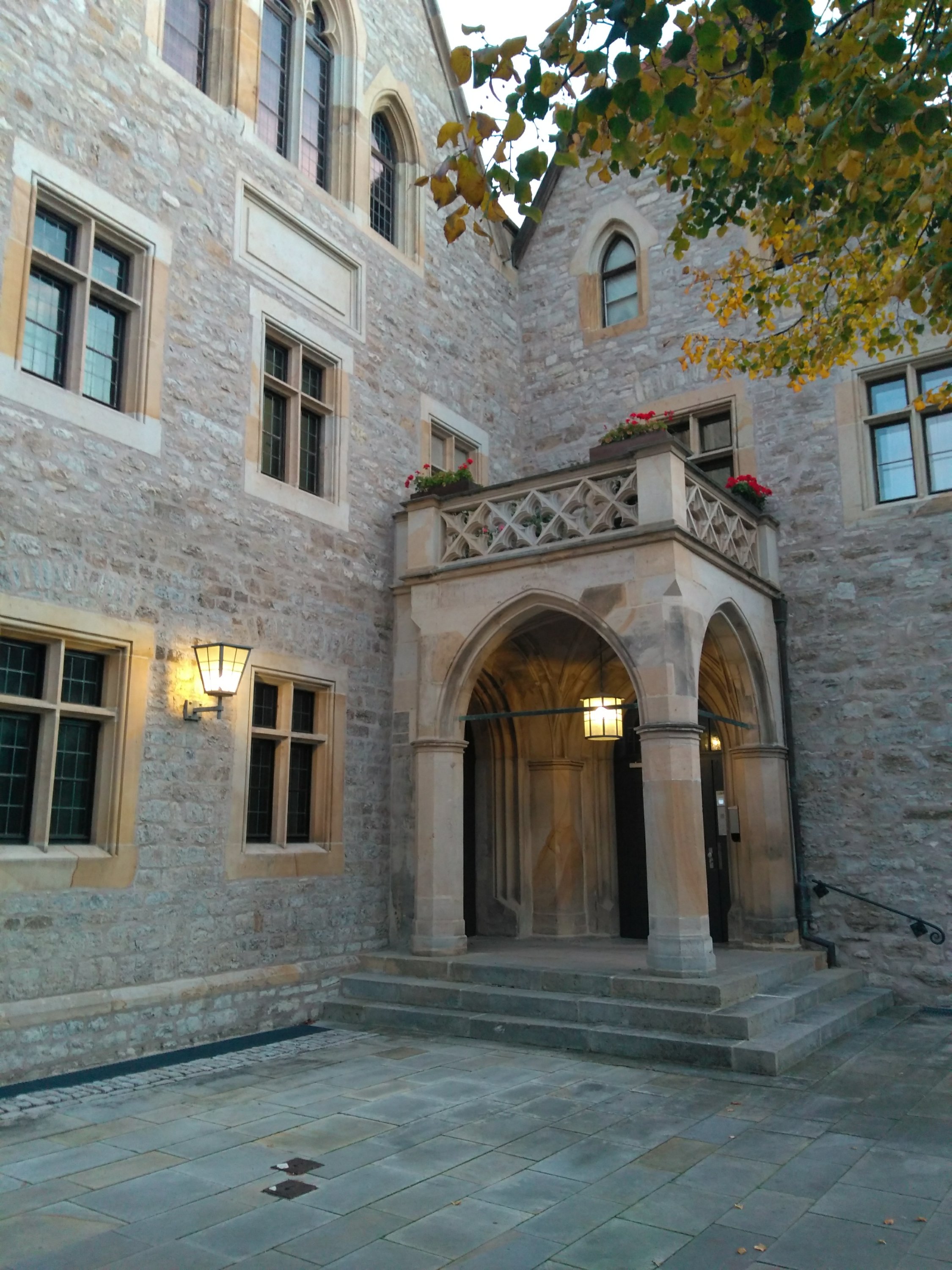
My Munich friends helped me plan my loop through the country, and when I told them I wanted to stop in Erfurt, they suggested I stay at the former monastery of St. Augustine there. It is now a retreat center.
This is not just any monastery; this was where Martin Luther studied and became a monk. It was a bit of a splurge, but I made a reservation for one night. I got there and within 15 minutes decided I needed to stay two nights. So I did. It was wonderful.
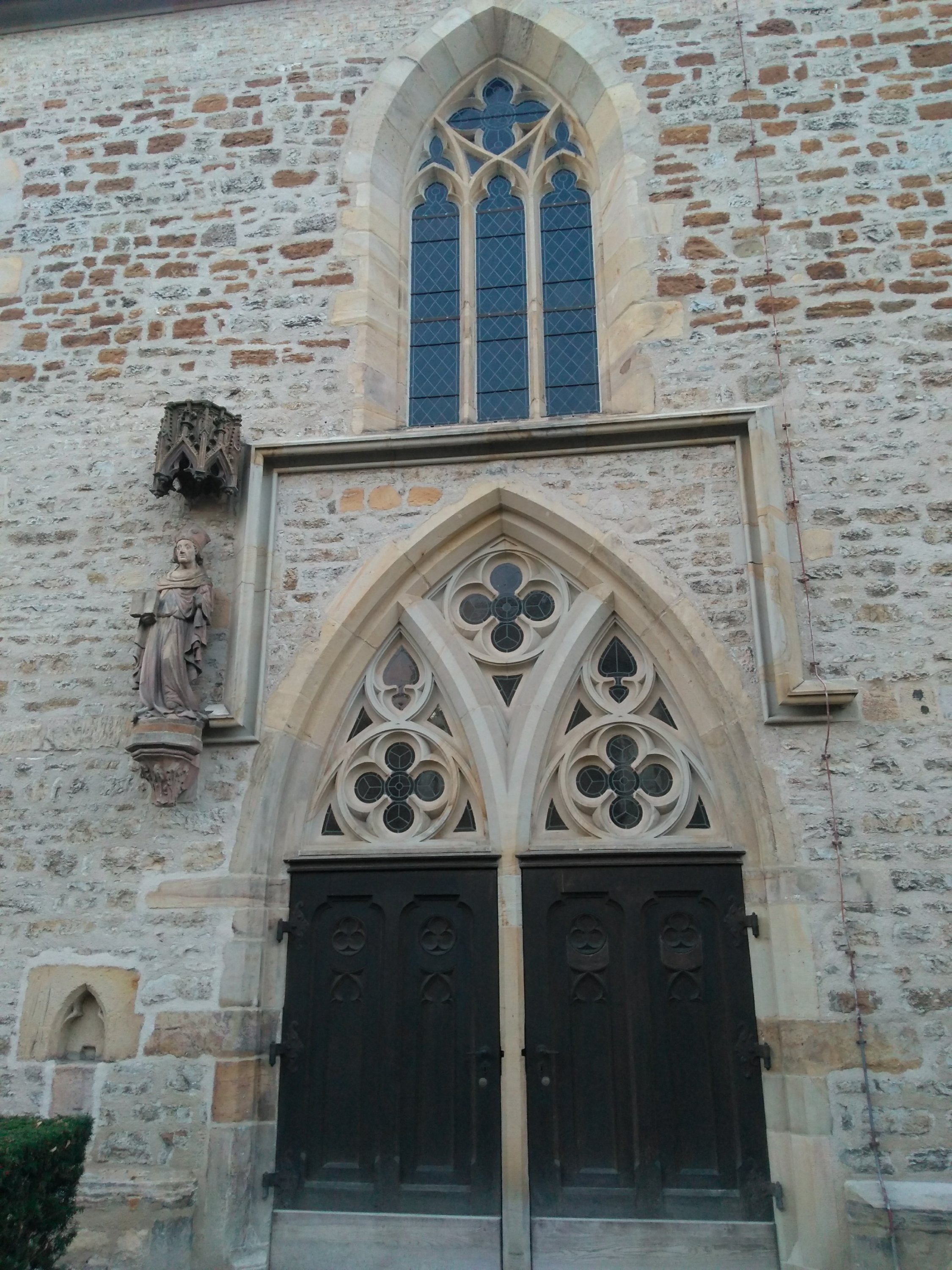
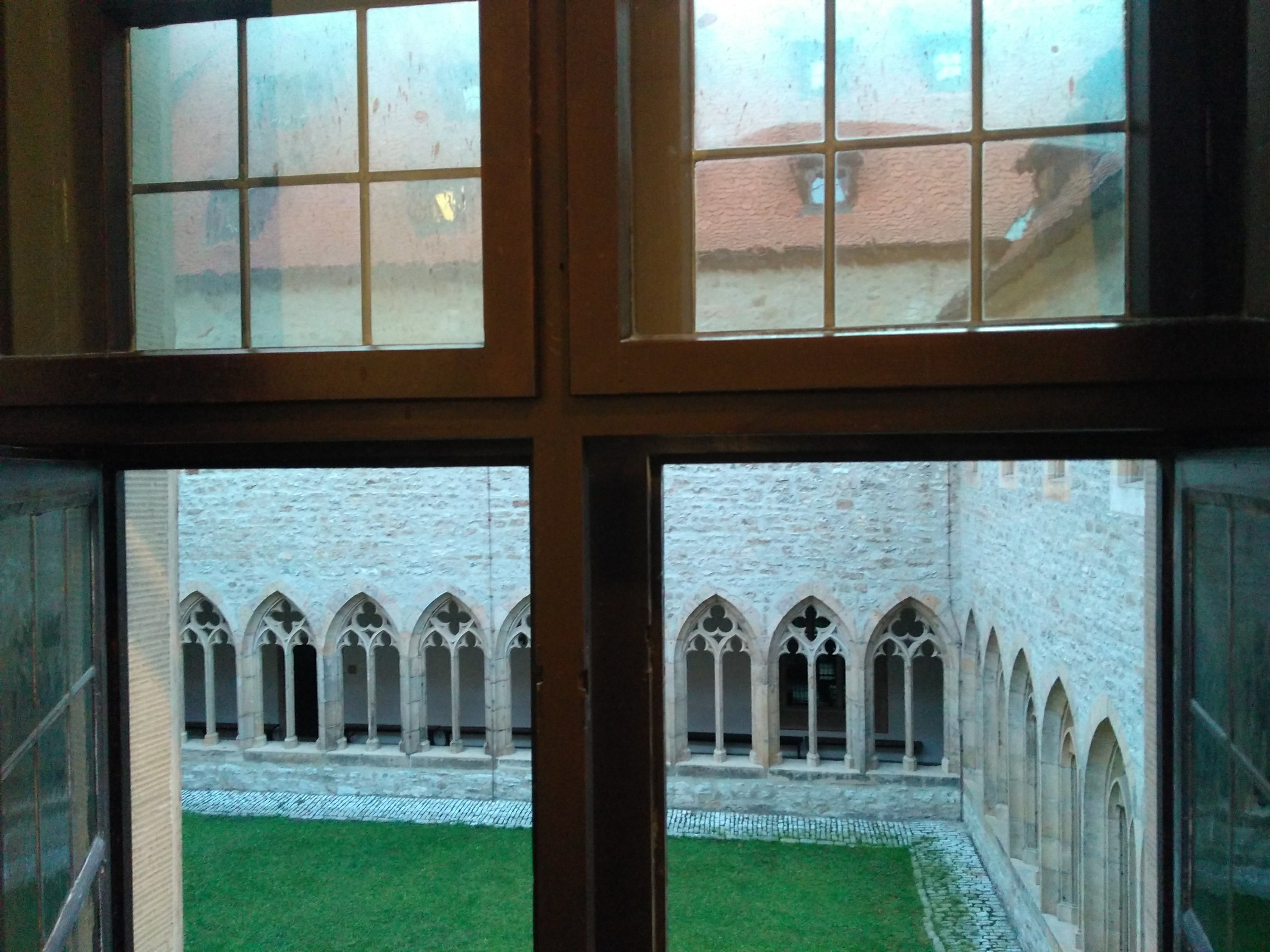
The room was modestly furnished and peaceful, and you can just feel the deep history of the place as you walk around the grounds or go into the church. Once Martin Luther’s teachings began to be absorbed, the monastery dissolved (in the 1520’s) and the site was part of a Protestant parish and had various uses over the centuries, including a school and an orphanage.
In 1945 the monastery was hit by two bombs dropped by Allied forces. Tragically 267 people taking refuge in the library basement were killed. That building and two others were destroyed. Reconstruction began after the war ended, but this town was in the GDR (East Germany), and rebuilding was not a quick or smooth process. Conversion to its current mission and structure began in 1999.
Of course I attended the nightly Vespers in the Sanctuary. The service was spoken and sung (a cappella) entirely in German, but the bulletin included the English translation for which I was grateful.
My day in Erfurt was spent walking around town, just soaking it all in. The information plaques all around are in German, of course, so my understanding of everything I saw was not always at a cognitive level. But that did not hamper my enthusiasm.
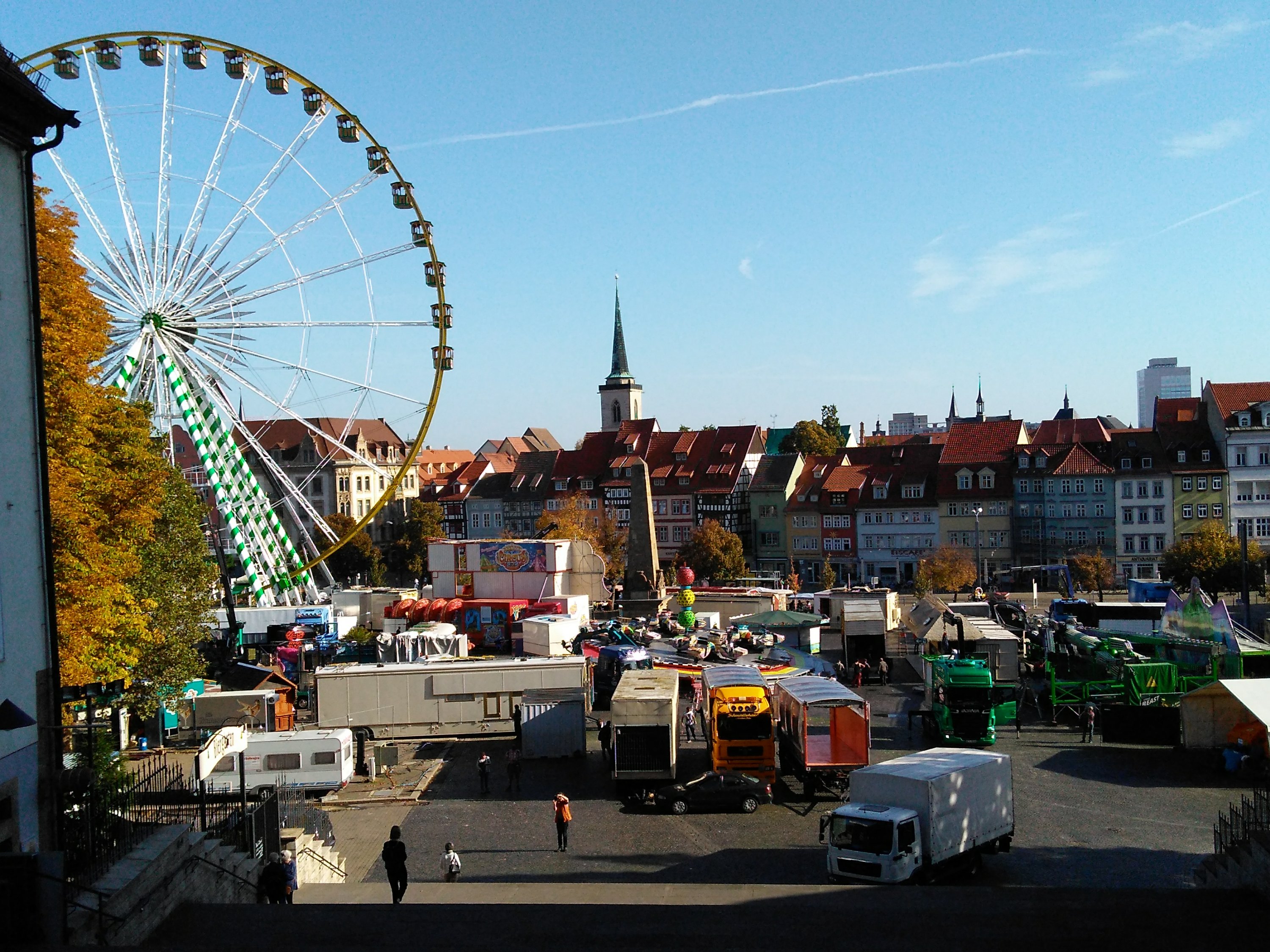
The carnival was just coming down.
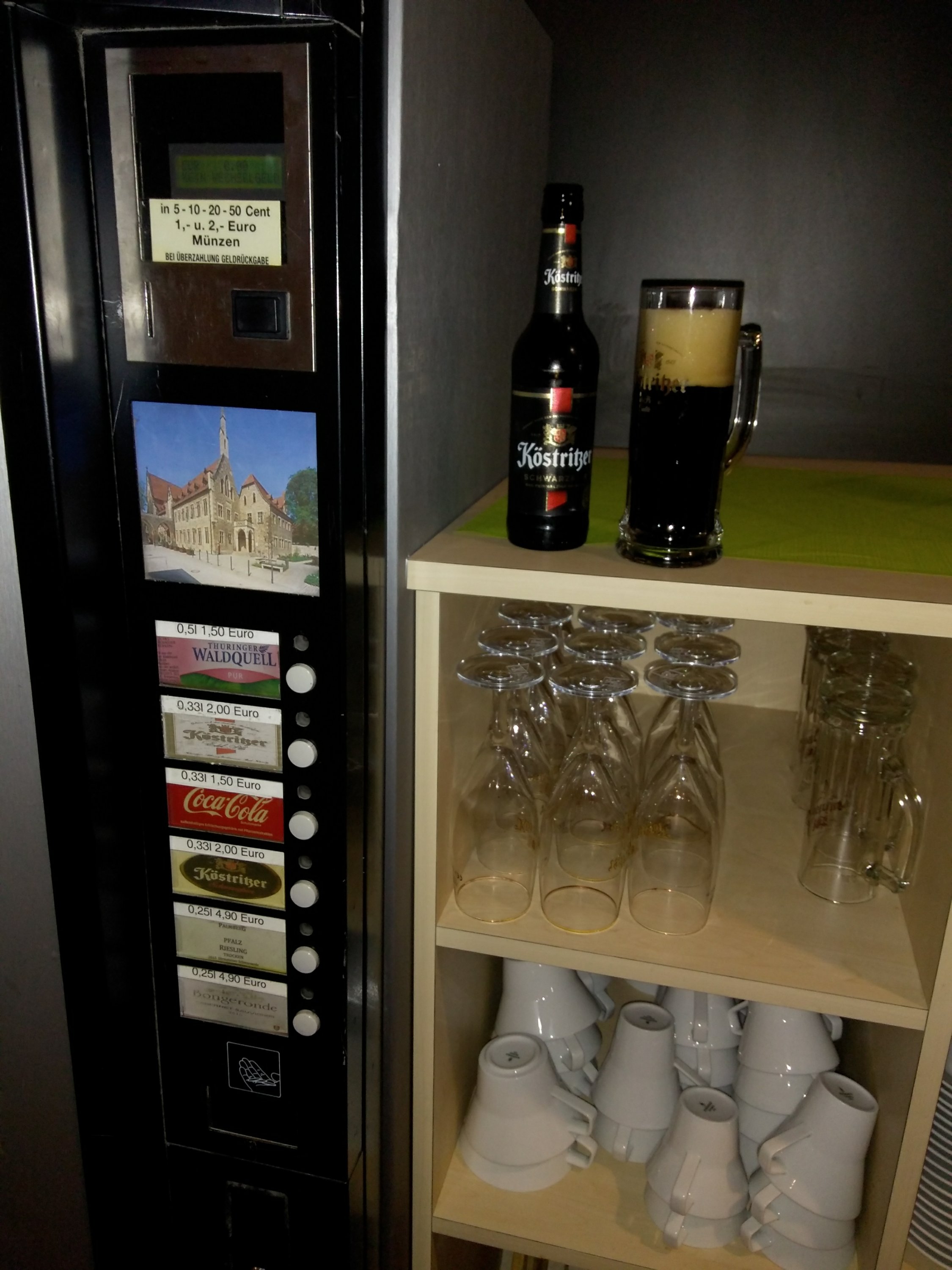
Oh, did I mention the vending machine with two beer options? For only € 2, how could I resist?
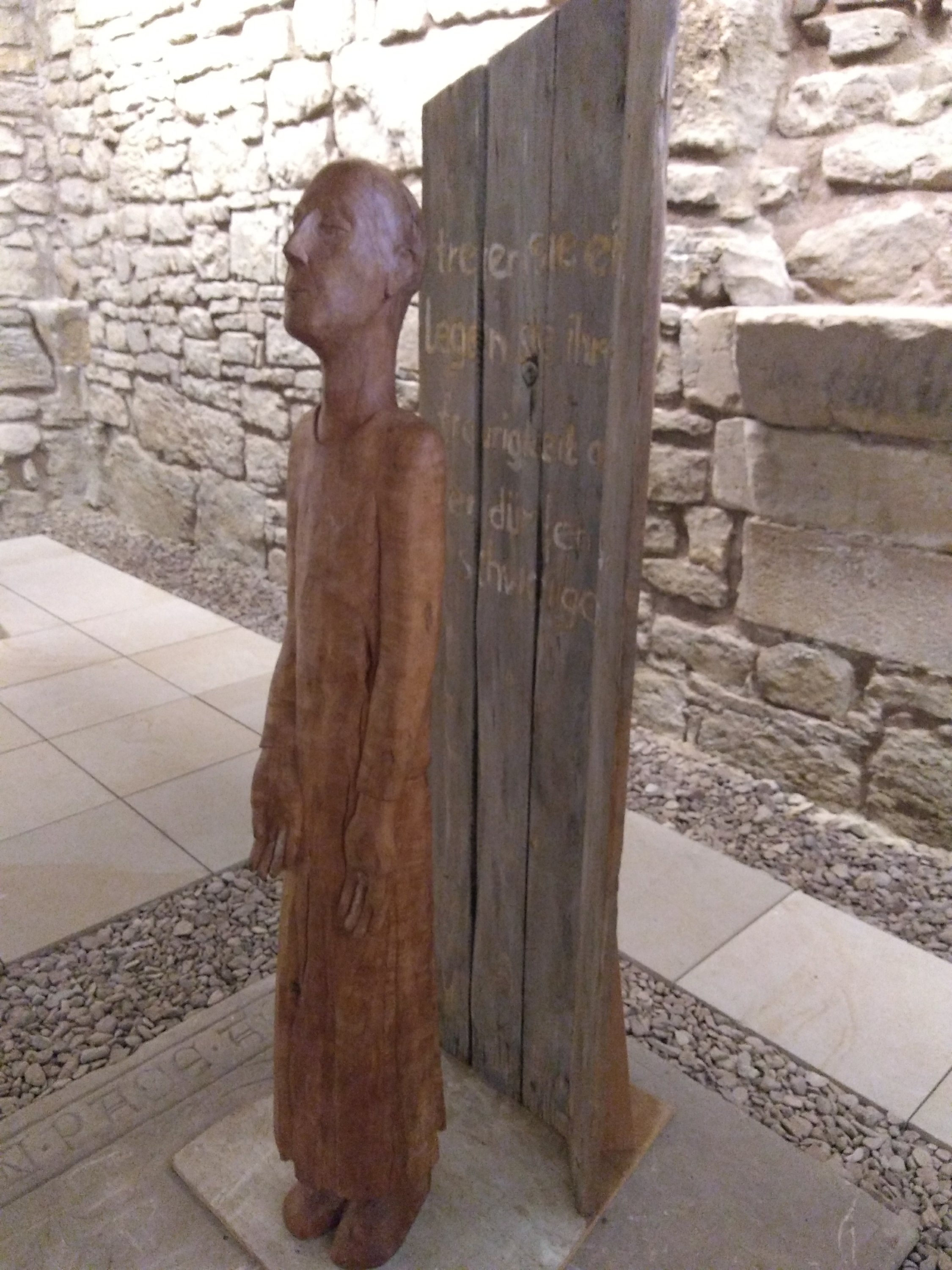
The pilsner was good too. I had to sample both. I was there two nights, after all.In the Room of Silence at the monastery
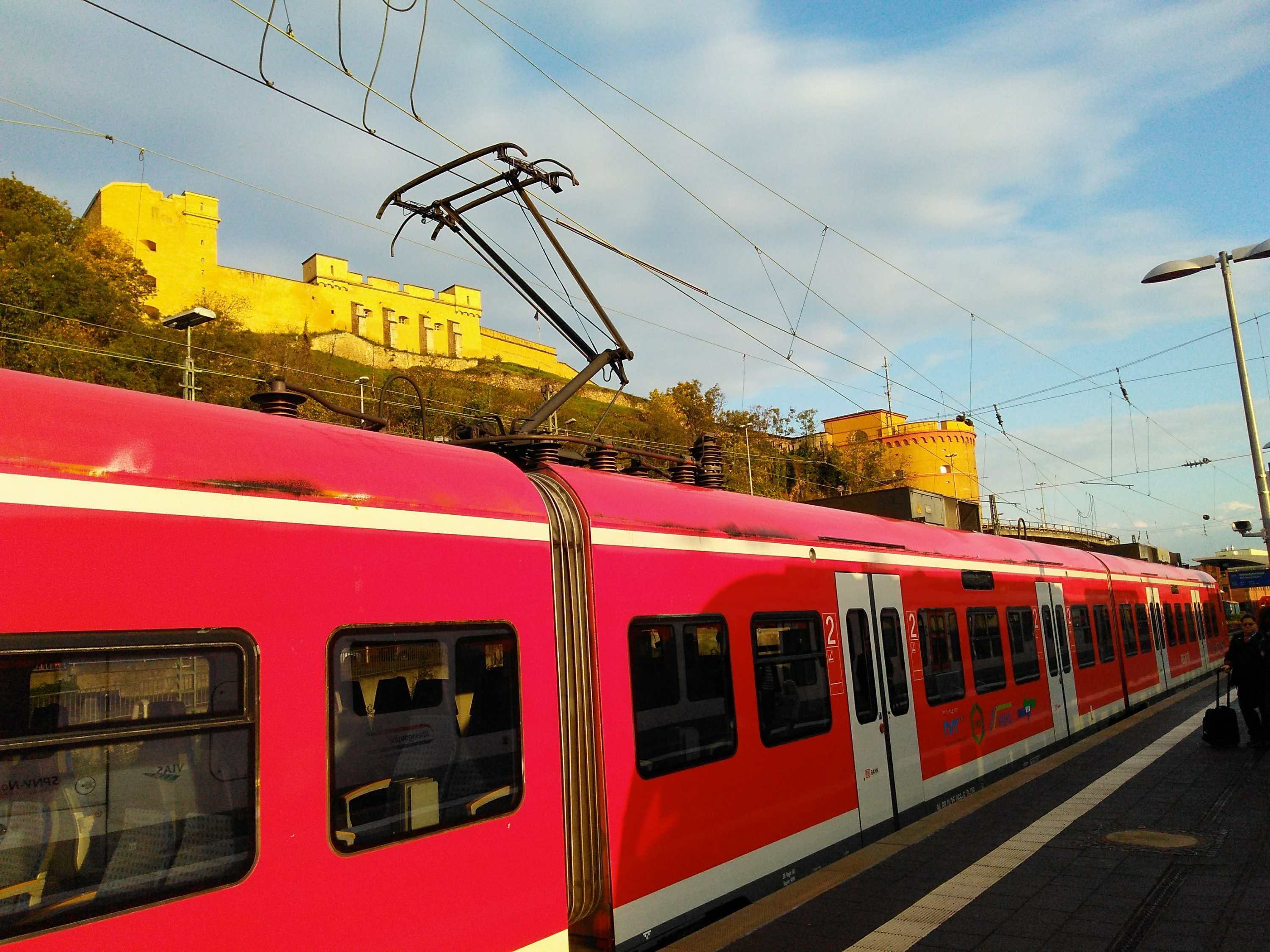
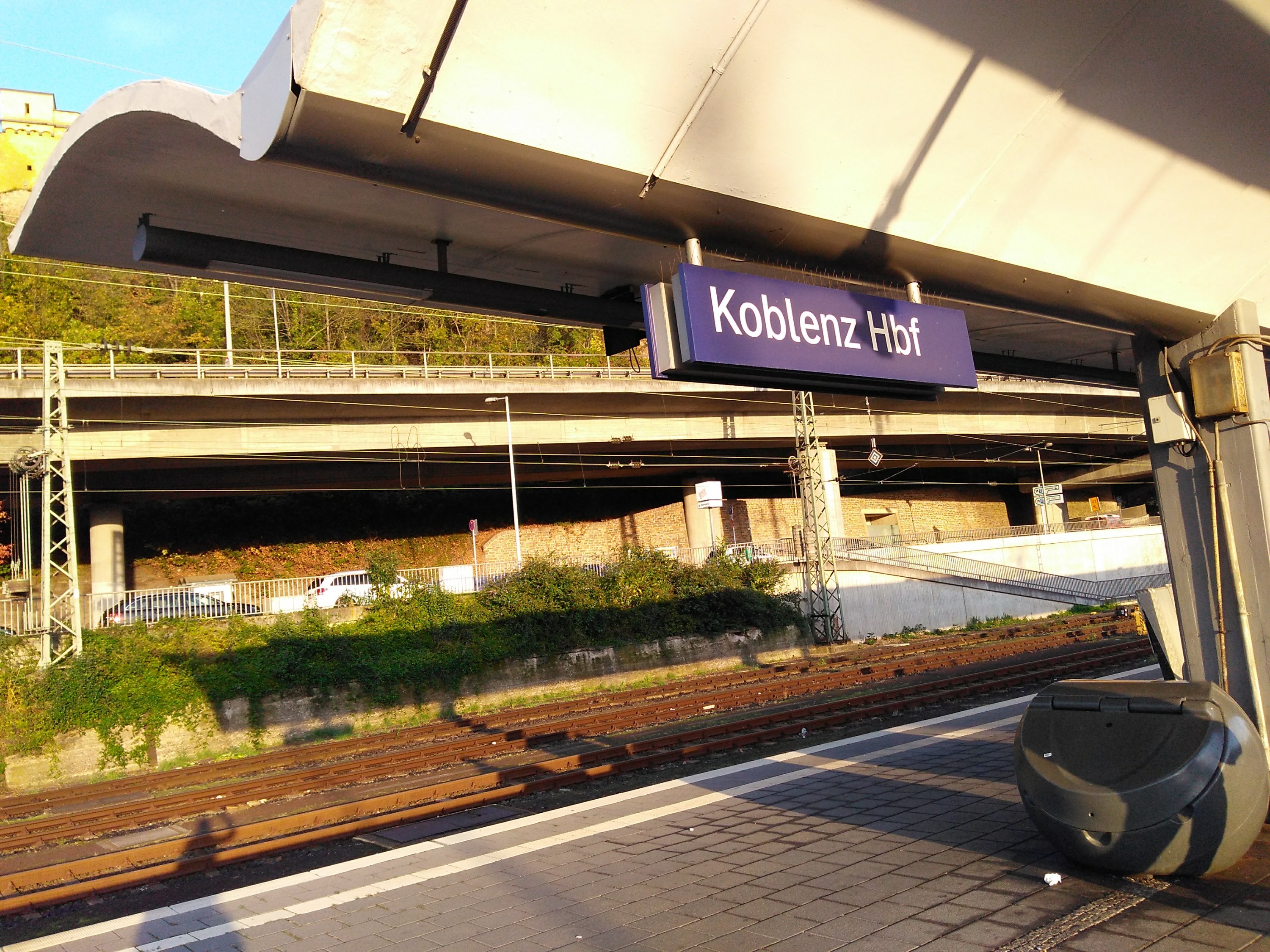
The river trip ended in the beautiful town of Koblenz. I didn’t have of a chance to see much of it though as I was catching a train early the next morning to head east. After taking a taxi (my first!) to my economy hotel I checked in (awkwardly, due to my lack of skill in speaking and understanding German). It was nearly dark and I wanted to find the route I’d be walking in the early morning, when it would to be dark, to catch my train.
No problem finding the route. The problem came the next morning when I couldn’t find a way to check out of the hotel. No 24-hour desk service here. No phone in the room. I couldn’t even get to the tiny desk where I checked in; it was in the restaurant of the hotel, which of course was closed at this early hour.
I did find some signage that Google translated to say something like “No service hours needed ring bell at front door.” I searched for a bell. All I could find was a buzzer outside one of the front doors. I rang it, but nobody came.
Of course I still had my room key, because I was intending to turn it in, so I went back up to the room, left the key on the table, and hurried out to catch the train. I emailed the hotel, in the best German that Google Translate and I could muster.
I received a reply about 24 hours later, which thanked me, and asked me to please pay my bill. Oh yeah, that small detail…
I left my checkbook in Bellingham, so I’m hoping Claudia will help me out of this fix when I return to Munich in a few days.


 This Journey Begins Now